





























India’s record startup recognition by the government marks an important milestone for the country’s entrepreneurial ecosystem. The achievement is particularly significant for entrepreneurs in Tier-2 and Tier-3 cities, where access to funding, mentorship, and business opportunities is steadily improving through policy support and digital transformation.
Government Startup Recognition Reaches New Milestone
The government-recognized startup ecosystem in India has expanded rapidly over the last few years. Under the Startup India initiative, thousands of businesses across sectors have received official recognition, enabling them to access various benefits designed to encourage innovation and entrepreneurship.
The recent record number of recognized startups reflects the growing confidence among founders across the country. Unlike the early years of India’s startup movement, which was heavily concentrated in cities such as Bengaluru, Mumbai, Delhi, and Hyderabad, the latest wave of entrepreneurship is emerging from smaller urban centers.
Government recognition is more than a symbolic achievement. It allows eligible startups to access tax benefits, intellectual property support, easier compliance procedures, and opportunities to participate in government procurement programs. These advantages can be particularly valuable for entrepreneurs operating outside major metropolitan hubs.
Why Smaller Cities Are Producing More Startups
The startup boom in smaller cities is being driven by several structural changes in the Indian economy.
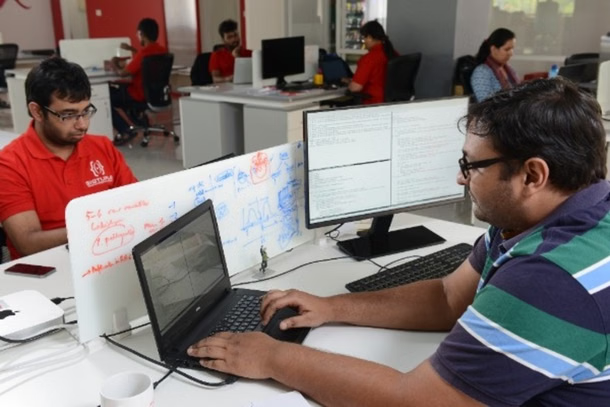
Improved internet connectivity, widespread smartphone usage, digital payment systems, and affordable technology tools have significantly lowered entry barriers for entrepreneurs. Today, a startup founder in Nagpur, Indore, Ranchi, Surat, or Coimbatore can build and scale a business without needing a physical presence in a major metro city.
Educational institutions in smaller cities are also producing a growing number of engineering, management, and technology graduates. Many young professionals are choosing to build businesses locally rather than migrate to larger urban centers.
The rise of remote work has further accelerated this trend. Entrepreneurs can now hire talent, serve customers, and collaborate with partners across India while operating from locations that offer lower costs and better quality of life.
These factors have created favorable conditions for startup growth beyond traditional technology hubs.
Benefits of Startup India Recognition for Entrepreneurs
Startup recognition provides several practical advantages that can help young businesses grow faster.
One of the most important benefits is easier access to government-backed support programs. Recognized startups may become eligible for funding opportunities, incubation support, mentorship initiatives, and networking platforms.
The program also offers assistance related to intellectual property rights. Startups often face challenges when filing patents or protecting innovations. Government support can help reduce some of these costs and procedural hurdles.
Another significant benefit is increased credibility. Investors, financial institutions, customers, and business partners often view government-recognized startups as more structured and growth-oriented organizations.
For entrepreneurs in smaller cities, this recognition can help bridge gaps that traditionally existed between regional businesses and larger investment ecosystems.
Impact on Employment and Local Economies
The increase in startup activity is contributing to job creation across emerging cities.
As startups expand, they hire employees in areas such as technology, marketing, operations, finance, logistics, customer service, and product development. This creates local employment opportunities and reduces the need for skilled workers to relocate to metropolitan regions.
The economic benefits extend beyond direct hiring. Successful startups generate demand for local services, office spaces, professional consultants, and supporting businesses.
Many startups are also solving region-specific problems related to agriculture, healthcare, education, logistics, and financial inclusion. By addressing local challenges, they contribute to broader economic development while creating sustainable business models.
As more startups receive government recognition, smaller cities are becoming important contributors to India’s innovation-driven growth story.
Challenges That Entrepreneurs Still Face
Despite the positive momentum, several challenges remain for founders operating outside major startup hubs.
Access to venture capital continues to be uneven. While funding availability has improved, a significant share of private investment still flows toward larger cities. Entrepreneurs in smaller markets often need to work harder to connect with investors and strategic partners.
Infrastructure gaps also persist in certain regions. Reliable transportation, advanced research facilities, and specialized talent pools are still more readily available in established startup ecosystems.
Mentorship and networking opportunities can also be limited compared to major metropolitan centers. However, the growth of digital communities, startup incubators, and virtual networking platforms is gradually reducing these disadvantages.
Continued policy support and private sector participation will be important to sustain the momentum in emerging startup regions.
What the Future Looks Like for Tier-2 and Tier-3 Entrepreneurs
The record number of government-recognized startups suggests that India’s entrepreneurial landscape is becoming more geographically diverse.
Experts believe that future startup growth will increasingly come from Tier-2 and Tier-3 cities, where large consumer markets, skilled talent pools, and lower operating costs create attractive business conditions.
Sectors such as agritech, healthtech, fintech, artificial intelligence, education technology, logistics, and sustainable energy are expected to generate significant opportunities for regional entrepreneurs.
As digital infrastructure continues to improve and support systems become more accessible, founders from smaller cities are likely to play a larger role in shaping India’s next phase of economic growth.
The startup ecosystem is no longer confined to a handful of metro cities. It is increasingly becoming a nationwide movement driven by innovation, technology, and local entrepreneurship.
Key Takeaways
• Government-recognized startups have reached record levels, reflecting strong entrepreneurial growth across India.
• Tier-2 and Tier-3 cities are emerging as important centers for startup creation and innovation.
• Recognition under Startup India provides benefits such as credibility, support programs, and easier access to resources.
• Growing startup activity is creating jobs and supporting local economic development in smaller cities.
FAQ
What is government startup recognition?
Government startup recognition is provided under the Startup India initiative and allows eligible startups to access various benefits and support programs.
Why are more startups emerging from smaller cities?
Lower operating costs, better digital connectivity, improved education, and remote work opportunities have made entrepreneurship more accessible in smaller cities.
What benefits do recognized startups receive?
Benefits may include tax-related incentives, intellectual property support, easier compliance procedures, networking opportunities, and access to government programs.
How does startup growth help local economies?
Startups create jobs, encourage innovation, support local businesses, and contribute to regional economic development through investment and entrepreneurship.
(record startup recognition, Startup India, entrepreneurs in smaller cities, Tier-2 startups, Tier-3 entrepreneurship, startup ecosystem India, startup benefits, government recognized startups, startup growth India, employment opportunities)