































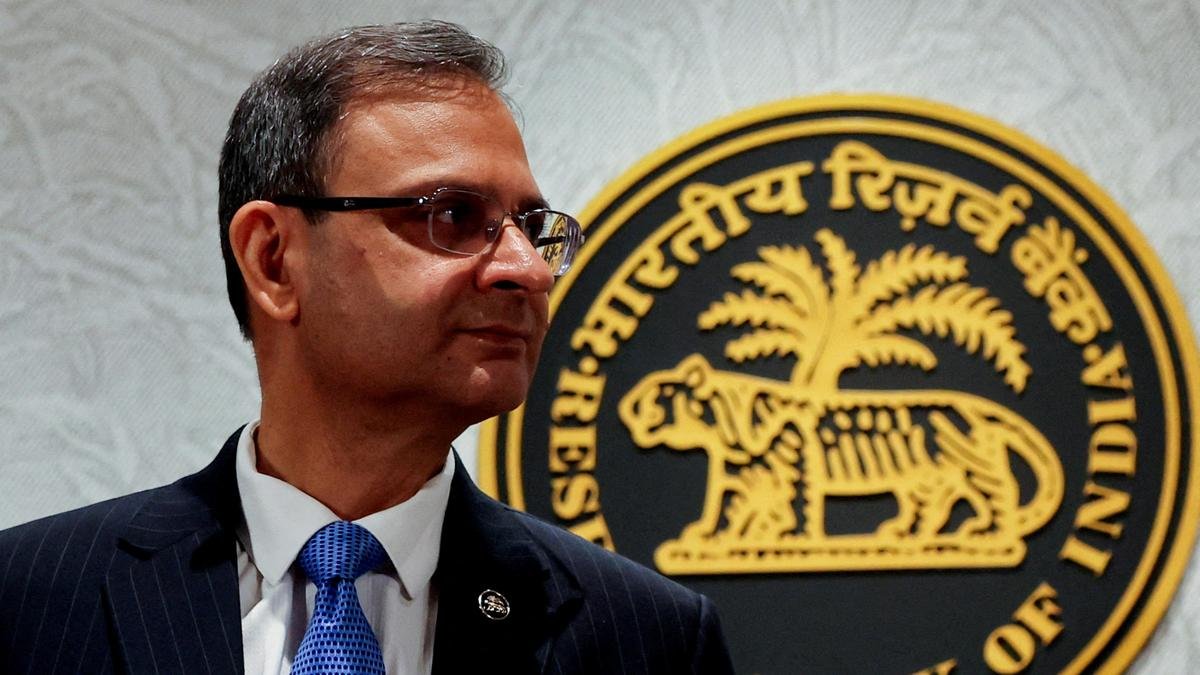
The Reserve Bank of India has raised the repo rate by 25 basis points to 5.5%, its first increase in nearly four years. The decision could affect loan EMIs, borrowing costs, deposits and household spending as the central bank responds to rising inflation risks. Reuters
RBI Repo Rate Hike Comes After Nearly Four Years
The RBI repo rate now stands at 5.5% after the Monetary Policy Committee raised it by 25 basis points on October 7, 2026. This is the first repo rate increase since February 2023 and marks a shift in the central bank’s approach after a prolonged period of stable or lower policy rates. Reuters
The six-member MPC unanimously approved the increase. Along with the repo rate, the Standing Deposit Facility rate has moved to 5.25%, while the Marginal Standing Facility rate and bank rate have risen to 5.75%. The Economic Times
For ordinary households, the repo rate may sound like a technical monetary policy number. In reality, it can influence the cost of borrowing across the economy.
The immediate impact will depend on how individual banks and financial institutions transmit the RBI’s decision to their customers.
Why Has the RBI Raised Interest Rates?
The RBI’s decision comes against a backdrop of rising inflation risks, higher crude oil prices and changing global financial conditions.
Reuters reported that the central bank cited mounting inflation concerns alongside strong economic growth. The RBI also changed its policy stance from neutral to calibrated tightening, signalling that controlling inflation has become a more important policy priority. Reuters
Higher crude oil prices are particularly important for India because the country imports a large share of its crude oil requirements. A sustained rise in oil prices can increase transportation and production costs, eventually putting pressure on prices paid by consumers.
The RBI has therefore opted to make borrowing somewhat more expensive in an effort to prevent inflationary pressures from becoming entrenched.
At the same time, the central bank has maintained a positive assessment of economic activity. It raised its FY27 GDP growth projection to 7.1% from 6.7%. The Indian Express
Home Loan EMIs Could Become More Expensive
The biggest concern for many households after an RBI repo rate hike is the impact on home loans.
Borrowers with floating-rate loans linked to external benchmarks can see their interest rates change when the relevant benchmark moves. Banks may pass on the increase through higher lending rates or adjustments to loan terms.
A 25-basis-point increase does not automatically mean that every home loan EMI will rise by exactly the same amount. The impact depends on the outstanding principal, remaining tenure, interest rate, benchmark and the lender’s transmission mechanism.
For example, consider a borrower with a large outstanding home loan and several years remaining on the repayment schedule. Even a relatively small increase in the interest rate can add to the total interest payable over the remaining tenure.
Some lenders may increase the EMI, while others may initially extend the loan tenure, depending on their policies and the borrower’s loan agreement.
Personal and Vehicle Loans May Also Feel the Impact
The effect is not limited to home buyers.
Personal loans and vehicle loans can also become more expensive when banks raise lending rates. Consumers planning to finance a new car, motorcycle or other large purchase may therefore face higher borrowing costs if lenders pass on the policy increase.
This could be particularly relevant for households in Tier-2 and Tier-3 cities, where bank financing plays an important role in purchases of homes, cars, two-wheelers and other consumer goods.
Existing borrowers should check whether their loans are fixed-rate or floating-rate. A fixed-rate loan generally does not respond to market interest-rate movements in the same way as a floating-rate loan.
Borrowers should also check their lender’s benchmark, reset frequency and loan agreement rather than assuming that the RBI’s 25-basis-point hike will immediately translate into a 25-basis-point increase in their personal interest rate.
What Happens to Bank Deposits and Fixed Deposits?
A higher repo rate can also have implications for savers.
When the overall interest-rate environment moves higher, banks may increase deposit rates to attract funds. This can benefit people who keep money in fixed deposits or other interest-bearing bank products.
However, deposit rates do not necessarily move by the same amount or at the same time as the repo rate.
For households that rely on interest income, the direction of deposit rates can therefore become important. Senior citizens and other savers who regularly renew fixed deposits may pay particular attention to changes announced by their banks.
The broader impact will depend on how banks respond to the RBI’s decision and their own funding requirements.
Inflation Remains a Major Concern
The RBI’s rate decision is closely connected to inflation.
The central bank raised its FY27 inflation projection to 5.2% from its earlier projection of 5%, according to the Indian Express report on the policy decision. The Indian Express
The challenge for policymakers is to control inflation without unnecessarily damaging economic growth.
Higher interest rates can reduce demand because borrowing becomes more expensive. If consumers and businesses take fewer loans or postpone large purchases, demand pressures can ease.
But monetary policy cannot directly increase food production or lower international crude prices. Supply-side factors can continue to influence inflation even when interest rates are higher.
This is one reason the RBI has to balance inflation management with the need to support economic activity.
What the Rate Hike Means for Household Budgets
For families, the impact will depend largely on their financial position.
Existing borrowers with floating-rate loans should watch for communication from their banks. They may see changes in their EMI or repayment tenure after the lender updates its lending rate.
People planning to take a new loan should compare interest rates carefully rather than focusing only on the advertised EMI. A small difference in interest rates can have a meaningful impact on total repayment over a long loan period.
Savers, meanwhile, should monitor deposit rates before renewing fixed deposits.
Households with substantial debt may want to review their monthly budgets and avoid taking on unnecessary high-cost borrowing while interest rates are moving higher.
The repo rate hike does not mean that every household will immediately see a major change in expenses. The effect is gradual and depends on the type of loan or deposit, lender policies and future RBI decisions.
Could More Rate Hikes Follow?
The RBI’s change in stance is an important part of the latest decision.
The MPC moved from a neutral stance to calibrated tightening. Reuters reported that economists interpreted the change as a signal that the central bank could consider further increases depending on inflation and economic conditions. Reuters
However, a future rate hike is not automatic.
The RBI will continue to assess inflation, economic growth, crude oil prices, global interest rates, financial conditions and other indicators before making its next decision.
For households, this means the October hike should be viewed as part of an evolving interest-rate environment rather than as a one-time event with a predetermined outcome.
What Borrowers and Savers Should Do Now
Borrowers should first identify whether their loans are fixed or floating rate and understand which benchmark determines the interest rate.
Home loan customers can also compare the effect of a higher EMI versus a longer tenure. If financially comfortable, some borrowers may consider making additional principal payments, although they should check applicable terms and charges before doing so.
People planning a major purchase through a loan should calculate the total repayment cost at different interest rates.
Savers should compare current fixed deposit rates across banks before renewing deposits, while also considering tenure and premature withdrawal conditions.
The most important point is not to make financial decisions solely because the RBI has raised the repo rate. The actual effect on each household will depend on its debt, income, savings and financial products.
Key Takeaways
- RBI has raised the repo rate by 25 basis points to 5.5%, the first hike since February 2023. Reuters
- Floating-rate home, personal and vehicle loans could become more expensive as lenders transmit the increase.
- Deposit and fixed deposit rates could also move higher, although the timing and extent will vary between banks.
- The RBI’s shift to calibrated tightening means inflation and future interest-rate decisions will remain important for households. The Economic Times
FAQ
What is the current RBI repo rate?
The RBI has raised the repo rate to 5.5% after increasing it by 25 basis points on October 7, 2026. Reuters
Will my home loan EMI increase after the repo rate hike?
It may, particularly if your home loan has a floating interest rate linked to an external benchmark. The actual impact depends on your lender, loan benchmark, outstanding amount and repayment terms.
Will fixed deposit rates increase after the RBI hike?
Banks may raise deposit rates when the broader interest-rate environment changes, but the increase is not automatic and may vary between banks and deposit products.
Why did the RBI raise the repo rate?
The RBI raised the rate amid increasing inflation risks, higher crude oil prices and strong economic activity. The central bank also shifted its policy stance to calibrated tightening. Reuters














