




















QR code restaurant ordering is facing fresh criticism in India as diners question whether digital menus are making restaurant visits unnecessarily complicated. A recent Bengaluru incident involving a nearly discharged smartphone battery has reignited the debate over convenience, customer privacy and the importance of traditional dining experiences.
Bengaluru Restaurant Incident Triggers QR Code Menu Debate
The growing use of QR code menus in Indian restaurants has become a talking point after a Bengaluru family’s dinner reportedly turned into a frustrating experience because of mandatory online ordering.
Laalit Lobo, a marketing consultant and former Vice-President of Bombay Shaving Company, shared his experience on LinkedIn after visiting a popular restobar near Brigade Road with his wife and son.
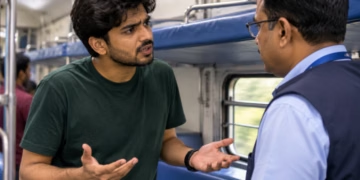
According to his post, Lobo asked a waiter for a menu but was instructed to scan a QR code using a smartphone. The problem was that his phone battery had already died, while his wife’s phone had only 6% battery remaining.
He requested a physical menu, which the restaurant reportedly provided. However, the waiter informed him that placing the order would still require customers to use their phones.
This meant the family had to depend on a nearly discharged smartphone throughout the dinner.
Repeated Login Requirements Added to the Frustration
The inconvenience reportedly did not end with the initial QR code requirement.
Lobo said the restaurant’s online ordering webpage repeatedly returned to its default screen during the meal. According to his account, this happened four times, requiring the family to log in again.
The process also involved obtaining an OTP from the waiter for the table before continuing with the order.
Instead of enjoying dinner, the family reportedly spent considerable time monitoring the remaining battery percentage on the available phone.
Lobo questioned why restaurants were making customers entirely dependent on their personal devices without ensuring that the digital ordering infrastructure worked reliably.
He argued that businesses adopting automation should also invest in the necessary technology rather than expecting every customer to arrive with a fully charged smartphone and reliable internet connectivity.
His post attracted attention online, with several users sharing similar experiences involving QR-based restaurant ordering systems.
Why Indian Restaurants Are Moving Towards QR Code Menus
QR code menus became particularly popular during the COVID-19 pandemic, when restaurants and hospitality businesses looked for ways to reduce physical contact.
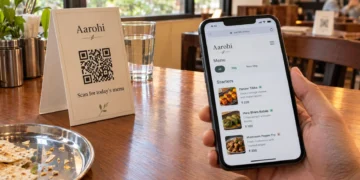
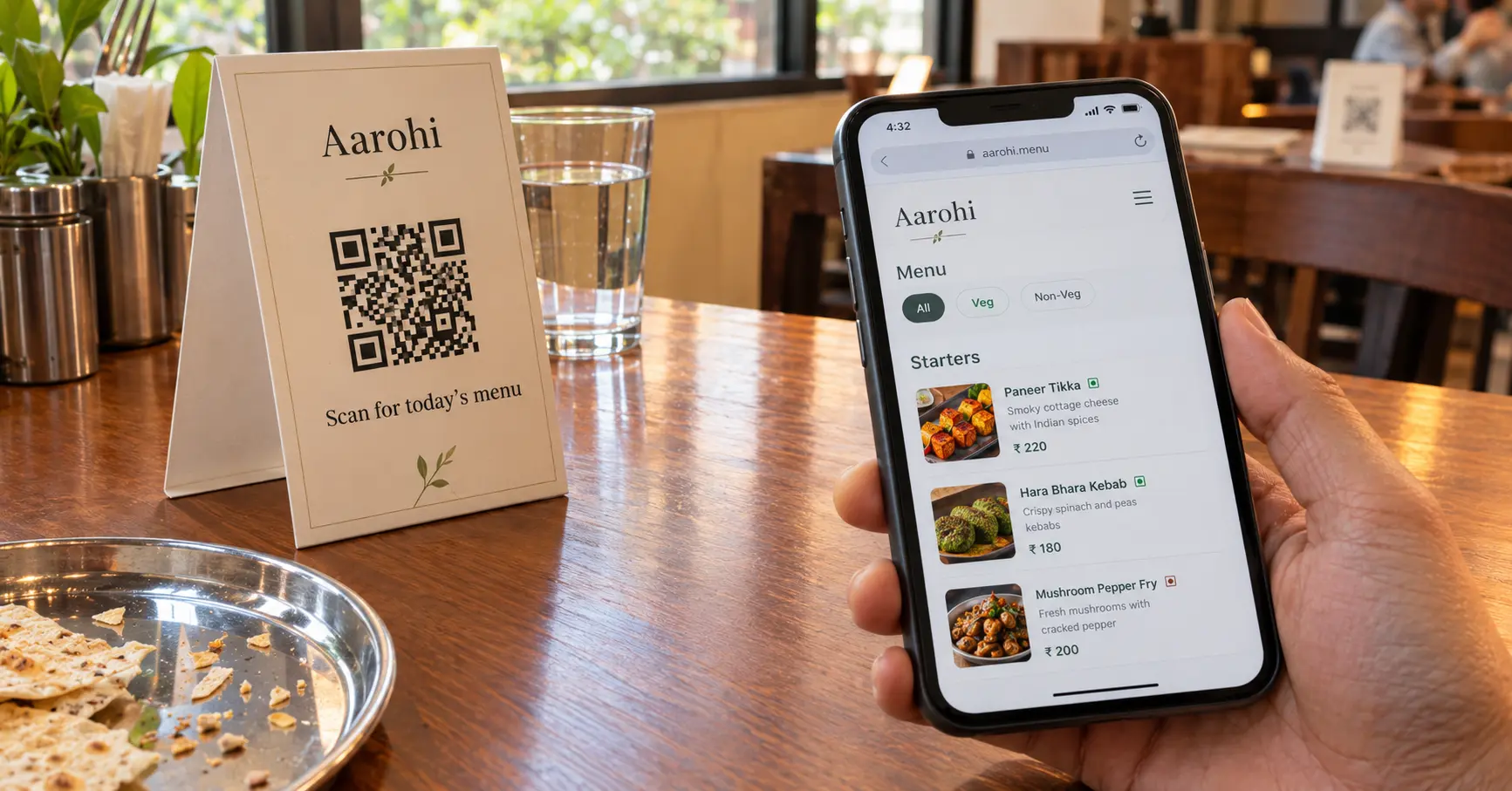
Instead of distributing printed menus between customers, restaurants could place QR codes on tables. Diners could scan them using their smartphones and access the available dishes digitally.
The system also offered several operational advantages.
Restaurants could update prices, remove unavailable dishes and introduce new items without printing fresh menus. Digital ordering platforms could also help businesses organise orders and reduce certain manual tasks.
For restaurant owners, these systems can reduce printing expenses and provide access to digital ordering tools.
However, the growing adoption of QR menus has also created a different challenge. Some establishments have moved beyond offering digital menus as an alternative and made smartphone-based ordering compulsory.
This difference is important. A digital menu can improve convenience when customers have a choice, but it can become an obstacle when no practical alternative is available.
Smartphone Battery and Internet Connectivity Become Dining Concerns
One of the biggest disadvantages of QR code restaurant ordering is its dependence on customers’ smartphones.
A person visiting a restaurant may have limited battery power, poor mobile network connectivity or an older smartphone that struggles to load certain websites.
These problems can become more noticeable in basement restaurants, crowded commercial areas and locations where mobile signals are inconsistent.
Unlike a printed menu, which can be opened immediately, a digital menu may require several steps.
Customers may need to unlock their phones, open the camera, scan the code, connect to a webpage and sometimes complete a login process before viewing the available dishes.
If the website is slow or repeatedly refreshes, ordering can take longer than expected.
The issue becomes more complicated when restaurants require OTP verification or additional personal information before allowing customers to place orders.
For families dining together, elderly customers and people who are uncomfortable using smartphone applications, these requirements can make an ordinary restaurant visit less convenient.
QR Code Menus Also Raise Customer Privacy Questions
Apart from convenience, customer privacy is another concern associated with digital restaurant ordering.
Some QR-based ordering platforms request mobile numbers, email addresses or other personal details before allowing customers to access menus or complete orders.
While restaurants may use this information for order management, billing or customer communication, diners may question whether collecting such information is always necessary.
A separate incident in Pune earlier in May 2026 brought this issue into focus.
A woman named Rishika Dutta alleged that a restaurant employee had accessed her contact details through a QR-code ordering system and subsequently sent her unwanted late-night messages.
The incident attracted attention after she shared her experience online. According to India Today, the restaurant later terminated the employee involved.
The case raised broader questions about how customer information collected through digital restaurant platforms is accessed, stored and protected.
However, it is important to distinguish between QR-code technology itself and the way businesses handle customer information. Scanning a QR code does not automatically mean that a restaurant receives access to a customer’s private phone data. The information shared depends on the website, application and permissions involved.
What Research Says About Digital Menus and Customer Experience
The debate over QR code menus is not limited to social media complaints.
A research paper published in the Journal of Hospitality and Tourism Management in December 2024 examined how QR-code menus influence customer loyalty compared with traditional printed menus.
The researchers found that QR-code menus could reduce customer loyalty because some diners perceived them as inconvenient.
The research also highlighted the importance of customer interaction. People who value conversations with restaurant employees may find digital self-service systems less satisfying.
Traditional restaurant service involves more than simply selecting dishes. Customers often ask waiters about ingredients, portion sizes, preparation methods and recommendations.
A printed menu combined with personal assistance can make these interactions easier.
Digital menus can still serve customers who prefer independent browsing, but they may not provide the same experience for everyone.
The findings suggest that restaurants should consider customer preferences rather than assuming that every diner wants a completely digital experience.
Should Restaurants Bring Back Physical Menus?
The recent debate does not necessarily mean restaurants should abandon digital ordering.
QR code menus can be useful when they are properly designed and supported by reliable technology. They allow restaurants to update information quickly and give customers access to larger menus without carrying printed copies.
However, offering a physical menu alongside a digital option could address many of the concerns raised by diners.
Restaurants can consider the following improvements:
1. Keep Printed Menus Available: Customers should have the option to browse a physical menu if they cannot access a QR code.
2. Make Online Ordering Optional: Digital ordering should improve the experience rather than become an unnecessary condition for placing an order.
3. Avoid Unnecessary Personal Information: Restaurants should collect only the information required to complete legitimate transactions.
4. Improve Digital Infrastructure: Websites should load quickly, retain order information and avoid repeated login requirements.
5. Train Restaurant Staff: Employees should be able to assist customers who experience technical problems instead of directing everyone towards their smartphones.
These measures can help restaurants retain the advantages of digital technology without compromising customer comfort.
The Future of Restaurant Ordering in India
India’s restaurant industry is increasingly adopting digital tools, from online reservations and digital payments to automated billing and QR-based ordering.
For businesses operating in major cities such as Bengaluru, Mumbai, Delhi and Pune, technology can help manage high customer volumes and simplify certain operations.
Smaller restaurants in Tier-2 and Tier-3 cities are also exploring digital solutions to manage orders and reduce operational expenses.
However, the needs of customers differ across age groups, locations and dining preferences. Not every customer is comfortable with smartphone-based ordering, and not every restaurant has the infrastructure to support a completely digital system.
The Bengaluru incident highlights an important distinction between adopting technology and improving customer service.
Customers generally expect digital systems to make everyday activities easier. When those systems create additional steps, technical difficulties or privacy concerns, businesses risk weakening the experience they are trying to improve.
The discussion is therefore not simply about choosing between paper menus and QR codes. It is about giving customers flexibility.
Restaurants that combine reliable digital ordering with traditional service options can accommodate different customer preferences while continuing to use technology where it genuinely adds value.
Key Takeaways
- A Bengaluru family’s restaurant experience has reignited debate over compulsory QR-code menus and smartphone-based ordering.
- Laalit Lobo said his phone had no battery and his wife’s phone had only 6% charge remaining.
- QR-based restaurant systems have also raised concerns about customer privacy and unnecessary collection of personal information.
- Offering both printed and digital menus can help restaurants improve convenience without excluding customers who prefer traditional service.
Frequently Asked Questions (FAQs)
1. Why are QR code menus becoming controversial in India?
QR code menus are facing criticism because some restaurants make smartphone-based ordering compulsory. Customers have raised concerns about low phone battery, poor internet connectivity, repeated login requirements and the collection of personal information.
2. What happened in the recent Bengaluru QR menu incident?
Laalit Lobo, a former Vice-President of Bombay Shaving Company, described how his family struggled with a restaurant’s QR-only ordering system. His phone battery had died, while his wife’s phone had only 6% charge remaining. He also reported repeated website resets and OTP requirements.
3. Are QR code restaurant menus safe to use?
QR code menus are generally safe when they direct customers to legitimate restaurant websites. However, diners should check the website address, avoid suspicious links and share personal information only when necessary.
4. Can customers ask restaurants for physical menus?
Customers can request a printed menu or assistance from restaurant staff. However, whether a physical menu is available depends on the establishment. Restaurants can improve accessibility by offering both digital and traditional ordering options.
(Internal keywords: QR code restaurant ordering India, digital menus in restaurants, QR code menu controversy, Bengaluru restaurant viral news, Laalit Lobo LinkedIn post, printed menus vs digital menus, restaurant customer experience, smartphone ordering problems, customer privacy in restaurants, QR code menu disadvantages, restaurant technology India, digital dining trends)