































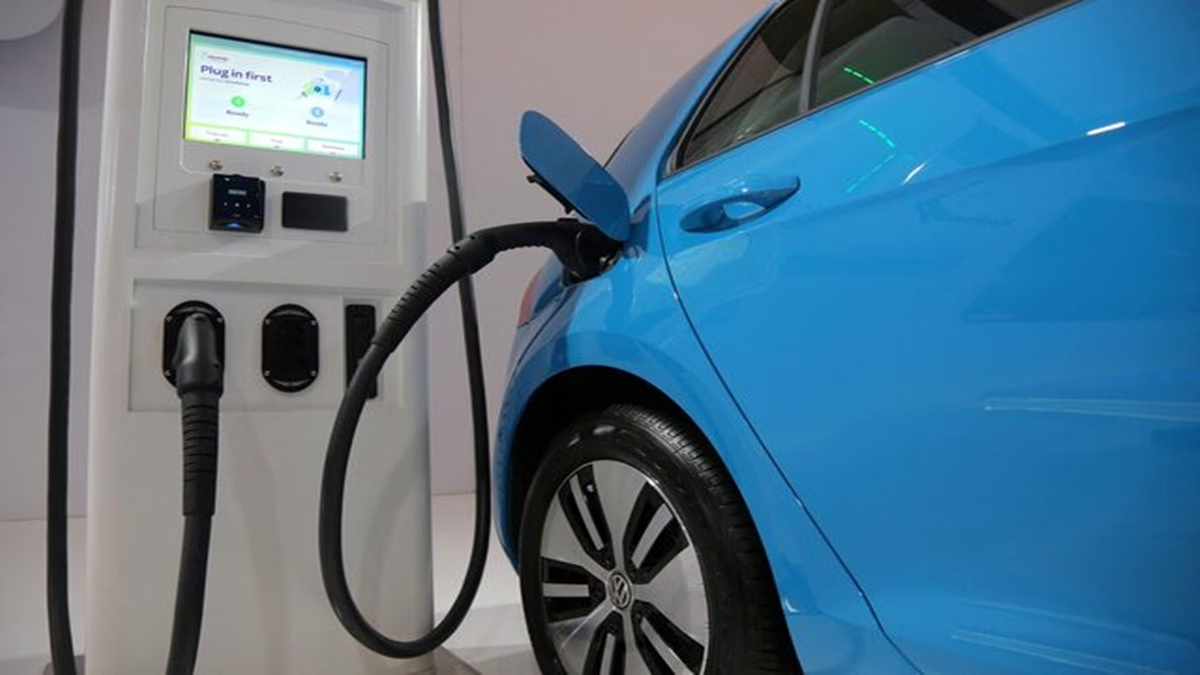
An EV charging infrastructure startup raising fresh capital to expand beyond metros signals growing investor confidence in India’s electric mobility ecosystem. The funding will support network expansion into Tier-2 and Tier-3 cities where EV adoption is steadily increasing.
EV Charging Startup Funding Reflects Market Expansion Trend
The development of an EV charging infra startup raising capital highlights a broader shift in India’s electric vehicle ecosystem. As EV adoption moves beyond metro cities, infrastructure providers are scaling operations to meet rising demand.
In India, electric vehicle growth has been driven by government incentives, rising fuel costs, and increasing awareness about sustainability. However, charging infrastructure has remained concentrated in major urban centers.
This funding round indicates that investors see strong potential in expanding charging networks into smaller cities, where infrastructure gaps still exist.
Why Expansion Beyond Metros Is Critical for EV Growth
The focus on expanding EV charging infrastructure beyond metros is essential for sustaining long term EV adoption. While cities like Delhi and Mumbai have relatively better charging networks, Tier-2 and Tier-3 cities are still developing.
Lack of accessible charging stations in smaller cities has been a major barrier for potential EV buyers. Range anxiety remains a key concern, especially for users who rely on daily commuting or intercity travel.
By expanding into these regions, startups can unlock new markets and support wider EV adoption. This also aligns with national goals to reduce emissions and promote clean energy.
How the New Funding Will Be Utilized
The capital raised by the EV charging startup is expected to be used for multiple purposes. A significant portion will go toward setting up new charging stations in emerging markets.
This includes both public charging points and partnerships with commercial spaces such as malls, offices, and residential complexes. Fast charging technology is likely to be a priority to improve user convenience.
Investment will also be directed toward technology development, including software platforms for locating stations, managing payments, and optimizing usage.
Operational expansion, including hiring and logistics, will support the scaling of the network across different regions.
Role of Government Policies and Incentives
Government initiatives are playing a crucial role in supporting EV infrastructure growth. Policies such as the FAME scheme and state level incentives are encouraging investment in charging networks.
Authorities are also working to simplify approvals for setting up charging stations and promoting public private partnerships. These measures are aimed at accelerating infrastructure development.
The expansion beyond metros complements these policies by ensuring that benefits reach a wider population. It also supports the transition toward sustainable mobility in smaller cities.
Challenges in Building EV Charging Infrastructure
Despite strong growth potential, EV charging startups face several challenges. High initial investment costs and long payback periods can impact profitability.
Land availability and regulatory approvals can delay the installation of charging stations. In smaller cities, identifying suitable locations with adequate power supply can be complex.
Utilization rates are another concern. Charging stations need consistent usage to remain financially viable, which depends on the pace of EV adoption.
Standardization of charging technology and interoperability between networks are additional factors that influence user experience.
Impact on EV Adoption and Consumer Behavior
The expansion of charging infrastructure is expected to have a direct impact on EV adoption. Improved access to charging reduces range anxiety and increases confidence among potential buyers.
For consumers in Tier-2 and Tier-3 cities, availability of charging stations can make EV ownership more practical. This is particularly relevant for two wheelers and three wheelers, which are seeing rapid growth in these regions.
Fleet operators and delivery services also benefit from better infrastructure, as it enables efficient operations and lower running costs.
As infrastructure improves, the overall EV ecosystem becomes more attractive for both consumers and businesses.
Future Outlook for EV Charging Ecosystem in India
The EV charging infrastructure sector in India is expected to grow significantly in the coming years. Continued investment from startups and established players will drive expansion across regions.
Technological advancements, including faster charging and smart grid integration, are likely to improve efficiency and user experience. Collaboration between government, private companies, and energy providers will be key to scaling infrastructure.
The shift toward non metro markets indicates a more inclusive approach to EV development, ensuring that growth is not limited to major cities.
Takeaways
- EV charging startup funding highlights expansion beyond metro cities
- Infrastructure growth is critical for increasing EV adoption in India
- Government policies are supporting the development of charging networks
- Challenges include high costs, approvals, and utilization rates
FAQs
Q1. Why are EV charging startups expanding beyond metros?
To support growing EV adoption in smaller cities and address infrastructure gaps.
Q2. How will this expansion benefit consumers?
It improves access to charging, reduces range anxiety, and makes EV ownership more practical.
Q3. What challenges do charging startups face?
High investment costs, regulatory approvals, and maintaining utilization rates are key challenges.
Q4. What is the future of EV charging in India?
The sector is expected to grow rapidly with increased investment and technological advancements.