




























Charging infrastructure expanding beyond metros is becoming a critical factor in India’s EV growth story. While announcements suggest rapid expansion, the ground reality in smaller cities shows a mixed picture of progress, gaps, and evolving adoption patterns.
Charging Infrastructure Expanding Beyond Metros Overview
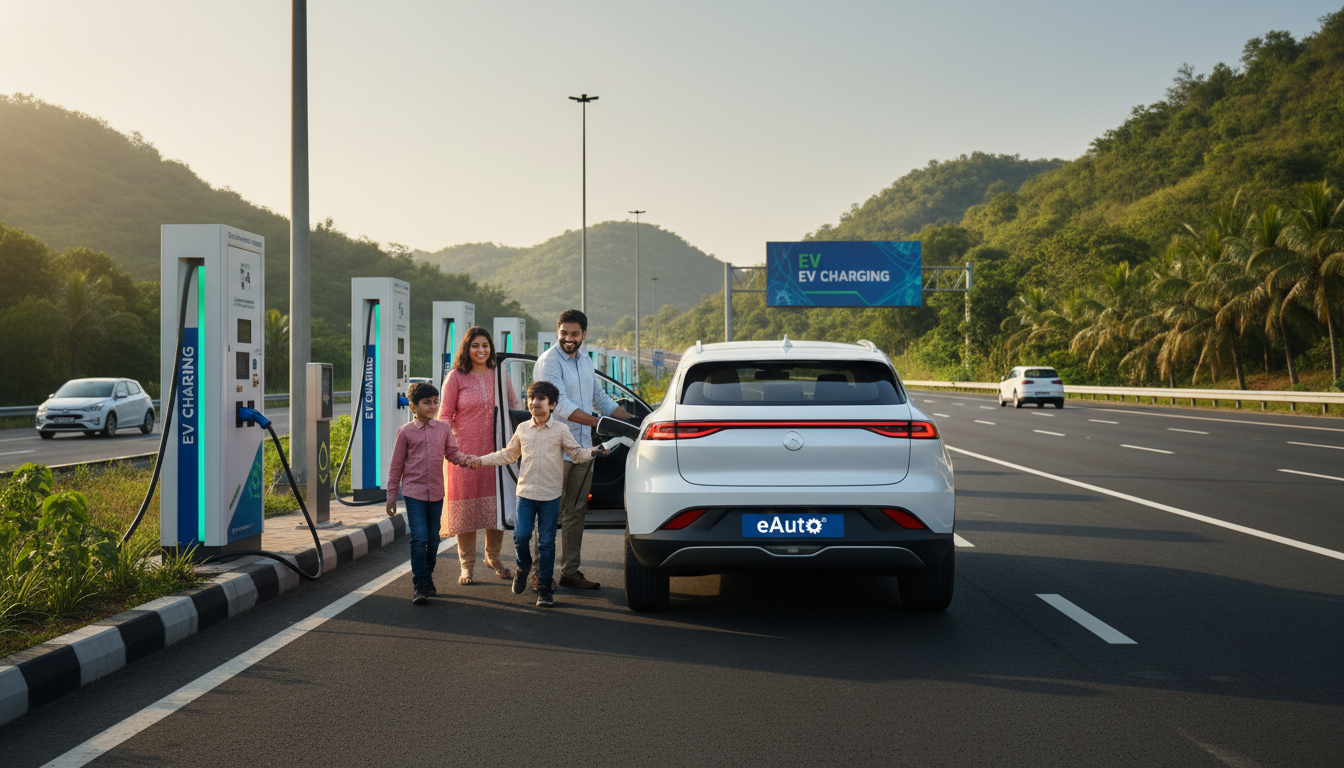
Charging infrastructure expanding beyond metros reflects the next phase of electric mobility growth in India. Early EV adoption was concentrated in major cities like Delhi and Bengaluru, where charging networks were first established.
Now, expansion is moving into Tier-2 and Tier-3 cities such as Pune, Jaipur, and Indore. This shift is driven by rising EV demand, government incentives, and private sector investment.
However, the pace and quality of infrastructure development vary significantly across regions.
What Expansion Looks Like on the Ground
On paper, charging infrastructure growth appears strong, with multiple announcements of new stations and partnerships. In reality, the distribution is uneven.
Many Tier-2 cities have limited public charging points, often concentrated in specific areas such as malls, highways, or commercial hubs. Residential charging remains the primary option for most EV users.
Private players and startups are setting up charging stations, but coverage is still developing. Availability during peak hours and maintenance of stations can also be inconsistent.
The gap between announced capacity and operational infrastructure is a key challenge.
Role of Government Policies and Incentives
Government initiatives are playing a major role in expanding charging infrastructure beyond metros. Programs like FAME II Scheme include provisions for setting up public charging stations.
State governments are also offering incentives for infrastructure development, including subsidies and policy support. These efforts aim to reduce entry barriers for private companies.
Regulatory frameworks are evolving to standardize charging equipment and pricing, improving user experience.
Policy support is essential for accelerating infrastructure growth in smaller cities.
Private Sector and Startup Participation
Private companies are actively contributing to the expansion of charging infrastructure. Firms like Tata Power and emerging EV startups are investing in charging networks across multiple cities.
Collaborations with real estate developers, fuel stations, and retail spaces are helping increase accessibility. Charging points are being integrated into existing urban infrastructure.
Startups are also experimenting with innovative models such as battery swapping and mobile charging solutions.
This mix of traditional and innovative approaches is shaping the ecosystem.
Challenges in Tier-2 and Tier-3 Cities
Despite progress, several challenges remain in expanding charging infrastructure beyond metros in India. One major issue is inconsistent electricity supply in some regions, which affects charging reliability.
High installation costs and lower initial demand can discourage private investment. Land availability and regulatory approvals also add complexity.
User awareness is another barrier. Many potential EV buyers remain uncertain about charging availability and convenience.
Addressing these challenges is crucial for sustained growth.
Impact on EV Adoption in Smaller Cities
Charging infrastructure directly influences EV adoption in Tier-2 and Tier-3 cities. Limited availability can slow down adoption, even if interest in EVs is high.
Improved infrastructure can boost confidence among buyers, making EVs a viable option for daily commuting. Electric two wheelers are particularly benefiting from this expansion due to lower charging requirements.
As infrastructure improves, adoption rates are expected to increase, creating a positive feedback loop.
The relationship between infrastructure and adoption is closely linked.
Future Outlook for Charging Infrastructure Expansion
The future of charging infrastructure expanding beyond metros in India looks promising but requires sustained effort. Continued policy support, private investment, and technological innovation will drive growth.
Fast charging networks and improved battery technology will enhance convenience. Integration with renewable energy sources may also become more common.
Standardization and better planning can help ensure more balanced distribution across regions.
Over time, infrastructure gaps are expected to reduce as the EV ecosystem matures.
Ground Reality Verdict What Buyers Should Know
The ground reality of charging infrastructure expansion shows steady progress but also highlights existing limitations. Buyers in Tier-2 cities should assess local charging availability before purchasing an EV.
Home charging remains the most reliable option for many users. Public infrastructure is improving but may not yet be sufficient in all areas.
Understanding local conditions and usage needs is essential for making an informed decision.
The transition to electric mobility is underway, but infrastructure development is still catching up.
Takeaways
- Charging infrastructure is expanding beyond metros but unevenly
- Government policies and private investment are driving growth
- Tier-2 cities still face challenges in availability and reliability
- Infrastructure improvement is key to increasing EV adoption
FAQs
Q1. Is charging infrastructure available in Tier-2 cities?
Yes, but coverage is limited and varies by location.
Q2. Who is building charging stations in India?
Both government initiatives and private companies like Tata Power.
Q3. Can I rely on public charging alone?
In many areas, home charging is still more reliable.
Q4. Will charging infrastructure improve in the future?
Yes, with ongoing investments and policy support.