



























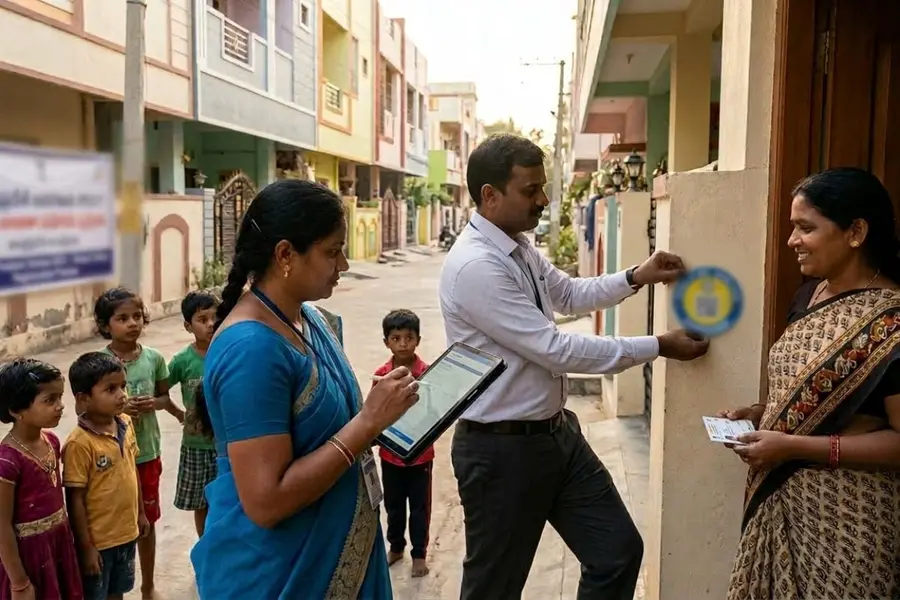
The first phase of Census 2027 officially moves into high gear today across Madhya Pradesh, Chhattisgarh, and Haryana. This crucial house-listing operation involves door-to-door visits by trained enumerators to collect data on housing conditions and amenities to shape future welfare policies.
Census 2027 Field Operations Begin in Key States
Starting today, May 2, 2026, thousands of government enumerators are hitting the streets in Madhya Pradesh, Chhattisgarh, and Haryana to begin the House-listing and Housing Census (HLO). While the 15-day self-enumeration window closed yesterday for these regions, the physical verification and manual data collection phase is now active. This is the first time India is conducting a completely digital census, with officials using mobile applications to record data in real-time. If you have already completed the online self-enumeration process, your interaction with the official will be brief, as you only need to provide your 11-digit Self-Enumeration ID (SE ID) for a quick digital sync. For those who did not use the portal, the enumerator will conduct a full interview to fill out the digital form on your behalf.
Understanding the 33 Questions of the House Listing Phase
During this house-listing phase, citizens are required to answer a set of 33 specific questions. These queries are designed to map the standard of living and the availability of basic infrastructure across the nation. You will be asked about the predominant material of your house’s floor, wall, and roof, the ownership status of the property, and the number of dwelling rooms. Additionally, the questionnaire covers household amenities such as the main source of drinking water, availability of a kitchen, type of fuel used for cooking, and access to a toilet. It is important to note that this phase focuses on the “house” and “household assets” rather than detailed personal biography. A new and significant addition to this year’s census is a question regarding the main cereal consumed in the household, aimed at refining food security and PDS distribution strategies.
Your Privacy and the Census Act Protection
Many residents express concern over the privacy of the data being shared with government officials. However, all information collected during the Census 2027 is strictly confidential under the Census Act of 1948. The law ensures that your personal details cannot be used as evidence in a court of law, nor can they be accessed by the police or the Income Tax department for investigation purposes. The data is used solely for statistical analysis and for the planning of public services like hospitals, schools, and transportation. Furthermore, the administration has clarified that enumerators will never ask for sensitive financial information such as bank account details, OTPs, or Aadhaar numbers during this exercise. Always verify the identity of the person at your door by checking their official photo ID card issued by the Registrar General of India.
Challenges and Cooperation in Urban Centers
The administration in states like Haryana and Madhya Pradesh has identified gated colonies and high-rise apartments as areas where access can sometimes be a bottleneck. District Collectors have issued specific instructions to Resident Welfare Associations (RWAs) to facilitate the entry of census staff. Obstruction of census duty is a legal offense, but officials are prioritizing a cooperative approach. In cities like Gurgaon, Indore, and Raipur, the government is deploying teachers and local municipal staff as enumerators because they are familiar with the local geography and enjoy high public trust. If your house is locked when the enumerator visits, they are mandated to leave a contact slip or visit at least three times at different intervals to ensure that no household is left out of this massive nation-building project.
Takeaways for Citizens in Active States
- Field operations for the Housing Census in MP, Chhattisgarh, and Haryana run from May 1 to May 30, 2026.
- The exercise is entirely digital; officials use a mobile app and will not ask for any physical documents or OTPs.
- Households that self-enumerated online must share their 11-digit SE ID to complete the process quickly.
- The 33-question survey covers housing materials, amenities like water and electricity, and household assets like TVs or internet.
Frequently Asked Questions
What happens if I missed the self-enumeration deadline?
If you did not fill out the details online by April 30, don’t worry. An enumerator will visit your home physically during the month of May to collect all the necessary information through a face-to-face interview.
Are questions about caste included in the house-listing phase?
No. The current phase starting today only asks if the head of the household belongs to a Scheduled Caste or Scheduled Tribe. The comprehensive caste enumeration will take place during the second phase, the Population Enumeration, scheduled for February 2027.
How do I identify a genuine census enumerator?
A genuine enumerator will always carry a valid photo identity card issued by the government and will be using the official “HLO App” on their smartphone. They will never ask for your bank details or any financial passwords.