




























Monsoon chaos is once again dominating social media as rain, waterlogging, traffic jams and difficult commutes create highly shareable scenes across Indian cities. From Bengaluru’s rainy Monday commute to recent Delhi waterlogging, ordinary travel disruptions are turning into viral videos.
Why monsoon traffic videos attract instant attention
Rain-related traffic videos have become a familiar part of India’s monsoon season. Every year, clips showing flooded roads, vehicles moving through water, stranded commuters and unusually long traffic queues spread rapidly across Instagram, X and other platforms.
The reason is simple. These videos capture situations that millions of people recognise from their own daily lives. A commuter stuck for an hour in traffic, a road disappearing under rainwater or a vehicle struggling through a flooded street can quickly become relatable content.
The trend is particularly visible in large urban centres where heavy rainfall immediately affects road movement. On August 17, Bengaluru was expected to see cloudy conditions and spells of rain, with the weather potentially affecting the Monday commute.
For social media users, a difficult commute can therefore become both a personal experience and a piece of widely shared city content.
Bengaluru rain highlights the daily commute problem
Bengaluru regularly becomes the subject of viral traffic discussions because of its heavy dependence on road transport and congestion on major corridors.
Recent social media discussions around the city’s Outer Ring Road and Hebbal area have highlighted the frustration of commuters dealing with prolonged traffic. Residents have shared videos and posts about vehicles remaining stuck for extended periods, with discussions also focusing on lane discipline, roadside stopping and other factors that worsen congestion.
Rain adds another layer to the problem.
When roads become wet, vehicle speeds can fall, visibility can reduce and minor disruptions can create longer queues. Two-wheelers may also slow down because of slippery surfaces, while cars and buses require additional braking distance.
The result is often a traffic situation that looks far more dramatic on camera than it would during a normal dry-weather commute.
Delhi waterlogging turns neighbourhood roads into viral scenes
Delhi-NCR has also seen repeated examples of rain-related videos spreading online. Recent reports and social media posts have shown waterlogging affecting roads and local movement after relatively short spells of rain.
A video shared by residents of West Patel Nagar earlier this month described streets becoming heavily waterlogged after around half an hour of rain. The footage and accompanying discussion focused on how quickly ordinary roads can become difficult to use.
Such clips often generate two types of reactions. Some viewers respond with humour because of the familiar monsoon experience, while others question drainage systems, road construction and civic preparedness.
The discussion becomes particularly relevant for people living in densely populated neighbourhoods, where even a limited stretch of waterlogged road can affect autos, buses, two-wheelers, pedestrians and local businesses.
Mumbai’s monsoon disruptions remain a familiar viral subject
Mumbai is another city where rainfall and transport disruptions frequently become social media stories. The city’s dependence on suburban trains, buses and busy arterial roads means that heavy rain can affect large numbers of commuters simultaneously.
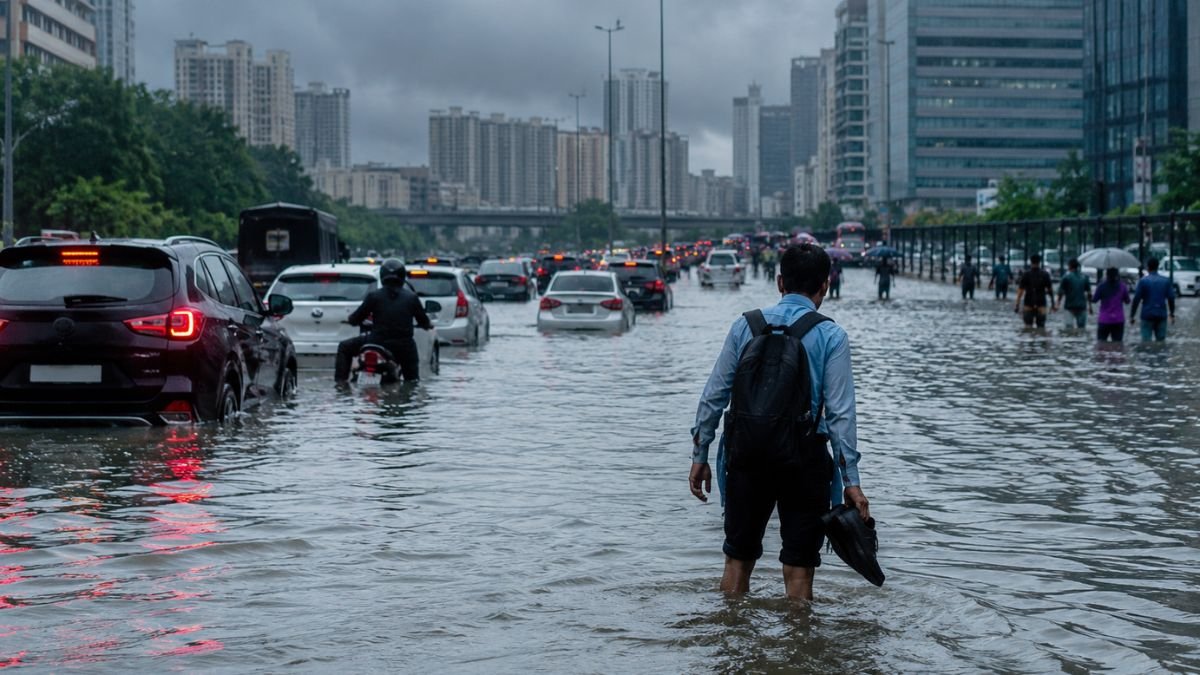
Previous monsoon disruptions have produced videos of passengers dealing with flooded railway areas, delayed services and waterlogged roads. Reports from the Mumbai region have also documented commuters wading through flooded areas when services were suspended during periods of heavy rainfall.
The visual nature of these incidents makes them especially suitable for social media. A line of people walking through water, vehicles moving slowly through a flooded road or traffic stretching for kilometres can communicate the scale of a disruption within seconds.
However, the popularity of such footage does not necessarily mean every viral clip represents the current situation. Location, date and original source need to be checked before a video is treated as a current news development.
Why ordinary rain becomes social media content
One major reason behind the popularity of monsoon videos is their relatability.
Unlike many breaking news stories, rain and traffic affect people’s routines directly. Office workers, students, delivery workers, shopkeepers, drivers and daily commuters all experience the consequences.
A short video showing a flooded road can therefore attract comments from people who have faced similar conditions elsewhere. Users frequently tag friends, compare cities and share their own experiences.
Humour also plays an important role. Phrases describing roads as swimming pools or comparing traffic to a parking lot are commonly used in online conversations about heavy rain.
This creates a cycle where real disruption becomes visual content, visual content generates reactions and reactions encourage more people to share similar footage.
Tier-2 and Tier-3 cities are part of the same trend
The viral monsoon phenomenon is not limited to Mumbai, Delhi and Bengaluru.
As smartphone access and social media usage continue to expand, residents of smaller cities and towns are increasingly documenting local weather and infrastructure problems themselves.
For Tier-2 and Tier-3 audiences, these videos can be particularly useful. A locally recorded clip may show road conditions, waterlogging or traffic problems that are not immediately covered by major news organisations.
At the same time, local footage requires the same verification standards as any other social media content. A video should not automatically be assumed to be from the location or date mentioned in its caption.
For news publishers, identifying the original footage and confirming when and where it was recorded is essential before publishing it as a current incident.
Viral videos can reveal genuine civic problems
Not every viral rain video is simply entertainment.
Repeated footage of waterlogging in the same areas can point towards broader questions about drainage capacity, road design, construction activity and maintenance.
In some cases, rain also exposes weaknesses in infrastructure that may not be visible during dry weather. Potholes become harder to see under water, open drains become hazardous and damaged road surfaces can create additional risks for two-wheeler riders.
Recent heavy rain has even affected major infrastructure projects. On August 17, a portion of the Ganga Expressway in Uttar Pradesh reportedly developed a depression and pothole-like damage following heavy rainfall, prompting concerns about vehicle safety on the affected section.
That makes viral footage more than a source of entertainment. When properly verified, it can document conditions that deserve attention from authorities and the public.
The danger of sharing old or misleading rain videos
The biggest problem with viral monsoon content is context.
A video from one city can easily be reposted with another city’s name. Footage from an earlier monsoon can also resurface during a new rainfall event and be presented as current.
News organisations and social media users should therefore check several basic details before sharing a dramatic clip.
The original upload date, location, weather conditions, landmarks, road signs and independent reports can help establish whether the footage is genuine and current.
This is especially important when a video is being used to make claims about government action, infrastructure failure or an emergency.
What commuters should remember during heavy rain
Viral videos can make difficult journeys look entertaining, but the conditions shown in them can be dangerous.
Drivers should reduce speed on wet roads and avoid entering waterlogged stretches when the depth cannot be assessed. Two-wheeler riders should be particularly cautious around submerged potholes, open drains and slippery surfaces.
Pedestrians should avoid walking through flowing water where possible. Water can conceal uneven surfaces, electrical hazards or open manholes.
Commuters should also check official weather and traffic updates before starting a journey when heavy rain is forecast.
The bigger story behind the viral videos is not simply that Indians are filming monsoon chaos. It is that smartphones have made everyday urban problems visible almost instantly. As long as the footage is verified and responsibly presented, these videos can help show how rain affects real people and where city infrastructure continues to face pressure.
Key Takeaways
- Monsoon rain and traffic disruptions are generating highly shareable videos across Indian cities.
- Bengaluru, Delhi-NCR and Mumbai regularly see social media attention around rain-related commuting problems.
- Viral footage should be verified for its original date, location and context before being treated as current news.
- Repeated waterlogging and traffic videos can also highlight genuine infrastructure and civic-management concerns.
FAQ
Q1. Why do rain and traffic videos go viral in India?
They show highly relatable situations that affect millions of commuters. Flooded roads, traffic jams and difficult journeys also create visually striking content that encourages users to comment and share.
Q2. Which Indian cities are commonly featured in viral monsoon traffic videos?
Mumbai, Delhi-NCR and Bengaluru frequently attract attention, although similar videos are increasingly being shared from Tier-2 and Tier-3 cities.
Q3. Can viral rain videos be used as news evidence?
They can provide useful visual information, but the footage should first be verified for its original source, date and location.
Q4. What should commuters do during severe rain?
Check official weather and traffic updates, slow down, avoid unknown waterlogged roads and remain cautious around flooded areas, especially when travelling on two-wheelers.