





























Nag Panchami 2026 is being observed across India on Monday, August 17, and the festival has once again brought snakes, wildlife rescue stories and viral videos into public focus. As social media fills with snake-related content, experts and rescuers continue to stress one message: admire these reptiles from a safe distance and leave handling to trained professionals.
Nag Panchami 2026 Brings Snakes Into Public Conversation
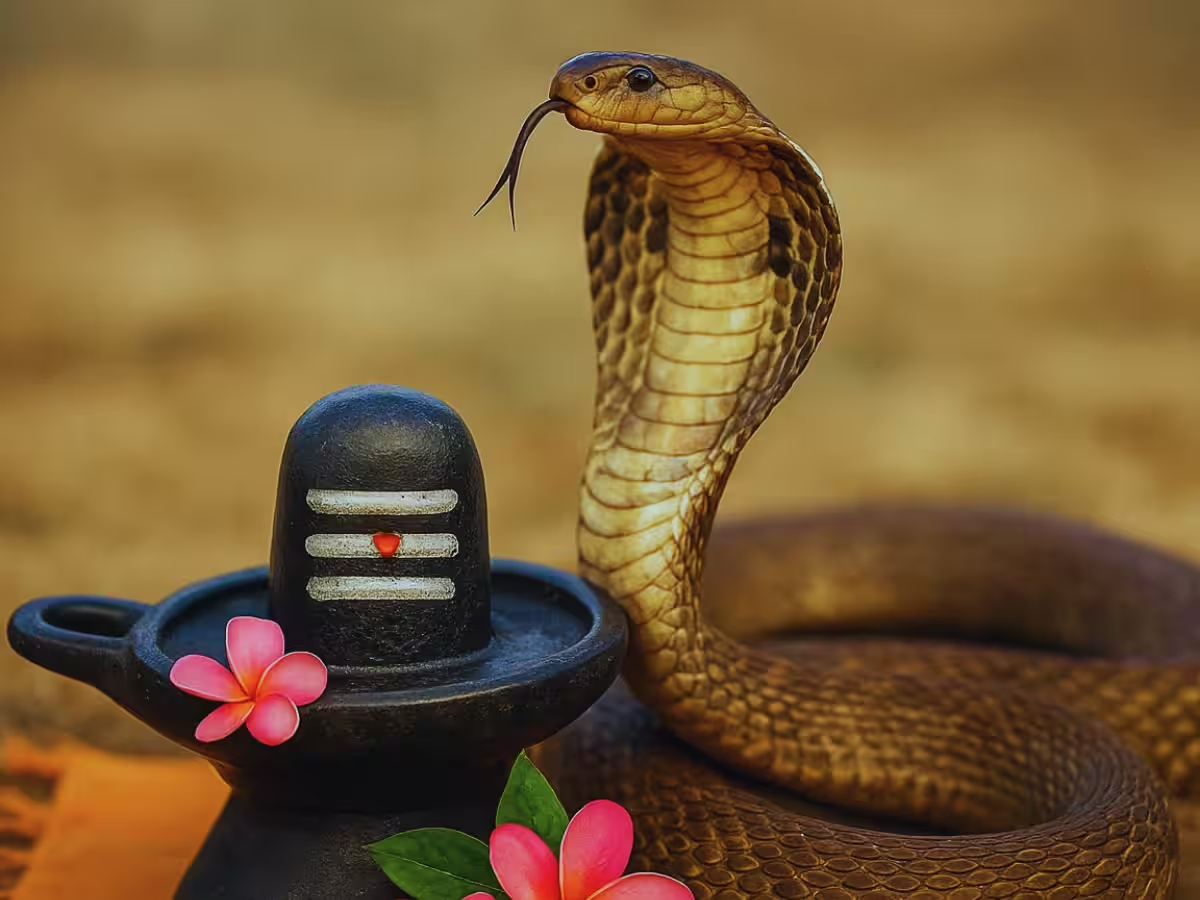
Nag Panchami is observed on the fifth day of the Shukla Paksha during Shravan and is traditionally dedicated to the worship of serpent deities. In 2026, the festival falls on August 17. The occasion has deep religious and cultural significance across different parts of India, although customs vary by region.
The festival also coincides with the monsoon season, when snake sightings can become more common around homes, farms, drains and other areas where reptiles seek shelter. This seasonal connection often results in videos of snake rescues appearing on social media.
For viewers, such clips can be fascinating. For rescuers, however, a snake inside a house or crowded public area can be a serious situation requiring experience, appropriate equipment and knowledge of the species involved.
Viral Snake Rescue Videos Highlight Monsoon Encounters
Snake rescue videos have repeatedly attracted attention online in recent months. In July 2026, a video from Bihar showed wildlife rescuer Janaki Devi, popularly known as the Snake Lady of Valmikinagar, rescuing a nearly 10-foot king cobra from a home. The incident drew attention because of both the size of the snake and the rescuer’s careful handling.
Other snake sightings have also generated online interest. A large Indian rock python estimated at around 12 feet was filmed crossing a walking trail at Hyderabad’s Kasu Brahmananda Reddy National Park in July. Visitors reportedly watched from a safe distance while the reptile moved across the path.
These incidents show why snake videos tend to spread quickly. A large reptile appearing unexpectedly in a residential area, road, park or agricultural field can create an immediate visual moment that people want to record and share.
Why Snake Sightings Increase During Monsoon
The monsoon creates conditions that can bring snakes closer to human settlements. Heavy rainfall can flood burrows and hiding places, while vegetation grows rapidly and prey such as rodents become active around homes and agricultural areas.
This does not mean that snakes are deliberately looking for people. In many cases, they are simply moving in search of shelter, food or a safer location.
For residents in Tier-2 and Tier-3 cities, villages and agricultural regions, this is particularly relevant. Homes located close to fields, open drains, water bodies or vegetation can sometimes experience unexpected encounters.
A viral video may make the encounter look entertaining, but the actual situation can be dangerous if untrained people attempt to catch, corner or attack the animal.
Social Media Can Spread Awareness and Misinformation
The popularity of snake videos has another side. Not every dramatic clip shared online is genuine, recent or correctly labelled.
Earlier in 2026, CyberPeace Foundation fact-checked a widely circulated video that supposedly showed a gigantic multi-headed snake emerging from water in Vrindavan. Its investigation found that the video had been generated using artificial intelligence.
This is important during festivals such as Nag Panchami, when snake-related content can receive increased attention. Old videos may be reposted as new incidents, footage from another state or country may be given a misleading location, and digitally manipulated clips may be presented as real wildlife sightings.
Viewers should therefore check the original uploader, date, location and context before believing or sharing an extraordinary claim.
Nag Panchami Traditions and Wildlife Concerns
Snake worship is an established part of Nag Panchami traditions, with devotees praying to Nag Devta and observing regional rituals. Some communities have historically included live snakes in public religious practices.
A widely circulated example from Bihar’s Samastipur district in 2025 showed devotees carrying live snakes during a Nag Panchami fair. The videos generated significant discussion online, including concerns about the treatment of the reptiles. Reports also raised questions about practices such as defanging snakes, which is harmful and illegal.
The distinction between religious reverence and unsafe handling is important. Worshipping the symbolic representation of a snake does not require people to physically approach or capture a wild snake.
Clay, metal or other traditional representations can also be used for worship without putting people or wildlife at risk.
What People Should Do If They See a Snake
The safest response to a snake sighting is to maintain distance and avoid sudden movements. People should not attempt to pick up the snake, surround it for photographs or videos, throw objects at it or try to kill it.
If the snake has entered a house, residents should move to a safe location and contact a trained local snake rescuer or appropriate wildlife authority.
Children and pets should also be kept away from the area. If a snake is outside and has a clear route to move away, people should avoid blocking its path.
Recording a video from a safe distance may be possible, but getting closer for a better social media clip is not worth the risk of a bite.
Why Responsible Sharing Matters on Nag Panchami
The popularity of snake videos can be useful when it encourages people to learn about reptiles and understand their role in ecosystems. Snakes help regulate populations of rodents and other animals and form an important part of many food chains.
At the same time, viral content can unintentionally encourage dangerous behaviour. A person watching an experienced rescuer handle a snake may assume that the same technique can be attempted without training.
That is why videos should be viewed as awareness content rather than instructions for amateur snake catching.
Nag Panchami 2026 offers an opportunity to look beyond the viral moment and understand the relationship between people, wildlife and traditional culture. Respect for snakes does not mean getting close to them. In many situations, the most responsible response is simply to give the animal space and allow trained professionals to handle the rescue.
Key Takeaways
- Nag Panchami 2026 is being observed on August 17 across India.
- Monsoon conditions can contribute to more snake encounters around homes and other human settlements.
- Viral snake videos should be checked carefully because old, misleading and AI-generated footage can circulate online.
- People should never attempt to catch or handle venomous snakes without professional training.
FAQ
Q1. When is Nag Panchami 2026?
Nag Panchami 2026 is being observed on Monday, August 17.
Q2. Why are snake sightings common during the monsoon?
Rain can disturb underground shelters and burrows, while increased vegetation and rodent activity can bring snakes closer to human settlements.
Q3. Should people try to rescue a snake themselves?
No. Snake handling can be dangerous, particularly when the species has not been identified. A trained local snake rescuer or appropriate wildlife authority should be contacted.
Q4. Are all viral snake videos on social media genuine?
No. Some videos are old, incorrectly labelled or digitally manipulated. In January 2026, a viral multi-headed snake video claimed to be from Vrindavan was fact-checked as AI-generated.
(Internal keywords: Nag Panchami 2026, Nag Panchami viral videos, snake rescue videos, viral snake video India, Nag Panchami today, snake sightings during monsoon, snake rescue India, Nag Panchami significance, snake safety tips, viral wildlife videos)