



























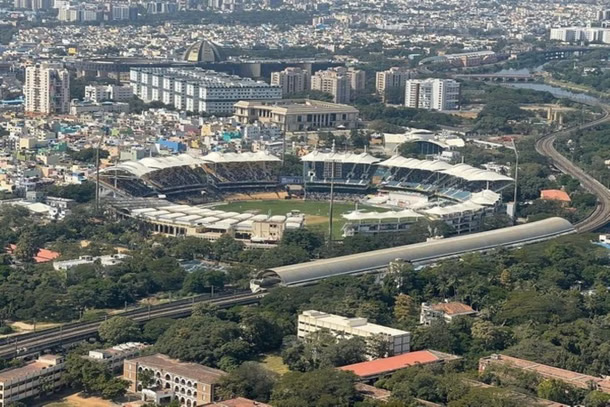
Chennai’s Smart City expansion is reshaping urban living through improved roads, public spaces, digital governance, smart mobility, and better civic infrastructure. While several projects have already enhanced everyday life, ongoing initiatives continue to improve transportation, public safety, and access to essential services
The topic is evergreen with a current affairs angle, not linked to a single breaking event. The article below follows an explanatory and informative style based on verified developments under Chennai’s urban infrastructure and Smart City initiatives.
Chennai’s Smart City Expansion Is Transforming Daily Life
Chennai’s Smart City expansion has become one of the most significant urban development efforts in southern India. Over the past few years, the city has introduced a range of infrastructure projects aimed at improving transportation, public spaces, digital governance, environmental sustainability, and citizen services. These initiatives are designed to make daily life more convenient while preparing Chennai for future population growth and economic development.
The Smart Cities Mission has encouraged the integration of technology with urban planning rather than simply building new infrastructure. From redesigned streets and improved pedestrian facilities to digital public services and modern surveillance systems, Chennai’s transformation is gradually becoming visible across different parts of the city.
Smart Roads and Better Urban Mobility
One of the major objectives of Chennai’s Smart City projects has been improving mobility. Several roads have been upgraded with better drainage systems, wider footpaths, organized parking spaces, improved street lighting, and safer pedestrian crossings. These changes aim to reduce congestion while making streets safer for both motorists and pedestrians.
The city has also focused on creating more accessible public transport connections. Chennai Metro Rail continues to expand through multiple phases, improving connectivity between residential neighborhoods, business districts, educational institutions, and commercial centers. Integration between metro services, suburban rail, Metropolitan Transport Corporation buses, and other transport options is gradually making daily commuting more efficient.
Smart traffic management systems, synchronized traffic signals, and digital monitoring have also been introduced at several busy intersections. These technologies help traffic authorities respond more effectively to congestion and improve vehicle movement during peak hours.
Public Spaces and Green Infrastructure Receive Attention
A key aspect of Chennai’s Smart City expansion involves improving public spaces rather than focusing only on transportation. Parks, public squares, lakes, heritage zones, and waterfront areas have undergone redevelopment to encourage recreation and community engagement.
Projects around important public areas have included better landscaping, seating facilities, energy-efficient lighting, public toilets, and accessible pathways for senior citizens and people with disabilities. These improvements enhance both the appearance and usability of urban spaces.
Environmental sustainability has also become an important priority. Rainwater harvesting systems, lake restoration projects, tree plantation drives, and improved waste management practices contribute to making the city more resilient against climate-related challenges such as flooding and rising temperatures.
The combination of environmental planning and urban infrastructure reflects a broader effort to improve quality of life while addressing long-term sustainability concerns.
Digital Governance Makes Civic Services More Accessible
Digital governance has emerged as another important pillar of Chennai’s Smart City initiatives. Citizens can now access many municipal services through online portals and mobile applications instead of visiting government offices for routine tasks.
Property tax payments, birth and death certificate applications, grievance registration, trade licenses, and various civic services have increasingly shifted to digital platforms. This reduces paperwork, improves transparency, and saves time for residents.
Command and control centers established under Smart City projects help authorities monitor urban services more efficiently. These centers collect information from multiple departments, allowing quicker responses to emergencies, traffic disruptions, and public service issues.
Digital systems also support better coordination between civic agencies responsible for sanitation, water supply, disaster management, and public safety.
Public Safety and Disaster Preparedness Improve
Chennai has historically faced challenges related to heavy rainfall, flooding, and cyclones. Smart City planning increasingly incorporates disaster preparedness alongside everyday urban management.
Modern surveillance systems, emergency communication networks, flood monitoring technologies, and improved drainage infrastructure strengthen the city’s ability to respond during extreme weather events. Early warning systems and real-time monitoring allow authorities to take faster preventive action when necessary.
Improved LED street lighting across many neighborhoods has enhanced nighttime visibility while reducing electricity consumption. Better-lit streets also contribute to public safety for pedestrians and commuters.
These developments are particularly important for a rapidly growing metropolitan city where efficient emergency response plays a critical role in protecting lives and infrastructure.
Challenges Remain Despite Steady Progress
While Chennai’s Smart City expansion has delivered visible improvements, several challenges remain. Rapid urbanization continues to increase pressure on roads, housing, public transport, and civic infrastructure. Some redevelopment projects have taken longer than expected because of land acquisition issues, utility relocation, and construction delays.
Maintaining upgraded infrastructure is equally important. Smart systems require regular maintenance, technical expertise, and continued investment to remain effective over the long term.
Traffic congestion during peak hours continues to affect several parts of the city despite ongoing improvements. Water management, waste disposal, and affordable housing also remain priorities as Chennai continues to expand.
Urban planners emphasize that smart city development is an ongoing process rather than a one-time project. Continuous planning and citizen participation will remain essential for achieving sustainable urban growth.
What Residents Can Expect in the Future
Chennai is expected to continue investing in integrated transport systems, digital governance, sustainable infrastructure, and climate resilience over the coming years. Future projects are likely to focus on expanding metro connectivity, improving multimodal transport, strengthening flood management systems, and enhancing public spaces.
As technology becomes more integrated into city management, residents can expect faster delivery of civic services, improved traffic management, better environmental monitoring, and more efficient public infrastructure.
The city’s Smart City expansion demonstrates how urban planning, technology, and citizen-focused governance can work together to improve everyday life while supporting long-term economic growth.
Key Takeaways
- Chennai’s Smart City expansion focuses on transportation, digital governance, sustainability, and public infrastructure.
- Metro expansion, smart traffic systems, and improved roads are enhancing urban mobility.
- Digital civic services are making government services faster and more accessible for residents.
- Continued investment and infrastructure maintenance will be essential for long-term urban development.
Frequently Asked Questions
Q1. What is Chennai’s Smart City project?
It is a comprehensive urban development initiative aimed at improving infrastructure, transportation, digital governance, public spaces, and sustainability through projects implemented under the Smart Cities Mission.
Q2. How does the Smart City expansion benefit residents?
Residents benefit from improved roads, better public transport, digital government services, enhanced public spaces, smarter traffic management, and improved public safety.
Q3. Is Chennai Metro part of the Smart City development?
While Chennai Metro is implemented under a separate infrastructure program, it complements Smart City objectives by improving sustainable urban mobility and connectivity.
Q4. What challenges still exist despite Smart City projects?
Traffic congestion, infrastructure maintenance, flood management, rapid urbanization, and timely completion of projects remain ongoing challenges for the city.