



























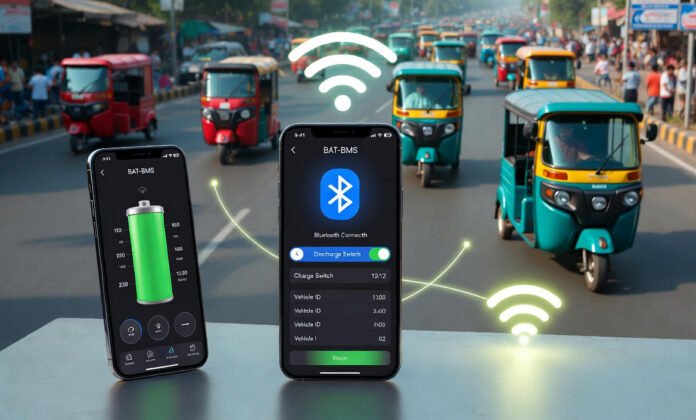
The Indian government has ordered the removal of several mobile apps allegedly used to remotely disable electric vehicles, particularly e-rickshaws. The move follows concerns over vehicle safety, cybersecurity, and the misuse of Battery Management System applications.
The government crackdown on apps that can remotely disable electric vehicles marks a significant step in India’s efforts to improve automotive cybersecurity. The Ministry of Electronics and Information Technology (MeitY) has directed Apple and Google to remove multiple mobile applications that were allegedly being misused to switch off batteries in certain electric vehicles. The decision follows viral videos showing e-rickshaws being immobilised through smartphone apps, raising concerns about passenger safety, driver livelihoods, and cybersecurity in India’s rapidly growing EV sector.
Why Did the Government Take Action?
The action came after authorities found that some Battery Management System (BMS) applications could be misused to remotely disable battery-operated vehicles. While these apps were originally designed to help users monitor battery health, voltage, temperature, and charging status, reports suggested that they could also be exploited to cut power to certain vehicles using Bluetooth connectivity.
According to government officials, the apps were being used to interfere with e-rickshaws and other battery-powered vehicles without the knowledge or consent of drivers. Such incidents raised serious concerns because a vehicle losing power unexpectedly on public roads could create safety risks for passengers and other road users.
As a result, MeitY instructed Apple and Google to remove the identified applications from their app stores while investigations continue. Authorities have also indicated that additional apps with similar capabilities may come under scrutiny.
Which Apps Are Under Scrutiny?
Government notices have identified several Battery Management System applications that allegedly interacted with vulnerable EV battery systems. Reports have named apps such as BAT-BMS, SMART BMS, JBD-BMS, XiaoXiangElectrics, JKBMS, Lossigy, and Epoch-i-ion among those targeted for removal.
Officials have clarified that the concern is not simply the existence of battery management software. Many legitimate BMS applications are used by manufacturers and technicians for diagnostics and maintenance. The issue arises when poorly secured systems allow unauthorised users to connect with nearby vehicles and alter battery functions.
Authorities believe stronger authentication, improved encryption, and stricter access controls are necessary to prevent misuse while allowing genuine battery monitoring features to continue.
What Is a Battery Management System?
A Battery Management System, commonly called a BMS, is an electronic system that monitors and manages rechargeable batteries in electric vehicles. It tracks battery health, charging cycles, temperature, voltage, and overall performance.
Many modern BMS units communicate with smartphone applications using Bluetooth, enabling owners or service technicians to monitor battery conditions. However, cybersecurity experts say that if these systems rely on default passwords or weak authentication methods, they can become vulnerable to unauthorised access.
The recent controversy has highlighted that cybersecurity is now just as important as mechanical safety in connected vehicles. As EV adoption increases across India, protecting digital systems has become a critical part of ensuring road safety.
Why This Matters for India’s EV Industry
India is witnessing rapid growth in electric mobility, particularly in the two-wheeler and e-rickshaw segments. Thousands of drivers depend on battery-operated vehicles for their daily income, making system reliability essential.
If connected vehicle technologies can be manipulated by unauthorised users, the consequences extend beyond inconvenience. A vehicle unexpectedly shutting down in traffic could lead to accidents, business losses, and reduced public confidence in electric mobility.
Industry experts believe the incident will encourage manufacturers to adopt stronger cybersecurity standards for Battery Management Systems. Government consultations with automakers are already focusing on reviewing existing safeguards and strengthening protection against digital threats.
A Broader Push for Automotive Cybersecurity
The government’s response reflects a broader shift toward regulating cybersecurity in connected vehicles. Earlier discussions around digital safety mainly focused on protecting user data and privacy. The recent incidents have demonstrated that cyber vulnerabilities can also create real-world physical risks.
Experts recommend that vehicle manufacturers implement secure pairing methods, unique authentication credentials, encrypted communications, and regular software updates to reduce the possibility of misuse.
For consumers, the incident serves as a reminder to use only official manufacturer applications, update software regularly, and avoid sharing sensitive access credentials. As India’s EV ecosystem continues to expand, cybersecurity is expected to become an integral part of future vehicle regulations and safety standards.
Key Takeaways
- The Centre has directed app stores to remove several applications allegedly capable of remotely disabling certain electric vehicles.
- The issue mainly involves vulnerable Battery Management Systems used in some e-rickshaws and battery-operated vehicles.
- Authorities are reviewing cybersecurity practices across the automotive sector to improve vehicle safety.
- The incident has highlighted the growing importance of digital security as India’s electric vehicle market expands.
FAQs
Q1. Why did the government remove these EV-related apps?
The apps were allegedly being misused to remotely disable certain electric vehicles, creating safety and cybersecurity concerns.
Q2. Were all electric vehicles affected?
No. Reports indicate that the issue involved specific Battery Management Systems used in certain battery-operated vehicles, particularly some e-rickshaws.
Q3. What is a Battery Management System (BMS)?
A BMS is an electronic system that monitors and manages an electric vehicle’s battery, including charging, temperature, voltage, and overall health.
Q4. What happens next?
The government is reviewing automotive cybersecurity standards and consulting with manufacturers to strengthen protection against unauthorised access to connected vehicle systems.
(Internal Keyword Suggestions: government EV app crackdown, Battery Management System India, e-rickshaw cybersecurity, EV battery apps, MeitY EV apps, remote vehicle shutdown, electric vehicle cybersecurity, EV safety India, BMS apps, connected vehicle security)