































Hyderabad has emerged as one of India’s fastest-growing startup destinations, attracting founders, investors, and technology companies. With lower operating costs, strong infrastructure, government support, and a growing talent pool, the city is increasingly competing with traditional startup hubs such as Bengaluru, Mumbai, and Delhi NCR.
Hyderabad Tech Expansion Gains National Attention
Hyderabad’s tech expansion has become a major talking point in India’s startup ecosystem. Over the past decade, the city has transformed from a growing IT destination into a leading innovation and entrepreneurship center. While Bengaluru continues to dominate India’s startup landscape, Hyderabad has steadily built a reputation as a practical and scalable alternative for founders.
The city is home to major technology parks, multinational corporations, startup incubators, and research institutions. Areas such as HITEC City, Gachibowli, Financial District, and Nanakramguda have witnessed rapid commercial growth, creating a strong ecosystem for both early-stage startups and established businesses.
Industry observers note that Hyderabad’s growth has not happened overnight. It is the result of consistent infrastructure development, policy support, and strategic investments that have made the city attractive for long-term business expansion.
Lower Costs Give Startups a Competitive Advantage
One of the biggest reasons startups are choosing Hyderabad over traditional hubs is cost efficiency. Office rentals, employee housing, and operational expenses are generally lower compared to Bengaluru and Mumbai.
For early-stage startups operating with limited funding, reducing expenses can significantly extend financial runway. Affordable commercial spaces allow founders to allocate more capital toward product development, hiring, and market expansion.
Employees also benefit from a relatively lower cost of living. Housing costs, daily commuting expenses, and overall lifestyle costs remain more manageable compared to several larger metropolitan cities.
This cost advantage has become increasingly important as startups focus on sustainable growth rather than aggressive spending. Investors are also paying closer attention to companies that demonstrate operational efficiency from the beginning.
Strong Infrastructure Supports Business Growth
Infrastructure remains one of Hyderabad’s strongest advantages. The city has invested heavily in roads, flyovers, commercial districts, and digital connectivity over the years.
The Outer Ring Road and other major transportation networks have improved accessibility across business zones. Hyderabad’s international airport is widely regarded as one of India’s most efficient aviation hubs, offering strong domestic and international connectivity for businesses.
Reliable power supply, expanding office spaces, and modern technology parks further strengthen the city’s appeal. Unlike some older urban centers where infrastructure struggles to keep pace with growth, Hyderabad has generally managed expansion in a more planned manner.
For startups looking to scale operations without facing severe infrastructure bottlenecks, this environment offers a significant advantage.
Government Initiatives Strengthen the Startup Ecosystem
Government support has played a major role in Hyderabad’s rise as a technology hub. Telangana has actively promoted entrepreneurship through innovation-focused policies and startup development programs.
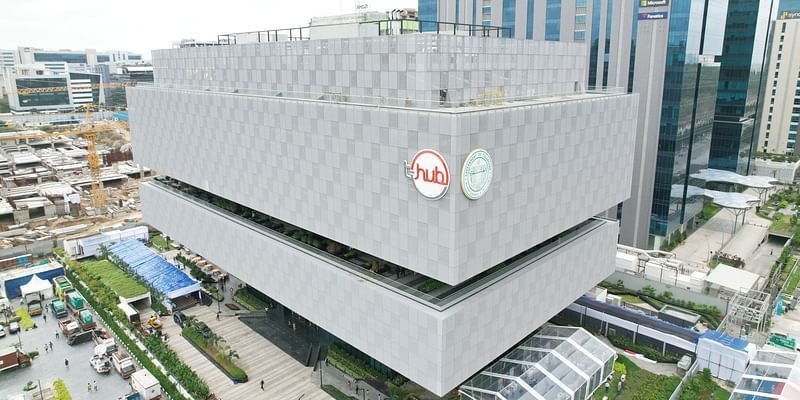
One of the most recognized initiatives is T-Hub, which serves as a startup incubator and innovation ecosystem connecting entrepreneurs, investors, mentors, and industry leaders. The city also hosts several accelerators, research centers, and innovation programs focused on emerging technologies.
Government agencies have consistently emphasized sectors such as artificial intelligence, cybersecurity, life sciences, fintech, deep technology, and software development. These efforts have helped attract startups working on both consumer and enterprise solutions.
A supportive policy environment often reduces regulatory uncertainty, making it easier for founders to establish and expand their businesses.
Growing Talent Pool Fuels Innovation
A strong talent pipeline is another key reason behind Hyderabad’s startup growth. The city hosts several leading engineering colleges, universities, and technical institutions that produce thousands of graduates every year.
Major global technology companies already operating in Hyderabad have created a large pool of experienced professionals. Many employees who gain expertise at multinational firms later join startups or launch their own ventures.
The rise of remote work and hybrid employment models has also benefited Hyderabad. Professionals who previously preferred traditional startup hubs now have greater flexibility in choosing where they live and work.
As startups increasingly compete for skilled engineers, product managers, designers, and data specialists, access to quality talent remains one of Hyderabad’s most valuable assets.
Can Hyderabad Challenge India’s Traditional Startup Leaders?
Despite its impressive growth, Hyderabad still trails Bengaluru in overall startup volume, venture capital activity, and ecosystem maturity. However, the gap has narrowed considerably over recent years.
Many startups now view Hyderabad as a city where they can build and scale without facing some of the cost and congestion challenges associated with larger startup hubs. The combination of infrastructure, affordability, talent, and policy support continues to strengthen the city’s position.
Rather than replacing Bengaluru or Mumbai, Hyderabad is becoming an important part of India’s multi-city innovation landscape. As technology sectors such as AI, SaaS, fintech, healthtech, and deep tech continue to expand, Hyderabad is expected to play an even larger role in shaping India’s startup future.
Key Takeaways
• Hyderabad is attracting startups through lower operational and living costs.
• Strong infrastructure and planned urban development support business growth.
• Government initiatives such as T-Hub have strengthened the innovation ecosystem.
• A growing talent pool and expanding tech sector continue to boost startup activity.
FAQs
Q1. Why are startups moving to Hyderabad?
Startups are attracted by lower costs, modern infrastructure, government support, and access to skilled technology professionals.
Q2. Is Hyderabad competing with Bengaluru as a startup hub?
Yes. While Bengaluru remains India’s largest startup ecosystem, Hyderabad has emerged as a strong alternative for founders seeking cost-efficient growth.
Q3. What industries are growing in Hyderabad?
Artificial intelligence, fintech, SaaS, cybersecurity, healthtech, life sciences, and enterprise technology are among the fastest-growing sectors.
Q4. What role does T-Hub play in Hyderabad’s startup ecosystem?
T-Hub supports entrepreneurs through incubation, mentorship, networking opportunities, and connections with investors and industry partners.
(Keywords: Hyderabad Tech Expansion, Hyderabad Startup Ecosystem, Startups in Hyderabad, T-Hub Hyderabad, Telangana Innovation Policy, Hyderabad IT Growth, Indian Startup Hubs, Hyderabad Business Environment)