






















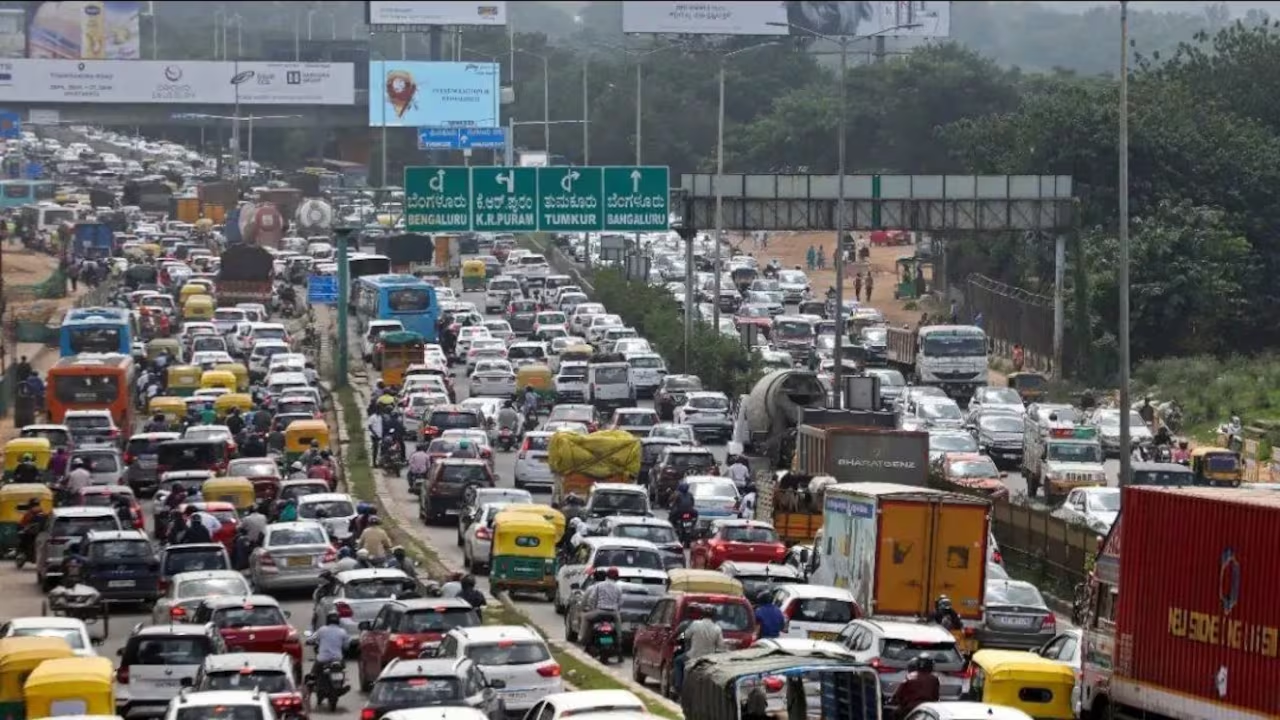
Bengaluru continues to face one of India’s most challenging urban traffic situations despite multiple policy interventions. While authorities have introduced new mobility measures, public transport upgrades, and infrastructure projects, the city’s growing population and vehicle ownership remain major hurdles to smoother commuting.
Bengaluru Traffic Crisis Remains a Major Urban Challenge
The Bengaluru traffic crisis remains a key concern for residents, businesses, and policymakers in 2026. Often referred to as India’s technology capital, Bengaluru has experienced rapid urban growth over the past decade. However, infrastructure development has struggled to keep pace with the increasing number of vehicles on city roads.
According to various government and transport estimates, Bengaluru adds thousands of new vehicles every month. The city’s expanding IT corridors, residential hubs, and commercial districts have significantly increased daily travel demand. Areas such as Outer Ring Road, Silk Board Junction, Marathahalli, Whitefield, Hebbal, and Electronic City continue to witness heavy congestion during peak hours.
The result is longer travel times, higher fuel consumption, increased pollution, and reduced productivity for commuters.
New Mobility Policies Introduced in Recent Years
To address growing congestion, city authorities and state agencies have introduced several mobility-focused initiatives. These include metro rail expansion, bus network improvements, intelligent traffic management systems, and investments in non-motorized transport infrastructure.
One of the biggest developments has been the continued expansion of the Namma Metro network. New metro corridors aim to connect key residential and employment zones, reducing dependence on private vehicles. Several sections that were previously underserved by mass transit are gradually being integrated into the city’s public transport ecosystem.
Authorities have also increased the use of smart traffic signals and AI-assisted traffic monitoring systems. These technologies help optimize signal timing and improve traffic flow at major intersections.
In addition, efforts have been made to encourage cycling and pedestrian-friendly infrastructure in selected urban zones.
Has Public Transport Started Delivering Results?
Public transport remains central to Bengaluru’s long-term traffic management strategy. The expansion of metro connectivity has already begun influencing commuting patterns in several areas.
Many office-goers who previously relied on private cars or two-wheelers are increasingly shifting to metro services where connectivity is available. This transition has helped reduce vehicle pressure on some major corridors.
The Bengaluru Metropolitan Transport Corporation (BMTC) has also continued to strengthen bus services through route optimization and improved fleet management. Airport connectivity, feeder bus services, and last-mile transport solutions have received greater attention.
However, experts argue that public transport adoption remains limited in areas where metro coverage is incomplete. Last-mile connectivity challenges still discourage some commuters from fully transitioning away from private vehicles.
As a result, the benefits of public transport expansion are visible but not yet transformative across the entire city.
Why Congestion Continues Despite Infrastructure Investments
While mobility policies have shown progress, Bengaluru’s traffic challenges are rooted in deeper structural issues.
Vehicle ownership continues to rise due to increasing incomes and urban expansion. Many residents still consider personal vehicles more convenient than public transport, particularly for flexible travel schedules.
The city’s road network also faces physical constraints. Widening roads in densely developed urban areas is often difficult due to land acquisition challenges and existing development patterns.
Another factor is the concentration of employment hubs. Large numbers of workers travel simultaneously toward major IT and business districts during peak hours, creating recurring bottlenecks.
Urban planners frequently point out that infrastructure projects alone cannot solve congestion without coordinated land-use planning, public transport integration, and demand management strategies.
Technology and Smart Mobility Solutions Gain Importance
Technology is becoming a critical component of Bengaluru’s mobility strategy.
Traffic monitoring systems now generate real-time data that helps authorities identify congestion hotspots and respond more efficiently. Navigation platforms also assist commuters by suggesting alternative routes and travel times.
Ride-sharing services, app-based mobility platforms, and electric vehicle adoption are gradually changing commuting behavior. Flexible work arrangements introduced by many companies have further reduced peak-hour pressure in some corridors.
The growing focus on electric buses and sustainable mobility solutions also aligns with broader environmental goals. While these measures may not immediately eliminate congestion, they contribute to creating a more efficient urban transport system over time.
What Lies Ahead for Bengaluru’s Mobility Future?
The effectiveness of Bengaluru’s new mobility policies should be viewed as a long-term process rather than an immediate solution. Metro expansion, smart traffic systems, and improved public transport are producing measurable benefits in selected areas.
However, the city’s population growth, economic expansion, and rising vehicle ownership continue to offset many of these gains.
Experts believe meaningful improvement will depend on faster transit expansion, better integration between transport modes, stronger last-mile connectivity, and sustained investment in public infrastructure.
For now, Bengaluru’s traffic crisis remains a work in progress. The policies introduced in recent years are making a difference, but the scale of the challenge means that lasting results will require continued commitment and coordinated urban planning.
Key Takeaways
• Bengaluru continues to face severe traffic congestion despite multiple policy interventions.
• Metro expansion and smart traffic management systems are showing positive results in several corridors.
• Rising vehicle ownership and rapid urban growth remain major obstacles.
• Long-term success depends on stronger public transport integration and sustainable urban planning.
FAQs
Q1. Why is Bengaluru’s traffic problem so severe?
Rapid urban growth, increasing vehicle ownership, concentrated employment hubs, and infrastructure limitations have contributed to persistent congestion.
Q2. Has Namma Metro reduced traffic congestion?
The metro has improved mobility in connected areas and encouraged some commuters to shift away from private vehicles, but citywide impact is still evolving as expansion continues.
Q3. What role does technology play in traffic management?
Smart signals, AI-based monitoring systems, and real-time traffic analytics help improve traffic flow and support better transportation planning.
Q4. Can Bengaluru solve its traffic crisis completely?
Experts believe congestion can be significantly reduced through integrated public transport, better urban planning, and continued infrastructure investment, though complete elimination is unlikely in the near future.
(Keywords: Bengaluru Traffic Crisis 2026, Bengaluru Traffic News, Namma Metro Expansion, Bengaluru Public Transport, Smart Mobility Bengaluru, Traffic Management System, Bengaluru Infrastructure, Urban Mobility India)