



























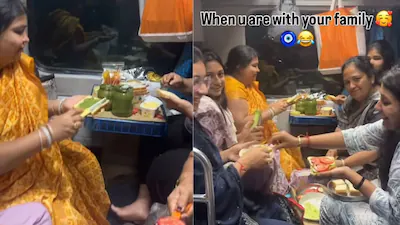
A viral reel from the Nagpur to Mumbai train route has reignited the train food vs home tiffin debate across India. Passengers online are divided between convenience and comfort, turning a routine travel choice into a widely discussed cultural conversation.
The train food vs home tiffin debate has once again taken over social media after a viral video from the Nagpur to Mumbai route showed passengers comparing pantry meals with homemade food. The clip, widely shared on platforms like Instagram, has sparked fresh reactions from daily commuters, long-distance travelers, and families across the country.
Viral Reel From Nagpur Mumbai Route Sparks Online Buzz
The recent spike in the train food vs home tiffin debate can be traced to a short video filmed on a train connecting Nagpur and Mumbai. The reel humorously captured passengers opening their tiffin boxes filled with homemade dishes while others unpacked standard railway meals.
What made the video relatable was its simplicity. It showed a familiar scene that millions of Indian travelers have experienced. Within hours, users began sharing their own preferences, turning the clip into a wider conversation about travel habits and food choices.
This is not the first time such a topic has trended, but the regional connection and everyday context helped it resonate strongly with audiences, especially in Tier-2 cities where train travel remains a primary mode of transport.
Why Home Tiffin Still Holds Emotional Value
The home tiffin culture in India is deeply rooted in comfort, hygiene, and familiarity. For many families, carrying homemade food during travel is almost a ritual. It ensures quality control and reflects a sense of care, especially for longer journeys.
Passengers often associate home-cooked meals with better taste and health benefits compared to packaged or pantry food. In smaller cities and towns, where food habits are more traditional, this preference remains strong.
The viral debate has highlighted how food is not just about convenience but also about emotional connection. Many users commented that opening a home-packed meal during a train journey feels like carrying a piece of home along with them.
Train Food Convenience and Changing Preferences
On the other side of the train food vs home tiffin debate, many travelers defended railway food for its convenience. Ordering meals on trains has become easier with digital services and improved catering systems.
For solo travelers, working professionals, or those on short trips, carrying food may not always be practical. Train pantry services and online food delivery options at stations offer flexibility and save time.
The quality of train food has also seen gradual improvements over the years, though perceptions vary widely. Some passengers reported satisfactory experiences, while others still expressed concerns about hygiene and consistency.
This shift reflects changing travel behavior, especially among younger passengers who prioritize ease and accessibility over traditional habits.
Social Media Amplifies Everyday Conversations
The role of social media in amplifying the train food vs home tiffin debate cannot be ignored. Platforms like YouTube and Instagram have turned everyday experiences into viral discussions.
Short-form videos often capture relatable moments, which quickly gain traction among users. In this case, the combination of humor, nostalgia, and practicality made the topic widely shareable.
Such trends also reveal how digital platforms are shaping public opinion around routine choices. What was once a personal preference has now become a topic of public debate, with users openly sharing opinions, tips, and experiences.
What This Debate Says About Indian Travel Culture
The renewed interest in the train food vs home tiffin debate reflects a broader shift in Indian travel culture. While traditional practices continue to hold value, modern conveniences are steadily influencing behavior.
In Tier-2 and Tier-3 regions, this balance is more visible. Travelers often combine both approaches by carrying light snacks from home while relying on train services for main meals.
The discussion also highlights how small, everyday decisions can spark larger conversations when amplified through digital platforms. It is not just about food but about how Indians adapt to changing lifestyles while staying connected to familiar habits.
Takeaways
• The train food vs home tiffin debate has resurfaced after a viral reel from the Nagpur Mumbai route
• Home-cooked meals remain popular due to emotional value and perceived hygiene
• Train food is gaining acceptance for its convenience and accessibility
• Social media is turning everyday travel choices into nationwide conversations
FAQs
Why is the train food vs home tiffin debate trending again
A viral reel from a Nagpur to Mumbai train journey sparked fresh discussions on social media, leading to widespread engagement.
Is train food in India considered safe
Train food quality has improved over time, but opinions still vary depending on personal experiences and routes.
Why do people prefer home tiffin during travel
Home tiffin is associated with better hygiene, taste, and emotional comfort, especially for long journeys.
Can passengers order food on trains now
Yes, passengers can order meals through railway catering services and online platforms at selected stations.