








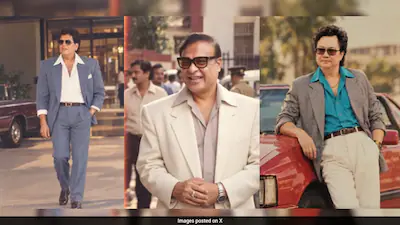
The 1980s AI photo trend is turning ordinary selfies into retro portraits across Indian social media. From Bollywood-inspired looks to family album recreations, users are using generative AI to imagine how their present-day photographs might have looked four decades ago.
What Is the 1980s AI Photo Trend?
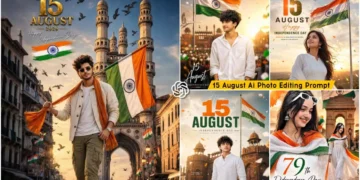
The 1980s AI photo trend involves uploading a modern photograph to an AI image generator and asking it to recreate the person or scene with the visual characteristics associated with the 1980s.
Unlike a conventional vintage filter, generative AI can change several parts of an image at once. Users can request period-specific clothing, hairstyles, jewellery, backgrounds, lighting and camera effects while asking the tool to retain recognizable facial features.
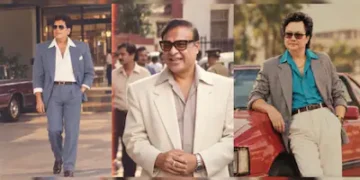
The resulting images often have warm tones, soft focus, film grain, dramatic studio lighting and fashion associated with the decade. In India, many of the prompts are influenced by Bollywood, old family portraits and regional cultural styles.
The trend has spread across Instagram, WhatsApp and X, with users posting their generated portraits and encouraging friends to create their own versions.
Why Retro Bollywood Looks Are Driving the Trend
The popularity of the 1980s AI photo trend in India is closely connected to nostalgia around Hindi cinema and the visual style of old photographs.
Users are not limited to simply asking for an old-looking picture. Prompts can describe the appearance of an 1980s Bollywood hero or heroine, an old film magazine cover, a wedding album or a studio portrait.
Typical requests include colourful clothing, large hairstyles, traditional jewellery, dramatic poses and analogue film effects. These details make the images instantly recognizable as belonging to a particular period.
Several Indian celebrities have also participated in the trend, helping push the format beyond ordinary social media users. The Indian Express reported that personalities including Kiara Advani, Sidharth Malhotra, Ravi Kishan, Shruti Haasan and Ameesha Patel joined the wider 1980s AI-photo wave.
Indian Users Are Adding Regional Flavours
The trend has also moved beyond a generic Bollywood interpretation of the 1980s.
Users are creating AI images inspired by regional clothing, homes, weddings and family photography. One example reported by The Times of India involved Kerala-style 1980s portraits, with prompts describing sarees, mundus, traditional jewellery, Kerala homes and period hairstyles.
This regionalisation is important because nostalgia does not look the same across India.
A family portrait from Kerala can have a very different visual identity from one created around a Punjabi wedding, a Maharashtrian family gathering or a North Indian studio photograph. AI image tools allow users to specify those details rather than relying on a single generic retro preset.
For users in Tier-2 and Tier-3 cities, this makes the trend particularly adaptable. Instead of recreating a celebrity-inspired photograph, someone can ask AI to imagine an old family wedding, school portrait or neighbourhood studio photograph.
From Instagram Reels to WhatsApp Family Groups
The trend has spread partly because the images are easy to share.
Users have been posting their AI-generated portraits on Instagram feeds and Stories, while some are encouraging others to participate through interactive features such as Add Yours. This turns an individual image into a chain of user-generated posts.
WhatsApp has also become a natural destination for the trend because family members can compare generated photographs with genuine pictures from the 1980s.
That comparison creates another layer of entertainment. Parents and grandparents may have actual photographs from the period, while younger users can create AI versions of themselves as if they had lived through the decade.
The difference between a real archival photograph and an AI recreation can therefore become part of the conversation.
Cricket and Public Figures Join the 1980s AI Craze
The trend has also moved beyond entertainment and ordinary social media accounts.
Indian cricket players were featured in an AI-generated 1980s makeover shared around the Indian team’s activities. The Times of India reported that players including Jasprit Bumrah, Vaibhav Sooryavanshi and Shreyas Iyer were among those shown in retro-style images, with the portraits featuring elements such as bell-bottom jeans, large sunglasses and period hairstyles.
Political figures have also participated in the trend. Hindustan Times reported that leaders including Kiren Rijiju, Shashi Tharoor and Chirag Paswan joined the broader 1980s social media wave. However, the examples were not identical: some shared genuine photographs from the 1980s, while others used AI-generated imagery.
That distinction matters because an authentic archival photograph and an AI recreation are fundamentally different types of visual evidence.
Why AI Makes the Trend Different From Old Filters
Traditional photo filters generally apply effects to an existing image. They can adjust colour, contrast, grain and lighting, but they do not necessarily reconstruct the entire visual context of another period.
Generative AI can do much more.
A user can provide a current photograph and ask an AI tool to change the clothing, hairstyle, setting, accessories and photographic treatment while retaining elements of the person’s appearance.
That flexibility is one reason the 1980s trend has generated so many variations. One prompt can produce a Bollywood-style portrait, while another can create a family wedding photograph or a college picture.
Tools such as ChatGPT, Google Gemini and Meta AI have been cited in reports covering the trend.
Privacy Concerns Are Growing Alongside the Trend
The popularity of AI-generated portraits has also brought attention to privacy and misuse risks.
Delhi Police issued a warning on September 23, cautioning users about uploading personal photographs to AI tools. According to a report by The Times of India, the warning highlighted the possibility of images being misused for fake profiles, blackmail and cyber fraud.
This does not mean every AI photo trend carries the same level of risk. The concern is about what can happen when personal images are uploaded to online services without users understanding how those services handle or retain data.
Users should therefore think carefully before uploading photographs containing children, identity documents, private locations or other sensitive information.
It is also worth remembering that an AI-generated image can look convincing without being historically accurate. A generated photograph should not automatically be treated as evidence that an event, person or scene actually existed.
The Line Between Nostalgia and False Memories
The 1980s AI photo trend is largely being used for entertainment, but its realistic appearance creates a broader issue.
AI-generated images can make fictional scenes look like genuine archival photographs. A person could create an image showing themselves at a location they never visited or with people they never met.
India Today recently examined how the retro-AI trend has moved beyond simple nostalgia into areas involving consent, political communication, reputation and historical distortion.
That distinction becomes especially important when generated images are shared without labels or context.
For casual social media use, the image may simply be a creative experiment. But once the same image is presented as a real historical photograph, viewers may interpret it differently.
Why the Trend Could Continue Beyond the 1980s
The popularity of the format suggests that the appeal is not necessarily limited to one decade.
AI can recreate the visual language of different periods, and users can combine those styles with regional memories, family stories and popular culture.
The current 1980s wave follows earlier AI image trends, including Studio Ghibli-inspired portraits and AI-generated figurines. Indian users have repeatedly adopted these formats and adapted them to local culture.
What makes the current trend particularly engaging is the combination of technology and nostalgia. Users are not simply applying an effect to a photograph. They are using AI to imagine an alternate version of their own past.
That is why the trend has moved quickly from individual experiments to celebrity posts, family photographs, regional recreations and wider social media challenges.
Takeaways
- The 1980s AI photo trend uses generative AI to recreate modern photographs with retro visual characteristics.
- Indian users are adapting the trend to Bollywood, family albums, weddings and regional cultural styles.
- Celebrities, cricket players and public figures have helped expand the trend across Indian social media.
- Police and technology experts have highlighted privacy, misuse and misinformation risks associated with uploading and sharing AI-generated images.
FAQ
What is the 1980s AI photo trend?
It is a social media trend in which users upload modern photographs to AI image generators and ask them to recreate the images with 1980s-style clothing, hairstyles, backgrounds, lighting and film effects.
Which AI tools can create 1980s-style photos?
Reports covering the trend have mentioned tools including ChatGPT, Google Gemini and Meta AI. The exact features and image-generation capabilities of these platforms can change over time.
Why has the trend become popular in India?
The format combines AI-generated imagery with nostalgia around Bollywood, old family photographs, fashion and regional culture. Users can also customise prompts around specific Indian settings and traditions.
Is it safe to upload personal photos to AI tools?
Users should consider privacy before uploading personal photographs. Delhi Police recently warned that images shared with AI tools can potentially be misused for fake profiles, blackmail or cyber fraud. Users should avoid uploading sensitive photographs unless they understand the platform’s privacy practices.