




























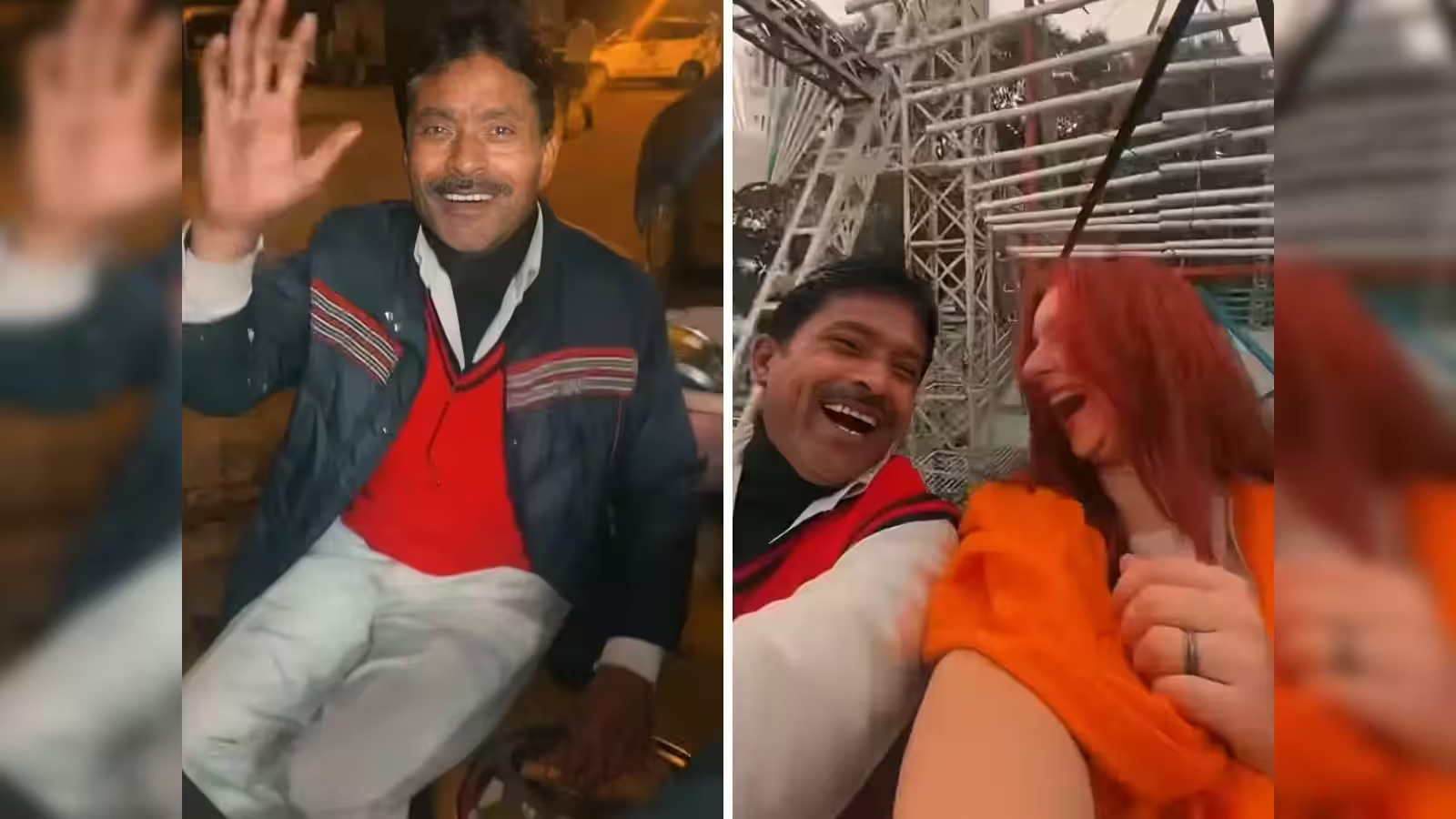
Social media in India is once again filled with viral videos ranging from funny celebrity reactions to unexpected public incidents. On September 2, several clips are drawing attention online, showing how quickly ordinary moments, fan interactions and unusual incidents can become national talking points.
Suryakumar Yadav’s Simple Fan Gesture Wins Attention
One of the more positive viral videos making the rounds today features Indian cricketer Suryakumar Yadav interacting with a fan. A video shared on social media shows the India batter stopping to sign an autograph on a female supporter’s T-shirt.
The moment itself was brief, but it attracted attention because of the personal nature of the interaction. Instead of simply walking past, Suryakumar took time to acknowledge the fan and fulfil her request.
The video was reported by the Free Press Journal on September 2, with social media users praising the cricketer for making the interaction memorable for the supporter.
Such clips often travel quickly because they offer a different side of public figures. Sports stars are frequently seen in highly controlled match environments, while short fan videos can make their interactions appear more spontaneous and relatable.
For Indian audiences, particularly cricket followers outside major metropolitan cities, these moments tend to perform strongly because they combine celebrity interest with an everyday human interaction.
Kubbra Sait’s ‘Magnetic’ Forehead Experiment Gets Laughs
Actress Kubbra Sait also attracted attention with a light-hearted Instagram video posted around September 1. In the clip, she appears to experiment with a small metallic object that seems to remain attached to the centre of her forehead.
Her surprised and amused reactions became a major part of the appeal of the video. Rather than presenting the experiment as a serious scientific demonstration, the actress turned the unusual moment into a piece of social-media humour.
The video was reported by UrbanAsian on September 1 and described as a quirky discovery that entertained her followers.
The clip also highlights one of the reasons celebrity reels can become viral even without a major news event behind them. A simple visual gag, an exaggerated reaction or an unexpected everyday experience can be enough to trigger shares and comments.
However, viewers should not automatically interpret an entertaining social-media experiment as scientific evidence. Viral content is often designed primarily for amusement rather than accuracy.
Ujjain Video Leads to Police Action
Not every viral video currently circulating online is funny or harmless. In Ujjain, Madhya Pradesh, police arrested a self-styled Aghori after a video allegedly showing him consuming flesh from a burning funeral pyre circulated widely on social media.
According to the Times of India report published on September 2, police said the video was allegedly filmed at the Chakratirth cremation ground and later uploaded to social media. The accused, identified as Kali alias Nand Giri, was arrested following a complaint concerning the incident.
Police registered a case under Section 301 of the Bharatiya Nyaya Sanhita, concerning trespass at burial places and indignity to human remains, along with provisions of the Arms Act, according to the report.
The case demonstrates an important distinction in viral news coverage. A video becoming popular online does not make every claim surrounding it automatically true. Authorities still need to investigate the footage, establish what happened and determine responsibility.
For audiences sharing disturbing videos, this is also a reminder that reposting graphic or unverified material can amplify an incident without providing proper context.
Indian Dance Video Sparks Debate Over Public Behaviour
Another recent viral video involving an Indian woman has triggered a very different conversation. A video showing a woman practising Thiruvathira, a traditional Kerala dance, inside a Costco store in the United States was widely circulated online.
The Economic Times reported that the clip crossed 1.7 million views after being posted on Instagram and later shared on X. The video triggered opposing reactions, with some viewers criticising the public setting while others defended the act as an expression of culture.
The debate is bigger than the video itself. Social-media users often disagree about where cultural expression ends and public etiquette begins. A clip recorded in a public or commercial space can quickly become a discussion about behaviour, identity and social norms.
This type of viral controversy also shows why context matters. A short video may capture only a few seconds of an incident and leave out information about what happened before or after the recording.
Why Unexpected Public Moments Go Viral So Quickly
The common thread between these videos is unpredictability. People are more likely to stop scrolling when something does not look like an ordinary social-media post.
A cricketer unexpectedly stopping for a fan, an actor reacting to a strange experiment, an unusual incident at a cremation ground or a cultural performance in an unexpected location all create an immediate reason to watch.
Short-form platforms reward this kind of content because users can understand the basic situation within seconds. Reactions, surprise, humour and controversy also encourage comments, which can push videos into wider circulation.
But virality and newsworthiness are not the same thing. A video may receive millions of views without representing a major public issue. Conversely, a serious incident can become viral because of its shocking visuals before reliable information becomes available.
For news organisations, the challenge is therefore not simply identifying what is trending. It is determining what can be responsibly reported.
What Viewers Should Check Before Sharing Viral Videos
The speed of social media makes verification particularly important. A video that appears to be new may actually be several months or years old. It may also have been recorded in another city or country and presented with a misleading caption.
The safest approach is to look for the original uploader, check when the video was first posted and compare the claim with reporting from established news organisations or official authorities.
This is especially important when a viral clip involves crime, violence, religion, public officials or allegations against a particular person.
The Ujjain case is a useful example of why this matters. The video itself circulated online, but the facts surrounding the incident required police investigation and reporting before they could be presented as news.
Similarly, the Costco dance controversy shows how a short clip can generate strong opinions even when viewers may not have access to the full context.
Viral Videos Are Becoming a Daily News Cycle
India’s social-media ecosystem now produces a continuous stream of clips that can move from Instagram or X into mainstream news coverage within hours. Celebrity reactions, cricket moments, public incidents and unusual everyday situations can all enter the same viral cycle.
The appeal is understandable. These videos are immediate, visual and easy to share. They also give audiences something to discuss beyond conventional headlines.
At the same time, responsible consumption requires a degree of caution. Not every trending clip deserves to be treated as breaking news, and not every caption attached to a viral video is reliable.
For readers, the best approach is simple: enjoy the funny moments, but verify serious claims before believing or sharing them.
Key Takeaways
- Suryakumar Yadav’s autograph interaction with a fan is among the positive viral moments reported on September 2.
- Kubbra Sait’s quirky forehead experiment has attracted attention for its humorous reactions.
- A disturbing Ujjain video led to police action after it circulated widely on social media.
- A viral Thiruvathira dance video at a Costco store has sparked debate over public behaviour and cultural expression.
Frequently Asked Questions
What viral videos are trending in India today?
Among the videos reported around September 2 are Suryakumar Yadav’s interaction with a fan, Kubbra Sait’s humorous forehead experiment and the Ujjain incident that resulted in police action. Other recently viral clips are also generating discussion across social-media platforms.
Why do unexpected public moments become viral?
Unexpected moments create curiosity and emotional reactions. Humour, surprise, controversy and celebrity involvement can encourage viewers to watch, comment on and share short videos, helping them spread rapidly across social platforms.
Can every viral video be considered genuine news?
No. A viral video may be old, edited, taken out of context or accompanied by a misleading caption. Serious claims should be checked against credible news reports, official statements and the original source before being treated as factual.
Why should people be careful while sharing disturbing viral videos?
Sharing disturbing footage can spread unverified claims and may cause unnecessary harm to people involved. It is better to verify the incident and provide context rather than forwarding a graphic clip simply because it is trending.
(Internal keyword suggestions: viral videos today India, trending videos India today, viral video India September 2026, funny viral videos India, latest viral videos, trending Instagram videos India, viral social media videos, Indian viral news, funny reactions viral video, unexpected public moments, viral videos on X, trending reels India)