





























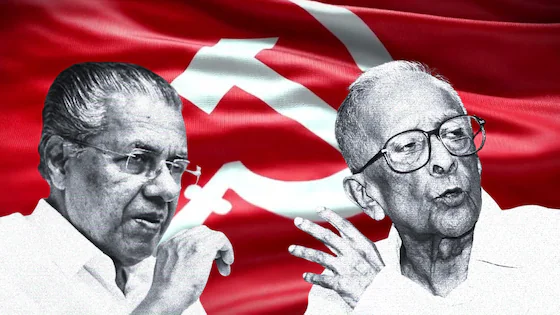
For the first time in nearly 50 years, India currently has no Communist-led state government. The development marks a major shift in the country’s political landscape and reflects the long-term decline of Left parties in regions where they once dominated electoral politics.
The absence of a Communist government in India has become a significant political moment after the Left Democratic Front lost power in Kerala, leaving no Indian state under Communist rule. For decades, Communist parties played a powerful role in shaping labor politics, land reforms and welfare-based governance across several regions, particularly West Bengal, Kerala and Tripura.
Political analysts describe this transition as more than an electoral setback. It represents a broader structural change in Indian politics where regional identity parties, nationalism-focused politics and welfare-driven populism have increasingly replaced traditional ideological movements.
The decline of Communist influence has happened gradually over many years, but the current situation marks the first time since the 1970s that no state government in India is officially led by Communist parties.
Communist Parties Once Dominated Key Indian States
Communist politics once held strong influence in several parts of India, particularly among workers, farmers, trade unions and intellectual groups. The Communist Party of India (Marxist), commonly known as CPI(M), became one of the country’s most organized political forces during the late twentieth century.
West Bengal remained under Left Front rule for 34 continuous years between 1977 and 2011, making it one of the world’s longest democratically elected Communist governments. Kerala also frequently alternated between Left-led and Congress-led coalitions, while Tripura saw long periods of Communist administration.
These governments were known for policies focused on land redistribution, labor rights, public education and welfare programs. In many regions, Left parties built deep organizational networks through unions, student groups and grassroots political structures.
However, political conditions gradually changed as economic priorities, voter expectations and communication methods evolved over time.
Why Communist Influence Declined Across India
One of the biggest reasons behind the decline of Communist governments in India has been the transformation of voter priorities. Younger voters increasingly focus on employment opportunities, infrastructure, entrepreneurship and aspirational politics rather than traditional ideological debates.
Economic liberalization during the 1990s also reshaped India’s political and business environment. As private sector growth expanded, many urban and middle-class voters shifted toward development-focused narratives promoted by national and regional parties.
In West Bengal, the Left Front eventually faced criticism over industrial policy controversies and governance fatigue after decades in power. The rise of the Trinamool Congress under Mamata Banerjee significantly weakened Communist influence in the state.
Tripura experienced a similar shift when the BJP successfully expanded its organizational presence and replaced the long-standing Left government in 2018.
Even in Kerala, where the Left retained relevance longer than elsewhere, changing demographics and political competition gradually reduced its broader national influence.
Rise of Regional and Identity-Based Politics
Another major factor behind the decline of Communist governments has been the rise of regional and identity-driven political movements across India.
Many voters now prioritize caste representation, regional identity, welfare delivery and leadership personalities over ideological alignment. Political campaigns have also become increasingly media-driven and personality-focused, areas where traditional Communist parties struggled to adapt effectively.
Regional parties such as the Trinamool Congress, DMK, BRS and AAP built stronger emotional and local identity connections with voters. Meanwhile, the BJP expanded aggressively using nationalism, welfare outreach and digital communication strategies.
Communist parties, in contrast, often continued relying on older organizational methods centered around cadre politics and union structures. While these networks remained influential in specific pockets, they gradually lost broader mass appeal among younger and urban voters.
Political analysts say the ideological language used by Left parties also became less relatable to audiences exposed to social media-driven political communication.
Trade Union Politics No Longer Drives Elections
Historically, trade unions played a central role in strengthening Communist parties across industrial regions and public sector institutions. Workers’ movements once shaped electoral outcomes in factories, ports and labor-intensive urban centers.
However, India’s economic transition toward technology, services and informal employment reduced the influence of traditional union-based politics. Gig economy workers, startup employees and private sector professionals often do not engage with political structures in the same way industrial labor groups once did.
The shrinking influence of organized labor directly impacted Communist parties, whose voter base historically depended heavily on union networks.
At the same time, welfare politics expanded across party lines. Policies once strongly associated with Left governments, such as subsidized food, healthcare support and social welfare schemes, are now promoted by many mainstream parties across ideological backgrounds.
This reduced the uniqueness of Communist policy positioning in the public imagination.
Can Communist Parties Rebuild Political Relevance?
Despite the decline, political experts believe Communist parties are unlikely to disappear completely from Indian politics. Left parties still maintain influence within student politics, labor organizations and intellectual circles.
Kerala continues to remain their strongest operational base, while pockets of influence survive in parts of West Bengal, Tripura, Tamil Nadu and Telangana.
The future challenge for Communist parties will involve adapting to modern political communication, addressing aspirational youth concerns and rebuilding grassroots trust in rapidly changing social environments.
Some analysts argue that issues such as unemployment, inequality and labor rights could eventually create opportunities for Left-oriented politics again. However, rebuilding electoral relevance will require organizational reinvention rather than dependence on historical legacy alone.
The current absence of a Communist government therefore represents not only a political milestone, but also a reflection of how dramatically India’s democratic priorities have evolved over the last five decades.
Key Takeaways
- India currently has no Communist-led state government for the first time in decades
- Communist influence declined due to changing voter priorities and regional politics
- Economic liberalization and identity-based politics reshaped electoral dynamics
- Left parties still retain limited influence through unions and student organizations
FAQ
Which states were historically ruled by Communist governments?
West Bengal, Kerala and Tripura were the main states where Communist parties held significant political power.
Why did Communist parties lose influence in India?
Changing voter expectations, rise of regional parties, economic reforms and weaker union influence contributed to the decline.
Are Communist parties still active in India?
Yes. Left parties remain active in elections, trade unions, student politics and ideological movements despite reduced electoral power.
Has India completely rejected Left politics?
Not entirely. Many welfare policies and labor-related discussions still reflect ideas historically associated with Left politics.