





























India has called for stronger human oversight in the military use of artificial intelligence during a United Nations Security Council debate on November 24, 2026. The statement highlighted concerns about autonomous weapons, manipulated data, cyber threats and the need to keep human judgement central to decisions involving warfare.
India Raises AI Security Concerns at United Nations
India has urged the international community to adopt a human-centric approach towards artificial intelligence in military operations, warning that emerging technologies could create new security risks if deployed without adequate safeguards.
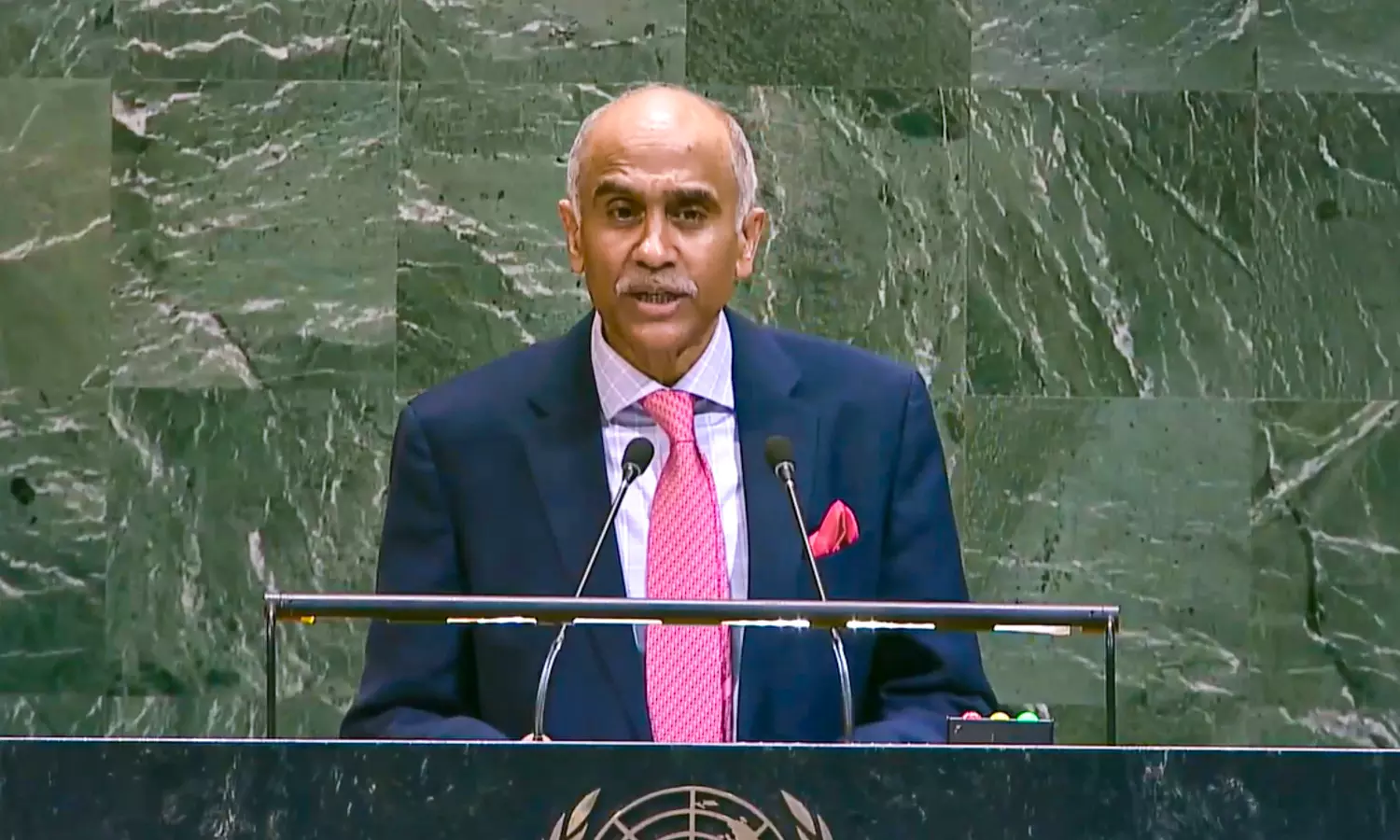
India’s Permanent Representative to the United Nations, Ambassador Harish Parvathaneni, delivered the statement during a high-level UN Security Council open debate convened by Latvia on November 24. The discussion focused on Conflict Resolution in an Era of Rapid Technological Change.
According to the statement published by India’s Permanent Mission to the United Nations, rapid developments in artificial intelligence, autonomous systems and digital technologies are changing the nature of modern conflicts.
India emphasised that technological progress should support peace and security rather than create additional risks. It also stressed that human judgement and oversight must remain central to military applications of AI.
The statement comes amid growing international discussions about autonomous weapons, AI-assisted targeting, cyber operations and the possibility of machines influencing decisions that could result in loss of human life.
Why India Says Human Judgement Must Remain Central in Military AI
One of the main concerns raised by India is the possibility of transferring critical military decisions from human authorities to automated systems.
Artificial intelligence can process large volumes of information, identify patterns and assist military personnel in analysing complex situations. These capabilities may improve operational efficiency, intelligence assessment and threat detection.
However, military decisions often involve circumstances that cannot be understood through data alone. Identifying a potential target, assessing the presence of civilians and determining whether an operation complies with international law require context and human judgement.
AI systems can produce inaccurate results when they rely on incomplete, outdated or manipulated information. If military personnel depend excessively on such outputs, incorrect recommendations could influence operational decisions.
India therefore maintains that responsibility for the use of military systems must remain with humans. An algorithm should not become the final authority in decisions involving the use of force.
This distinction is particularly important in situations where military operations develop rapidly and information changes within minutes.
Autonomous Weapons: What Are the Risks?
Autonomous weapons are systems that can select and engage targets without further human intervention after activation.
These systems are different from conventional weapons that require a human operator to identify and approve each target. Depending on their design, autonomous systems can use sensors, software and automated processes to identify potential threats and carry out certain actions.
The development of such weapons has raised legal, ethical and humanitarian concerns internationally.
One major issue is the difficulty of ensuring that autonomous systems consistently distinguish between combatants and civilians. International humanitarian law requires parties to armed conflicts to distinguish between military targets and civilians.
Human commanders must also consider whether an attack is proportionate and whether necessary precautions have been taken to protect civilians.
An automated system may process visual information and other data, but interpreting the wider circumstances of an armed conflict is considerably more complicated.
The United Nations has repeatedly highlighted these concerns. Secretary-General António Guterres has called for a legally binding international instrument to prohibit and regulate autonomous weapons systems.
The central debate is not simply whether countries should use AI in defence. It is about establishing clear limits on how much decision-making authority can be transferred to machines.
AI-Powered Warfare: How Technology Is Changing Modern Conflicts
Artificial intelligence is increasingly becoming part of military planning, intelligence gathering, surveillance and defence operations. Countries are exploring AI tools to analyse battlefield information, identify potential threats and support faster decision-making.
Some of these applications can provide operational benefits. AI-assisted surveillance can help analyse satellite images, identify unusual movements and process information from multiple sources. Predictive systems may also help military planners assess potential risks and improve logistical coordination.
However, the same capabilities introduce new vulnerabilities.
For example, an AI system analysing battlefield images could incorrectly identify an object or person if the underlying data is incomplete or misleading. If military personnel accept its assessment without independent verification, the error could have serious consequences.
AI-generated misinformation is another growing concern. Deepfake videos, fabricated images and manipulated audio can be used to spread false information during conflicts. Such material may create confusion among civilians, influence public opinion or complicate diplomatic negotiations.
India has therefore highlighted the importance of addressing technological misuse alongside the benefits of military innovation.
Four Key Concerns Highlighted by India at the UN
During the November 24 debate, India outlined four fundamental considerations to guide the international response to emerging technologies in conflict situations.
1. Technology must remain human-centric
India believes artificial intelligence should function as an instrument supporting human decision-making rather than replacing human responsibility. Military applications must remain guided by human judgement and international law.
2. Human oversight must be maintained
India stressed that decisions involving the use of force must remain under human responsibility. Appropriate oversight is necessary to ensure that military technologies are used within established legal and operational boundaries.
3. Misuse of emerging technologies must be addressed
The misuse of AI by terrorist organisations and non-state actors is a significant concern. Inaccurate or deliberately manipulated information can undermine military assessments and create additional security threats.
4. International cooperation must be strengthened
India called for cooperation between countries to address emerging technological risks. International discussions should encourage responsible innovation while recognising the different security requirements and technological capabilities of nations.
These considerations reflect India’s position that military AI governance should address both technological opportunities and potential threats.
Why Manipulated AI Data Can Become a Military Security Threat
The reliability of information is particularly important in modern military operations.
AI systems depend on data to identify patterns, assess situations and generate recommendations. If the information entering these systems is inaccurate, incomplete or deliberately manipulated, their outputs may also become unreliable.
This creates opportunities for cyberattacks and information manipulation.
For example, an attacker could attempt to interfere with the data used by an AI-powered surveillance system. If the system receives altered information, it may generate incorrect assessments about a potential threat.
This type of manipulation is often discussed in the context of data poisoning, where malicious actors interfere with training or input data to influence a machine learning system’s behaviour.
Cybersecurity is equally important for military AI infrastructure. Unauthorised access, software vulnerabilities and compromised communication networks could affect systems that support defence operations.
India has highlighted the need to protect critical information infrastructure and strengthen cybersecurity as emerging technologies become more integrated into military and civilian systems.
The concern extends beyond the battlefield. AI-related cyber threats can also affect communication networks, financial systems, electricity infrastructure and other essential civilian services.
International Law and the Debate Over Autonomous Weapons
The use of AI in warfare raises important questions about existing international laws.
International humanitarian law, particularly the Geneva Conventions and their additional protocols, establishes rules governing the conduct of armed conflicts. These rules include the principles of distinction, proportionality and precaution.
The principle of distinction requires parties to distinguish between civilians and combatants. Proportionality prohibits attacks expected to cause excessive civilian harm compared with the anticipated military advantage. The principle of precaution requires parties to take feasible steps to minimise civilian casualties.
Applying these principles to increasingly autonomous weapons can be difficult, particularly when systems operate in unpredictable environments.
The United Nations has been discussing lethal autonomous weapons systems through the Convention on Certain Conventional Weapons and its Group of Governmental Experts.
The UN Secretary-General has called for a legally binding instrument establishing prohibitions and restrictions on certain autonomous weapons systems.
The International Committee of the Red Cross has also called for international rules to address weapons that operate without meaningful human control.
The challenge for governments is to establish practical safeguards without ignoring the potential legitimate uses of AI in defence, intelligence and civilian protection.
India’s Approach to Responsible AI in Defence
India’s position on military artificial intelligence is not limited to restricting new technologies. The country has also discussed ways to evaluate and use AI responsibly within the defence sector.
In a submission to the United Nations Convention on Certain Conventional Weapons process in 2025, India outlined its approach to lethal autonomous weapons systems. It acknowledged the legal and ethical questions associated with these technologies while recognising that emerging systems could potentially improve compliance with international humanitarian law.
India has also discussed a framework for evaluating trustworthy AI in the defence sector. Its proposed approach focuses on five principles:
- Reliability and robustness
- Safety and security
- Transparency
- Fairness
- Privacy
These principles are intended to provide a foundation for assessing military AI applications and managing associated risks.
India’s approach recognises that AI itself is not inherently harmful. The risks depend on how systems are developed, deployed and used.
This distinction is important for a country investing in defence modernisation while also participating in international discussions about emerging military technologies.
What India’s UN Statement Means for Global AI Governance
India’s intervention comes at a time when governments are trying to establish common standards for military AI.
Countries have different defence priorities, technological capabilities and security concerns. Some are focusing on developing advanced autonomous systems, while others are emphasising international restrictions and stronger human control.
Reaching a common framework is therefore complicated.
The United Nations provides a platform where governments can discuss these differences and work towards shared principles. However, discussions and declarations do not automatically create legally binding obligations.
International cooperation will need to address several practical questions. These include how much human supervision is necessary, who is responsible when an AI-assisted military decision causes harm, how systems should be tested and what restrictions should apply to autonomous weapons.
There is also a need to ensure that countries with developing technological capabilities have a voice in shaping international rules.
For India and other countries in the Global South, access to AI technology, cybersecurity infrastructure and technical expertise will remain important parts of the discussion.
What Lies Ahead for Military Artificial Intelligence?
Artificial intelligence is expected to remain an important part of defence planning, intelligence operations and military research. Its potential applications range from surveillance and logistics to cybersecurity and decision-support systems.
However, the speed of technological development is creating pressure on existing legal and regulatory frameworks.
India’s November 24 statement reinforces the argument that technological advancement should not come at the cost of human responsibility.
The coming years will be important for determining how governments regulate autonomous weapons, establish accountability mechanisms and protect civilians from technology-related risks during armed conflicts.
The central question is no longer simply how much AI can contribute to military operations. It is also how countries can ensure that these systems remain predictable, accountable and consistent with international law.
For India, maintaining human oversight while supporting responsible technological development is likely to remain an important part of its position in international security discussions.
Key Takeaways
- India called for human judgement and oversight in military AI applications during a UN Security Council debate on November 24, 2026.
- Ambassador Harish Parvathaneni highlighted risks involving autonomous weapons, manipulated data and the misuse of emerging technologies.
- India supports a responsible approach to defence AI based on reliability, safety, transparency, fairness and privacy.
- The United Nations continues to discuss international safeguards and possible restrictions on lethal autonomous weapons systems.
Frequently Asked Questions
1. What did India say about AI security at the United Nations in November 2026?
India called for a human-centric approach to military AI, emphasising that human judgement and oversight must remain central to decisions involving the use of force. The statement was delivered by Ambassador Harish Parvathaneni during a UN Security Council debate on November 24.
2. Why is human oversight important in AI-powered warfare?
Human oversight helps ensure that military decisions consider operational circumstances, civilian safety and international humanitarian law. AI systems can produce inaccurate assessments, making human supervision important when decisions involve the use of force.
3. What are lethal autonomous weapons?
Lethal autonomous weapons are systems capable of selecting and engaging targets without further human intervention after activation. Their development raises concerns about accountability, civilian protection and compliance with international humanitarian law.
4. What are India’s five principles for trustworthy military AI?
India’s proposed framework focuses on reliability and robustness, safety and security, transparency, fairness and privacy. These principles are intended to guide responsible AI development and evaluation in the defence sector.