




























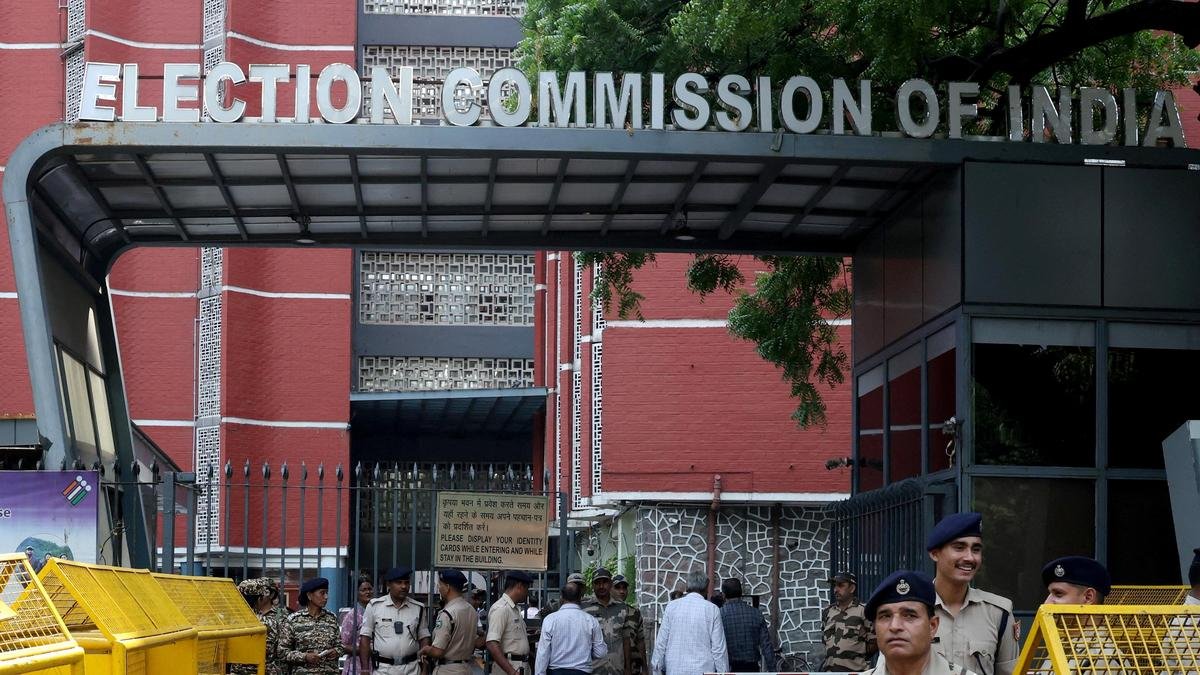
The Election Commission of India has ordered a Special Summary Revision (SSR) of electoral rolls across 17 states and Union Territories, using January 1, 2027, as the qualifying date. The exercise aims to update voter lists, include eligible citizens and correct errors ahead of the next electoral cycle.
Voter List Revision 2026: What the Election Commission Has Announced
The Election Commission of India (ECI) has directed 17 states and Union Territories to undertake a Special Summary Revision (SSR) of their electoral rolls, according to reports published on October 15 and 16, 2026. The revision will use January 1, 2027, as its qualifying date, which determines eligibility for voter registration during this exercise.
The move is intended to improve the accuracy and completeness of electoral rolls by including eligible voters who are missing from the lists, correcting personal details and addressing other discrepancies. The Commission has also instructed officials to conduct a special drive to enrol eligible citizens who have not yet registered, including young and first-time voters.
The announcement comes at a time when electoral roll revisions have attracted considerable public and political attention because of the separate Special Intensive Revision (SIR) exercise. However, the Special Summary Revision and Special Intensive Revision are different processes and should not be confused with one another.
Which 17 States and Union Territories Are Included?
According to the Election Commission’s announcement reported by Akashvani News, the Special Summary Revision covers the following 17 states and Union Territories:
- Andaman and Nicobar Islands
- Assam
- Bihar
- Chhattisgarh
- Goa
- Gujarat
- Kerala
- Lakshadweep
- Madhya Pradesh
- Manipur
- Puducherry
- Punjab
- Rajasthan
- Tamil Nadu
- Uttar Pradesh
- Uttarakhand
- West Bengal
Residents in these regions should follow announcements from their respective Chief Electoral Officers and local election authorities for information about the revision schedule, draft electoral rolls, verification procedures and deadlines.
The schedule may differ in states and Union Territories where the Special Intensive Revision is ongoing or has recently been completed. The Election Commission has indicated that the timetable for those areas will be announced separately.
What Is a Special Summary Revision of Electoral Rolls?
A Special Summary Revision is a process through which election authorities review and update electoral rolls. These rolls contain the names and details of registered voters who are eligible to participate in elections in their respective constituencies.
The exercise helps authorities identify eligible citizens who have not registered, correct inaccurate information and process requests relating to changes in voter records. It also provides a formal opportunity for voters to check their entries and raise objections when necessary.
For ordinary residents, the process is particularly important after moving to a new address, reaching voting age or discovering an error in their electoral details. Students who have moved away from their family homes, workers who have relocated for employment and families who have changed residences should pay attention to their registration details.
The objective is to maintain an accurate and accessible electoral roll. Voters should nevertheless check their own records rather than assume that their details are correct simply because they were registered in an earlier election.
January 1, 2027: Why the Qualifying Date Matters
The qualifying date determines when a citizen’s age and eligibility are assessed for inclusion in the electoral roll under the applicable revision.
For the current exercise, January 1, 2027, is the announced qualifying date. Eligible Indian citizens who have attained, or will attain, the age of 18 by that date can check the applicable registration procedure and submit an application if they are not already enrolled.
This is relevant to students and young adults who will turn 18 around the beginning of 2027. Rather than waiting until an election is announced, eligible citizens can check the Election Commission’s official voter services portal and follow the registration instructions available for their area.
Age is not the only consideration. Applicants must also satisfy the applicable citizenship, ordinary residence and other legal eligibility requirements. Being 18 years old does not automatically place a person’s name on the voter list.
The qualifying date should also not be mistaken for a universal application deadline. The relevant dates for submitting applications, checking draft rolls and filing claims or objections depend on the official schedule issued for the state or Union Territory.
How Citizens Can Check Their Names on the Voter List
Residents can use the Election Commission’s official voter services portal to check electoral information and access registration services.
The following steps can help voters get started:
- Visit the official portal at https://voters.eci.gov.in/.
- Look for the electoral roll search facility and enter the requested details.
- Check the spelling of the name, constituency, polling station information and other available particulars.
- If the entry is missing or incorrect, review the relevant application form and instructions.
- Follow the official process for submitting a request and keep the acknowledgement or reference number for future tracking.
Voters who prefer offline assistance can contact their local election office or Booth Level Officer (BLO), subject to the arrangements announced for their area.
The Election Commission also provides voter-related information through its official website at https://www.eci.gov.in/. Citizens can use these official channels to avoid relying on unverified messages or third-party websites that claim to provide guaranteed registration.
Which Forms Are Used for Registration and Corrections?
Different forms are used for different voter registration requests. Applicants should select the form that matches their situation and consult the latest official instructions before submitting documents.
Form 6: New voter registration
Form 6 is used by eligible citizens applying for inclusion in the electoral roll. It is particularly relevant to first-time voters and people who need to register after becoming eligible, subject to the applicable rules.
Form 7: Objections and deletion requests
Form 7 is used for specified objections to entries and requests for deletion from the electoral roll. It should be used carefully, with the grounds and supporting information required under the prescribed procedure.
Form 8: Corrections and other updates
Form 8 is used for permitted requests relating to corrections in electoral roll entries and other specified updates, including changes associated with shifting residence, as provided under the applicable rules.
The form numbers alone do not guarantee approval. Election officials process applications according to the prescribed requirements, and applicants may need to provide supporting information or respond to a notice.
People who have moved to another city should pay particular attention to the residence-related procedure. They should not submit duplicate registrations simply because they have changed addresses.
Special Summary Revision vs Special Intensive Revision
The two revision exercises have different scopes and procedures.
A Special Summary Revision is a periodic exercise to update electoral rolls through the prescribed process of claims, objections and corrections. It allows eligible citizens to seek inclusion and existing voters to request appropriate updates.
A Special Intensive Revision is a more detailed verification exercise conducted under a separate procedure. Depending on the instructions issued for the relevant area, it may involve additional verification and enumeration requirements.
The distinction matters because the announcement of a Special Summary Revision across 17 states and Union Territories does not mean that every area is automatically undergoing the same process as an area covered by SIR.
The Election Commission has said that states and Union Territories where SIR is ongoing or has recently concluded will have a separate schedule for SSR. Residents should therefore follow the notification that applies specifically to their location rather than rely on dates announced for another state.
What Should Voters Do If Their Names Are Missing?
A missing name can create serious difficulties when a person tries to vote, so residents should verify their entries before an election approaches.
If a voter cannot find their name, the first step is to search again using accurate details and check the relevant electoral roll. Differences in spelling, constituency boundaries or address details can sometimes make a record difficult to locate.
If the name remains missing, the person should contact the local election office or BLO and ask which application or corrective procedure applies. Eligible citizens may need to submit Form 6 for inclusion, depending on their circumstances and the applicable rules.
If a name or other detail is incorrect, voters should use the appropriate correction procedure rather than submit a fresh registration without checking the existing record.
Citizens should also retain application acknowledgements and monitor the status of their requests. A submitted application is not the same as a confirmed entry on the final electoral roll. Voters should check the updated list after the authorities process their requests.
Why the Revision Matters for Young Voters and Migrant Workers
Electoral roll accuracy affects citizens across different age groups and occupations. Young adults who are approaching voting age may need to complete their first registration, while people who have moved for education or employment may need to update their details.
Migrant workers and residents of rapidly growing cities can face practical challenges when their current residence differs from the address recorded in older documents. Families may also discover errors when checking the records of elderly relatives or other household members.
For Tier-2 and Tier-3 cities, where people frequently move between districts for education, work and family reasons, checking voter registration details can be an important administrative step. Local election officials can explain the procedure for the relevant constituency.
At the same time, voters should avoid sharing personal documents or sensitive information with unverified agents. Registration and correction requests should be made through authorised election channels. Citizens should be cautious of messages demanding payment or promising guaranteed inclusion in the voter list.
What Happens Next in the Revision Process?
The next steps depend on the official schedule issued for each state or Union Territory. The process generally involves the publication or updating of electoral rolls, opportunities for eligible citizens to submit applications and a mechanism for handling claims and objections.
According to the Election Commission’s announcement reported on October 16, the final timetable for states and Union Territories undergoing or recently completing SIR will be communicated separately. Residents should not assume that one common deadline applies to all 17 regions.
The Commission’s stated objective is to make the electoral rolls more accurate and inclusive. The effectiveness of the exercise will depend on the timely processing of applications, clear communication with voters and the proper resolution of errors or objections.
For citizens, the most practical step is straightforward: check the official voter list, verify personal details and act promptly if a correction or registration request is needed. Relying on official notices is the safest way to understand the deadlines and procedures that apply locally.
Key Takeaways
- The Election Commission has ordered a Special Summary Revision of electoral rolls across 17 states and Union Territories.
- January 1, 2027, is the announced qualifying date for the exercise.
- Form 6 is used for new voter registration, Form 7 for specified objections or deletion requests, and Form 8 for corrections and other permitted updates.
- Voters should check their names through official Election Commission services and follow their local revision schedule.
Frequently Asked Questions
1. What is the voter list revision announced in October 2026?
The Election Commission has ordered a Special Summary Revision of electoral rolls in 17 states and Union Territories to update voter information, include eligible citizens and correct errors.
2. What is the qualifying date for the 2026 voter list revision?
The announced qualifying date is January 1, 2027. Citizens who meet the applicable eligibility requirements by that date can check the registration process for their area.
3. How can I check whether my name is on the voter list?
Visit the official Election Commission voter services portal at https://voters.eci.gov.in/ and use the electoral roll search facility. You can also seek assistance from your local election office or Booth Level Officer.
4. What should I do if my name is missing from the voter list?
Verify your details and constituency first. If your name is still missing, contact your local election authority and follow the applicable registration procedure. Eligible applicants may need to submit Form 6. Check the relevant schedule and retain the application acknowledgement.