































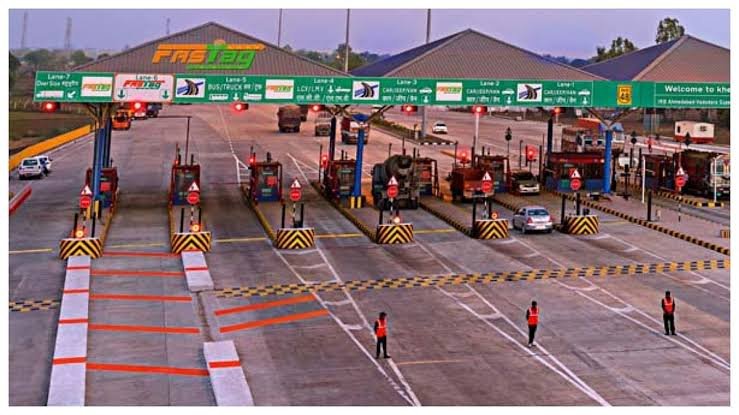
Mumbai toll rates for commercial vehicles increased from October 1, 2026, raising the cost of entering and exiting the city through five major entry points. Private cars remain exempt, but higher charges for trucks, buses and light commercial vehicles could affect transport costs and, indirectly, prices paid by consumers.
Mumbai Toll Hike: What Changed From October 1
The Mumbai toll hike came into effect on October 1, 2026, after the Maharashtra State Road Development Corporation revised charges for commercial vehicles using five entry points into the city.
The revised toll applies to mini buses, light commercial vehicles, buses, trucks and heavy motor vehicles. According to current reports, mini buses and LCVs now pay Rs 90 per trip, compared with Rs 75 earlier. Buses and trucks are charged Rs 180, up from Rs 150, while heavy motor vehicles pay Rs 225 instead of Rs 190.
The increase is part of the scheduled revision of toll rates. The previous revision at these entry points took effect on October 1, 2023.
For ordinary private car users, however, there is an important distinction. Private cars and SUVs continue to be exempt from the toll at these five entry points.
Which Mumbai Entry Points Have Higher Toll Rates?
The revised charges apply at five major entry points used by vehicles entering or leaving Mumbai.
These include Vashi on the Sion-Panvel Highway, Mulund LBS Road, Mulund on the Eastern Express Highway, Airoli Bridge and Dahisar on the Western Express Highway.
Atal Setu is not included in this five-point toll structure. It has a separate toll system and separate charges.
This distinction is important for commuters because not every road entering Mumbai follows the same toll rules. A person travelling through Atal Setu, for example, needs to consider its separate toll while planning the overall cost of a journey.
Private Cars Remain Exempt From Mumbai Entry Toll
One of the biggest points of confusion following the October revision is whether private car owners will also have to pay more.
They will not.
Light motor vehicles, including private cars, remain exempt from the toll at Mumbai’s five entry points. School buses and state transport buses also continue to remain exempt under the existing arrangement. Public transport buses, auto-rickshaws and taxis are also not affected by this particular entry-point toll revision.
This means a family travelling into Mumbai in a private car does not suddenly face a new entry toll because of the October 1 revision.
The immediate impact is concentrated on commercial and goods-carrying vehicles.
Why Transporters Are Concerned About the Hike
Transport groups have opposed the higher toll rates, arguing that repeated trips can make even a relatively small increase expensive for operators.
For example, an LCV making several Mumbai trips each day will pay an additional Rs 15 per trip compared with the earlier rate. Trucks and buses face an increase of Rs 30 per trip, while heavy motor vehicles pay Rs 35 more.
For a vehicle making frequent journeys, these additional charges can accumulate significantly over a month.
The All India Motor Transport Congress has opposed the increase and sought relief for heavy commercial vehicles. Transport representatives have also warned that higher operating costs could eventually be reflected in freight rates.
Will the Toll Hike Make Goods More Expensive?
The toll increase does not automatically mean that consumers will immediately see higher prices in shops.
However, transportation is an important part of the supply chain. Trucks and commercial vehicles carry food products, construction material, parcels, manufactured goods and other supplies into Mumbai and the wider metropolitan region.
If transport operators face higher recurring costs, companies may decide to adjust freight charges. Those higher logistics costs can potentially be passed through the supply chain.
This is why the toll revision matters even to people who never personally pay the entry toll. The impact, if it occurs, is more likely to appear indirectly through transportation and logistics costs rather than through a new charge on private car owners.
October Commuter Changes Beyond the Toll Hike
The toll revision is not the only transport-related change Mumbai commuters need to watch this month.
Central Railway has announced a 75-day traffic and power block at Chhatrapati Shivaji Maharaj Terminus from October 1 to December 15, 2026, as part of redevelopment work. Eight long-distance trains have been short-terminated, with seven terminating at Dadar and one at Thane.
This could affect passengers travelling to Mumbai for work, education, business or medical appointments, particularly those coming from outside the city.
The Mumbai Metropolitan Region has also seen a CNG price increase from October 1. Mahanagar Gas Limited raised the price by Re 1 per kg to Rs 89 per kg, citing higher input costs.
For commuters using CNG-powered vehicles, including taxis and other commercial transport, this is another October cost change to keep in mind.
What Mumbai Commuters Should Check Before Travelling
People using private cars do not need to budget for the revised five-entry-point toll simply because of the October hike.
Commercial vehicle operators, however, should calculate the additional cost based on the number of Mumbai trips they make each month.
Transporters can also look at the advance toll coupon options reported by Moneycontrol. The available scheme provides discounts for bulk purchases, including reported discounts on 50 and 100 coupons.
Passengers using long-distance trains should also check their train’s latest schedule before travelling to or from CSMT during the redevelopment period.
For CNG users, the new MMR price should be factored into regular commuting and operating expenses.
Takeaways
- Mumbai’s revised entry toll for commercial vehicles came into effect on October 1, 2026.
- Mini buses and LCVs now pay Rs 90, buses and trucks Rs 180, and heavy motor vehicles Rs 225 per trip.
- Private cars, SUVs, school buses and state transport buses remain exempt under the applicable rules.
- CSMT redevelopment changes and the MMR CNG price increase are additional October developments relevant to commuters.
FAQs
- Has Mumbai increased toll charges for private cars?
No. Private cars and SUVs continue to remain exempt from the toll at Mumbai’s five entry points covered by the October 2026 revision.
- How much is the new Mumbai toll for trucks?
Trucks and buses now pay Rs 180 per trip at the five applicable Mumbai entry points, compared with Rs 150 previously.
- Which Mumbai entry points have the revised toll?
The revised toll applies at Vashi, Airoli, Dahisar and the two Mulund entry points, one on LBS Road and another on the Eastern Express Highway.
- Does Atal Setu have the same toll?
No. Atal Setu has a separate toll structure and is not included in the five entry points covered by this particular revision.














