































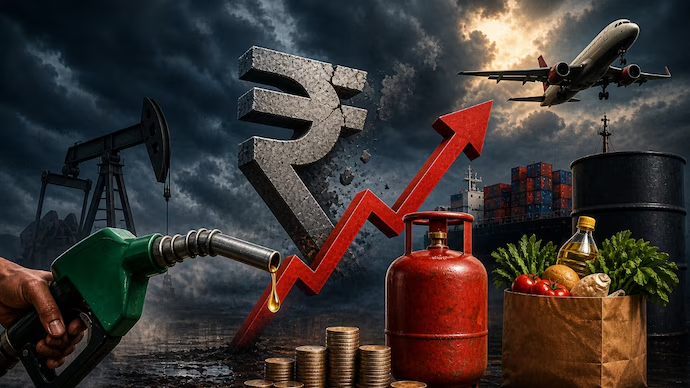
Rising oil prices are becoming an important concern for India as international crude remains above $100 a barrel amid supply disruptions and uncertainty around West Asia. For Indian households, the impact can extend beyond petrol and diesel to transport fares, food deliveries, logistics, household budgets and inflation.
Why Crude Oil Prices Matter to India
Crude oil prices have a direct connection with the Indian economy because India imports most of the crude oil it consumes. Recent reporting puts India’s crude import dependence at around 90%, making international oil movements particularly important for the country’s energy costs and external finances.
On September 30, Brent crude was trading above $103 a barrel after rising concerns linked to the situation involving Iran and the disruption of oil supplies. Brent had also gained sharply during September, despite signs that some Middle Eastern exports were beginning to recover.
This does not mean petrol and diesel prices automatically rise every time crude moves higher. Indian retail fuel prices can remain unchanged for periods even when international crude becomes more expensive. Oil marketing companies can absorb part of the increase, while taxes, refining costs, freight, exchange rates and pricing decisions also influence what consumers ultimately pay.
Petrol and Diesel Prices Are Only Part of the Story
For most consumers, petrol and diesel are the most visible connection between crude oil and everyday expenses. A sustained increase in international crude can eventually put pressure on fuel retailers, particularly if domestic pump prices do not adjust at the same pace.
Recent reporting said Indian oil marketing companies were facing significant losses as international crude prices rose while retail petrol and diesel prices remained comparatively stable. ICRA estimated that state-run fuel retailers were facing daily losses of around Rs 530 crore in late September, while India’s crude basket had risen substantially from its 2025-26 average.
For households, the immediate effect depends on whether higher input costs are passed on to consumers. If fuel prices remain unchanged, the direct impact on a family’s monthly petrol or diesel bill may be limited. However, pressure can still build elsewhere in the economy.
Transport Costs Could Rise Across Indian Cities
Transport is one of the biggest channels through which higher oil prices can reach consumers.
Diesel is widely used in road freight, buses, commercial vehicles, agricultural machinery and other parts of the supply chain. When diesel becomes more expensive, transporting goods from farms, factories, warehouses and wholesale markets to cities can become costlier.
This matters particularly for Tier-2 and Tier-3 cities, where road transport plays a major role in moving vegetables, groceries, medicines, construction materials and manufactured products.
Higher operating costs can also affect private bus operators, taxis, auto-rickshaws, delivery companies and logistics businesses. Whether those costs result in higher fares depends on local competition, government regulations, demand and the ability of operators to absorb additional expenses.
For a commuter travelling long distances every day, even a small increase in fuel expenditure can add up over a month.
Why Food and Grocery Prices Can Also Be Affected
The effect of expensive crude oil does not stop at the petrol pump.
Food products often travel through multiple stages before reaching consumers. Vegetables may move from farms to collection centres, then to wholesale markets and finally to local retailers. Packaged food, household goods and online orders also require transportation at different stages.
A rise in diesel and other energy costs can therefore increase logistics expenses. The New Indian Express has previously explained how higher fuel costs can feed into transportation expenses for vegetables, grains, manufactured products and e-commerce deliveries.
This does not mean every grocery item will immediately become more expensive. Food prices are influenced by several factors, including crop production, weather, seasonal availability, storage, demand and local supply conditions. But prolonged high fuel costs can add another layer of pressure to the supply chain.
What It Could Mean for Small Businesses
Small businesses in Tier-2 and Tier-3 cities could also feel the impact if high oil prices persist.
A retailer may pay more for goods transported from a distributor. A restaurant may face higher delivery and logistics expenses. A construction contractor may see transportation costs rise for cement, steel, sand and other materials.
Businesses that operate delivery vehicles or depend heavily on road freight have a particularly direct exposure to fuel costs.
Some businesses may absorb the additional expense to protect sales, while others may gradually adjust prices. The final impact will vary considerably between sectors and cities.
For small businesses with limited margins, however, even relatively modest increases in operating expenses can become significant when they continue for several months.
The Rupee Adds Another Layer of Pressure
India’s oil bill is also affected by the value of the rupee against the US dollar because crude oil is traded internationally in dollars.
Recent Reuters reporting showed the rupee under pressure around the 96-per-dollar level, with oil prices among the factors affecting currency-market sentiment. Since India imports a large share of its crude requirement, a weaker rupee can make imported oil more expensive in domestic currency terms.
This creates a potentially difficult combination for the economy. Higher crude prices can increase the import bill, while a weaker rupee can raise the rupee cost of those imports further.
At the same time, the actual effect depends on how crude prices, currency movements, domestic fuel pricing and global supply conditions develop.
Will Higher Oil Prices Immediately Increase Inflation?
Not necessarily.
Inflation responds to a combination of factors, and the transmission from crude oil to consumer prices can take time. Fuel prices can influence transportation costs, manufacturing expenses and other operating costs, but businesses do not always pass the entire increase to customers immediately.
The Reserve Bank of India also monitors oil prices because sustained energy-cost increases can affect inflation and the broader economic outlook.
Earlier analysis during the current oil-market disruption suggested that prolonged crude price increases could raise India’s inflation risks and widen the current account deficit.
The important point for households is that a temporary movement in crude prices is different from a prolonged period of elevated prices. The longer higher oil costs remain in place, the greater the possibility of broader economic effects.
What Households Can Watch in the Coming Weeks
Consumers do not need to track international crude prices every day, but a few indicators can provide a clearer picture of what may happen next.
The first is Brent crude, the international benchmark closely watched by global markets. The second is the rupee-dollar exchange rate. The third is domestic petrol and diesel pricing in individual states and cities.
Households can also watch transportation fares, LPG availability and prices, food inflation and delivery charges.
For now, the situation remains fluid. Oil prices have moved sharply in both directions as markets respond to developments in West Asia and changes in supply. On September 29, Brent fell around 2.5% as signs of recovering Middle Eastern exports emerged, but it remained above $100 a barrel. On September 30, prices moved higher again after uncertainty over US-Iran sanctions returned.
What Rising Oil Prices Really Mean for Indian Consumers
The impact of rising crude prices is not limited to the amount paid at a petrol pump. It can move through freight, public and private transport, business operating costs, food distribution and household spending.
For consumers in smaller Indian cities, transportation costs can be particularly important because many essential goods arrive from agricultural markets, manufacturing hubs or larger urban centres.
However, the extent of the impact will depend on how long crude remains elevated, how domestic fuel prices respond, what happens to the rupee and whether global oil supplies normalise.
At present, international oil markets remain sensitive to developments in West Asia. That makes crude prices an important indicator to watch for Indian households, businesses and transport operators in the coming weeks.
Key Takeaways
- Brent crude was trading above $103 a barrel on September 30 amid renewed uncertainty around Iran and global oil supplies.
- India imports around 90% of its crude requirement, leaving the economy exposed to major international oil-price movements.
- Higher diesel costs can affect freight, delivery services, public transport and the movement of essential goods.
- The final impact on Indian households depends on crude prices, the rupee, domestic fuel pricing, taxes and the duration of the global supply disruption.
FAQs
1. Why are oil prices rising in September 2026?
International oil prices have been affected by supply concerns connected to the conflict involving Iran, disruptions around major shipping routes and uncertainty over future oil flows. Brent crude remained above $100 a barrel in late September.
2. Will higher crude prices immediately increase petrol prices in India?
Not necessarily. Indian petrol and diesel prices do not automatically change in line with every movement in international crude. Oil marketing companies, taxes, refining costs, exchange rates and domestic pricing decisions all influence retail fuel prices.
3. How can expensive oil affect food prices?
Higher fuel costs can increase the expense of transporting agricultural produce, packaged food and other goods. However, food prices are also determined by supply, demand, weather, production and seasonal factors, so the effect varies between products and locations.
4. Why does the rupee matter when crude oil prices rise?
India purchases crude oil largely through international markets where transactions are conducted in dollars. If the rupee weakens against the dollar while crude prices are high, the rupee cost of importing oil can increase further.














