































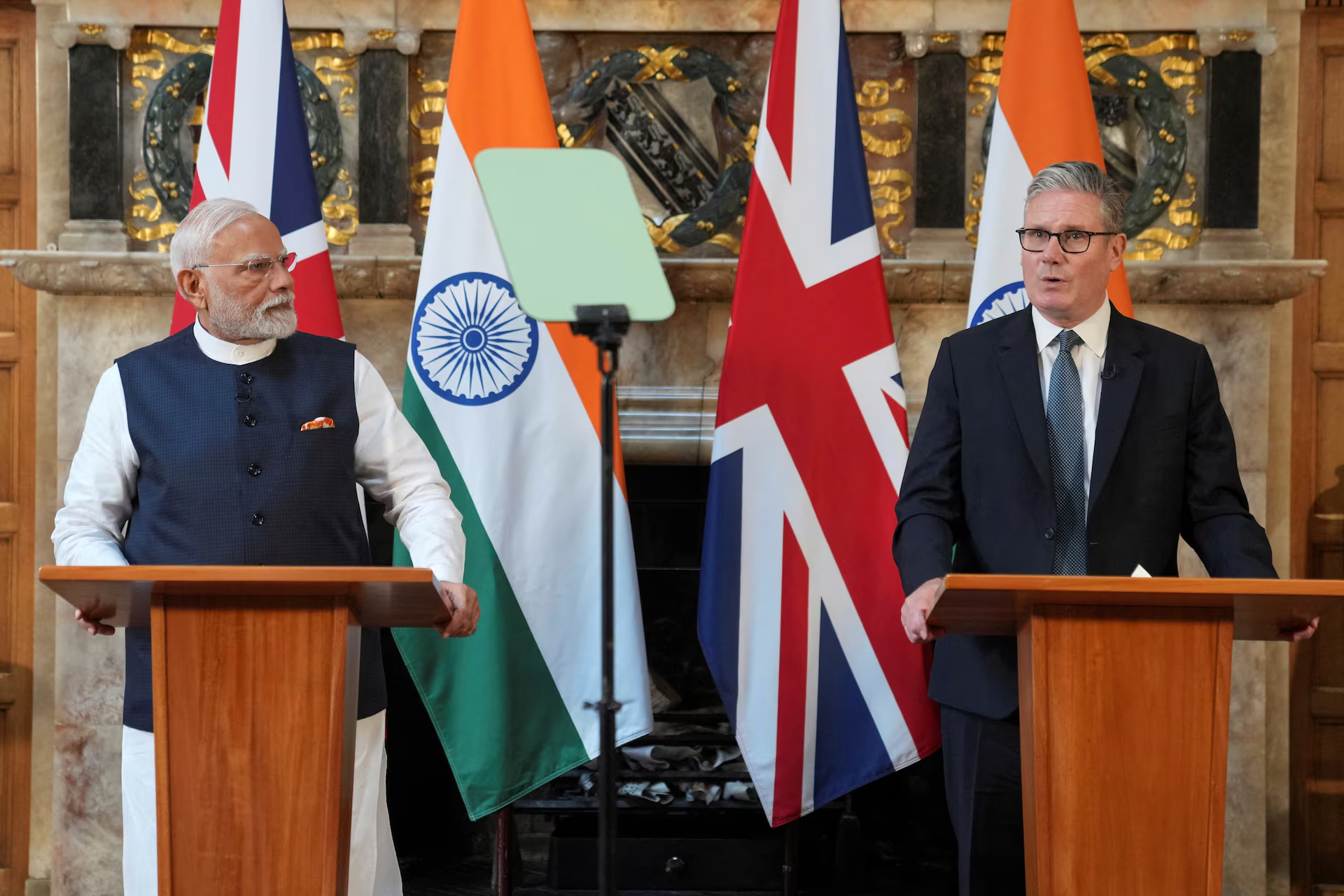
The India-UK Comprehensive Economic and Trade Agreement has officially come into force, opening a new chapter in trade between the two countries. The agreement is expected to reduce tariffs on several products, improve market access, strengthen services trade, and create new opportunities for Indian businesses and consumers.
The India-UK Trade Deal has become one of the biggest economic developments of the year after the Comprehensive Economic and Trade Agreement (CETA) officially came into effect on 15 July 2026. Since the agreement has recently entered into force, this is a time-sensitive news topic. The deal is expected to expand bilateral trade, improve access to each other’s markets, reduce tariffs on a wide range of products, and strengthen cooperation in services, investment, and technology. While businesses are preparing to take advantage of the new rules, consumers could also see changes in product availability and pricing over the coming months.
What Is the India-UK Trade Deal?
The India-UK Comprehensive Economic and Trade Agreement is the most comprehensive trade agreement India has signed with a developed economy. Negotiations continued for several years before both countries finalized the pact.
Under the agreement, nearly 99 percent of Indian exports by value will receive zero-duty access to the UK market, benefiting sectors such as textiles, apparel, leather, engineering goods, gems and jewellery, food processing, marine products, and chemicals. In return, India will gradually reduce tariffs on selected British goods over different timelines rather than immediately. The agreement also includes provisions covering digital trade, intellectual property, government procurement, services, and investment cooperation.
How Indian Consumers Could Benefit
For Indian consumers, the impact will likely be gradual rather than immediate. Products imported from the UK may become more competitively priced as tariffs are reduced according to the agreement’s schedule.
Industry experts expect premium British products such as automobiles, certain manufacturing equipment, cosmetics, healthcare products, and specialty consumer goods to become more accessible over time. However, not every imported product will become cheaper overnight because tariff reductions are being implemented in phases. For example, luxury cars are expected to see earlier price benefits, while tariff reductions on products like Scotch whisky follow a different timeline.
Domestic manufacturers are also expected to respond by improving quality, innovation, and product offerings instead of viewing the agreement solely as increased competition. Many industry groups believe the overall impact on Indian consumer brands will remain limited while encouraging higher standards across the market.
Why the Agreement Matters for Indian Businesses
The biggest beneficiaries are expected to be Indian exporters.
With most Indian exports entering the UK without customs duties, businesses in manufacturing, agriculture, pharmaceuticals, engineering, textiles, and food processing gain a stronger competitive position against suppliers from other countries.
Small and medium enterprises may also benefit by finding new buyers in the UK. Lower trade barriers can encourage Indian companies to expand internationally while reducing export costs.
For startups and technology firms, the agreement goes beyond physical goods. It includes provisions that encourage collaboration in digital trade, fintech, innovation, education, and professional services, creating opportunities for companies operating in India’s rapidly growing knowledge economy.
New Opportunities for Professionals and Service Industries
One of the less discussed aspects of the agreement is its focus on services and skilled professionals.
India has a strong global presence in information technology, consulting, engineering, financial services, healthcare, and education. The agreement creates a framework that supports easier professional mobility and strengthens cooperation between businesses operating in both countries.
Alongside CETA, the Double Contribution Convention has also come into force. It allows eligible professionals working temporarily in the other country to avoid paying social security contributions in both jurisdictions for a specified period, reducing costs for employers and employees on qualifying assignments.
Challenges and What Comes Next
Although the agreement creates significant opportunities, its full benefits will depend on effective implementation.
Exporters must comply with rules of origin, product quality standards, certification requirements, and documentation procedures to qualify for preferential tariffs. Businesses entering the UK market will also need to meet regulatory standards and compete with established international brands.
For consumers, changes in prices may take time to become visible as companies adjust supply chains, inventory, and distribution networks. Economists generally view free trade agreements as long-term growth instruments rather than policies that deliver immediate price reductions.
Nevertheless, the India-UK trade agreement marks an important milestone in India’s global trade strategy. By improving access to one of the world’s largest developed markets while encouraging investment and innovation, the agreement has the potential to strengthen India’s manufacturing sector, expand exports, and create new employment opportunities in the years ahead.
Key Takeaways
- The India-UK Comprehensive Economic and Trade Agreement officially entered into force on 15 July 2026.
- Nearly 99 percent of Indian exports by value receive zero-duty access to the UK market.
- Consumers may gradually benefit from increased product choices and lower prices on selected imported goods.
- Indian exporters, service providers, startups, and professionals are expected to gain new growth opportunities.
Frequently Asked Questions
Q1. What is the India-UK Trade Deal?
It is a Comprehensive Economic and Trade Agreement that reduces trade barriers, improves market access, and strengthens economic cooperation between India and the United Kingdom.
Q2. Will products become cheaper in India?
Some imported British products may become more affordable over time as tariff reductions are implemented, although the impact will vary by product category.
Q3. Which Indian industries benefit the most?
Textiles, leather, engineering goods, pharmaceuticals, food processing, gems and jewellery, IT services, and professional services are among the sectors expected to benefit.
Q4. Does the agreement only cover goods?
No. It also includes provisions related to services, digital trade, investment, intellectual property, government procurement, and professional mobility.
(Internal Keyword Suggestions: India UK Trade Deal, India UK CETA, India UK Free Trade Agreement, India UK trade benefits, Indian exporters UK, UK imports India, India UK business news, India UK tariff reduction, India UK services trade, India UK economic partnership)