































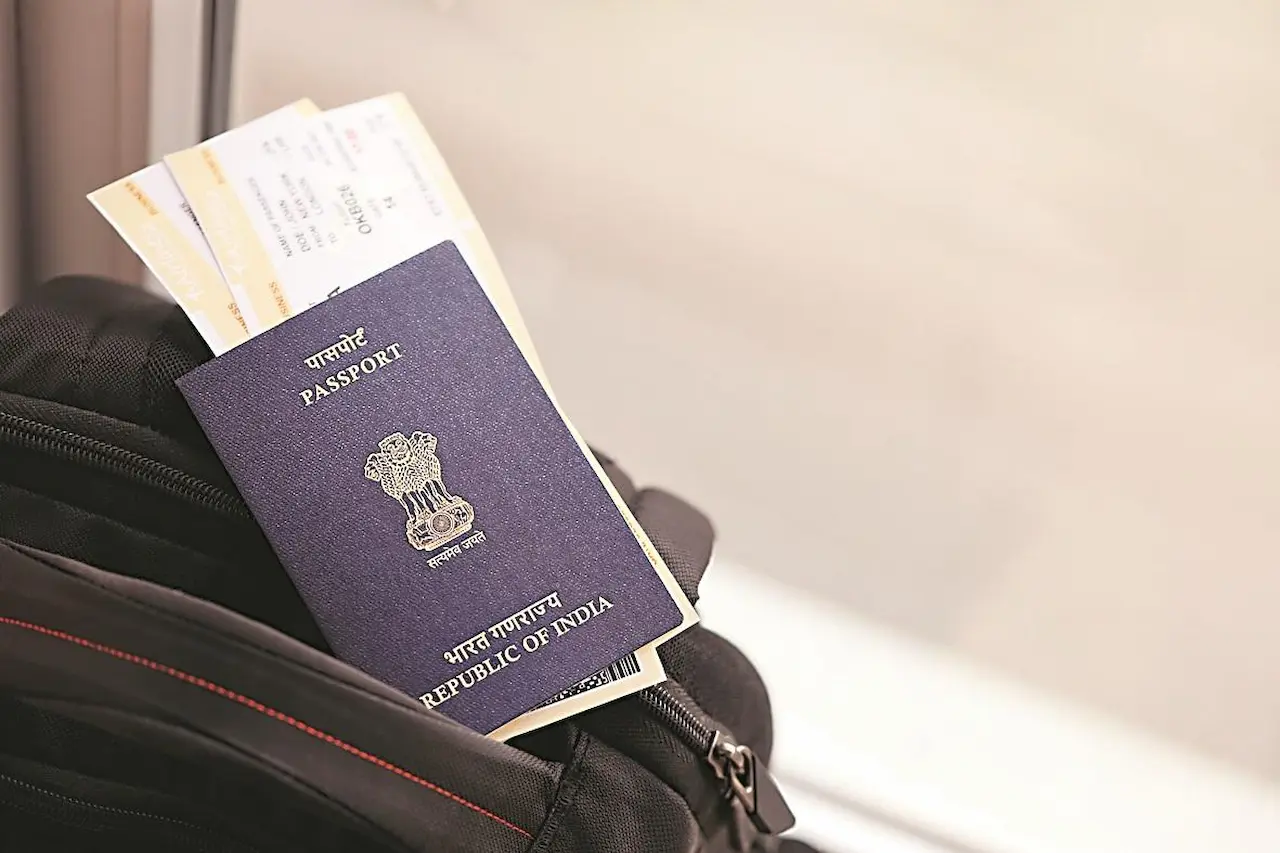
Passport rules have become a major talking point in India after recent discussions about citizenship verification. Many people assume that holding an Indian passport automatically proves citizenship. However, the legal position is more nuanced. Here’s what the law says and which documents are actually considered evidence of Indian citizenship.
The topic of passport rules explained has generated significant public interest, with many people asking whether an Indian passport alone is enough to prove citizenship. While a passport is one of the country’s most important identity and travel documents, Indian law distinguishes between documents issued for identification and the legal determination of citizenship. Understanding this difference is important for anyone applying for government services, passports, or dealing with official verification processes.
Indian Passport and Citizenship: Understanding the Difference
An Indian passport is issued under the Passports Act, 1967, by the Ministry of External Affairs. It serves primarily as an international travel document that establishes the holder’s identity and nationality for travel purposes.
However, under Indian law, a passport is generally considered strong evidence that its holder is an Indian citizen, but it is not legally defined as the sole or conclusive proof of citizenship in every circumstance. Citizenship itself is governed by the Citizenship Act, 1955, along with the Constitution of India and related rules.
This distinction has become important in recent public discussions because citizenship may sometimes require verification through additional records, especially in legal or administrative proceedings.
Which Documents Can Help Establish Indian Citizenship?
There is no single document that universally proves citizenship in every legal situation. Instead, authorities may examine multiple records depending on the purpose of verification.
Some commonly accepted documents include:
- Indian Passport
- Birth Certificate showing birth details, where applicable
- Citizenship Certificate issued under the Citizenship Act
- Certificate of Registration or Naturalisation for eligible individuals
- Government records supporting citizenship claims
- Family lineage and supporting legal documents when required
The exact combination of documents depends on the nature of the verification and the authority conducting it.
For most routine purposes such as international travel, visa applications, and identity verification, an Indian passport is widely accepted. However, specific legal proceedings may require additional evidence.
Why Has This Issue Become a Talking Point?
The discussion gained attention after recent public statements and legal debates highlighted the distinction between possessing a passport and proving citizenship under the law.
Many social media posts suggested that passports alone either completely prove or do not prove citizenship. Both claims oversimplify the legal position.
Legal experts point out that while passport authorities conduct verification before issuing a passport, the issuance process itself is separate from legal proceedings that determine citizenship status under the Citizenship Act.
As a result, different authorities may examine different documents depending on the specific legal context.
How Citizenship Is Determined in India
Indian citizenship can be acquired through several legal routes provided under the Citizenship Act, 1955.
These include:
- Citizenship by birth
- Citizenship by descent
- Citizenship by registration
- Citizenship by naturalisation
- Citizenship through incorporation of territory
Each category has its own eligibility conditions, documentation requirements, and verification procedures.
For example, a person born in India may need to satisfy different legal conditions depending on their date of birth, as citizenship laws have changed through amendments over the years.
Similarly, people acquiring citizenship through registration or naturalisation receive official citizenship certificates issued by the Government of India.
What Should Citizens Keep Ready?
For most Indian citizens, there is no immediate need to obtain additional documents if they already possess valid government records.
However, maintaining updated personal documents remains a good practice.
These include:
- Valid Indian passport
- Birth certificate
- Aadhaar card
- PAN card
- Voter ID, if eligible
- Educational records
- Property and family records where applicable
It is important to remember that Aadhaar is primarily a proof of identity and residence, while PAN is issued for taxation purposes. Neither document independently establishes citizenship.
Similarly, voter identity cards indicate electoral registration but are not universally treated as conclusive proof of citizenship in every legal context.
Why Accurate Information Matters
Misinformation regarding citizenship documents can spread quickly through social media, creating unnecessary confusion among the public.
Legal experts advise citizens to rely on official government notifications and established laws instead of viral claims circulating online.
The Ministry of External Affairs continues to issue passports after a detailed application and verification process. At the same time, citizenship matters continue to be governed separately under the Citizenship Act and relevant legal provisions.
Understanding the difference between identity documents and citizenship documentation helps citizens respond accurately whenever official verification is required.
Takeaways
- An Indian passport is strong evidence of citizenship but is not the only legally relevant document in every situation.
- Citizenship in India is governed by the Citizenship Act, 1955, not the Passports Act.
- Different authorities may require different supporting documents depending on the legal purpose.
- Aadhaar, PAN and Voter ID serve important functions but do not independently establish citizenship in all legal contexts.
FAQs
Q1. Does an Indian passport automatically prove Indian citizenship?
An Indian passport is strong evidence that the holder is an Indian citizen and is widely accepted for most purposes. However, specific legal proceedings may require additional documentation under citizenship laws.
Q2. Is Aadhaar proof of Indian citizenship?
No. Aadhaar is a proof of identity and residence. It is not a citizenship document.
Q3. Is a PAN card proof of citizenship?
No. PAN is issued for tax administration and does not establish citizenship.
Q4. Which law governs Indian citizenship?
Indian citizenship is governed by the Citizenship Act, 1955, along with relevant constitutional provisions and subsequent amendments.
(Internal Keyword Suggestions: passport rules explained, Indian passport citizenship, proof of Indian citizenship, Citizenship Act 1955, passport rules India, Aadhaar citizenship, passport document verification, Indian citizenship documents, passport vs citizenship proof, government document verification)