
























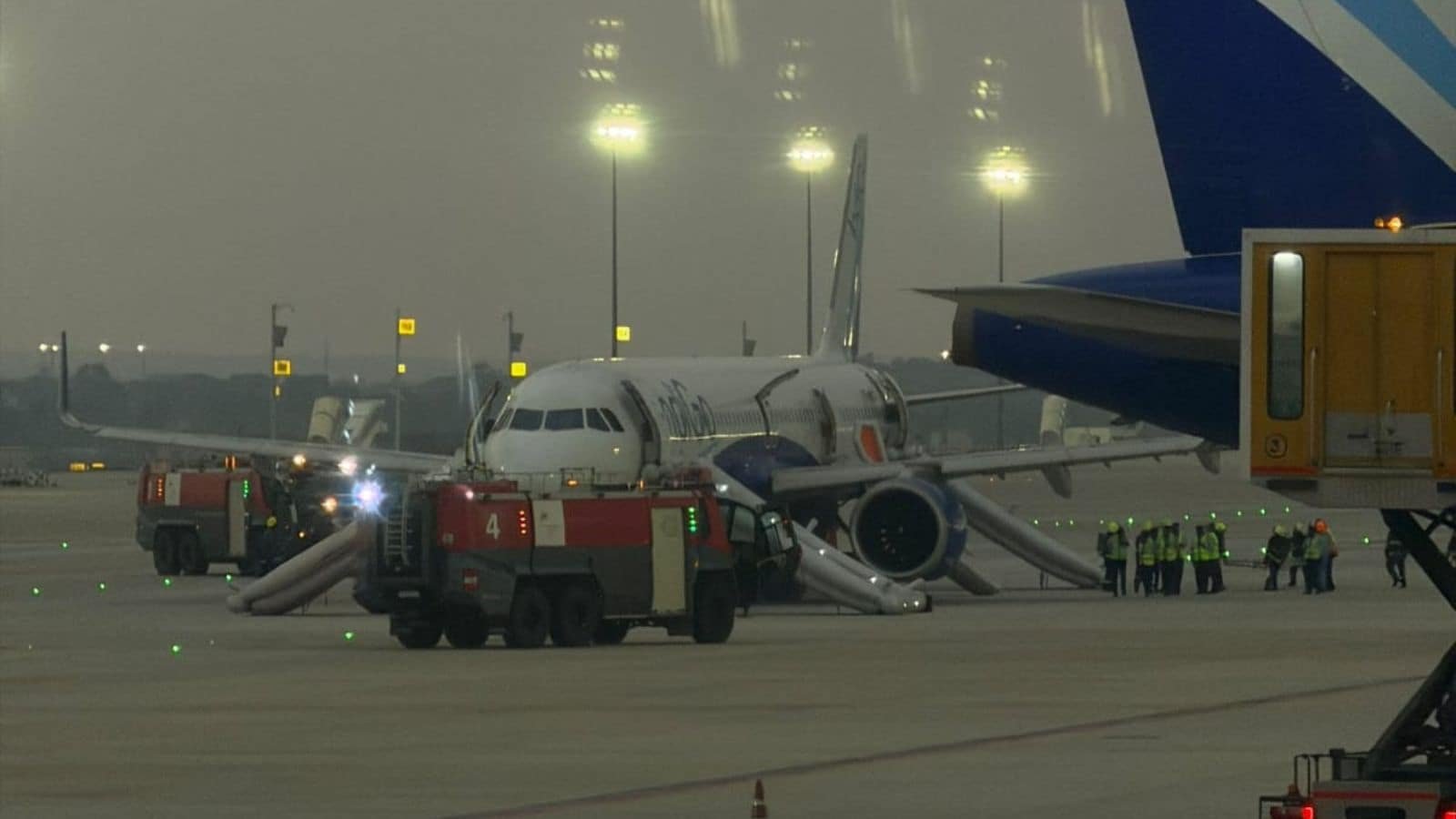
An IndiGo smoke scare video showing passengers walking on an aircraft wing during an emergency evacuation has gone viral across social media. The incident triggered widespread discussion about airline safety procedures, passenger panic, emergency response systems, and how quickly misinformation spreads online during aviation incidents.
IndiGo Smoke Scare Video Quickly Spread Across Social Media
The IndiGo smoke scare video became a major talking point after clips circulated online showing passengers evacuating from an aircraft and stepping onto the wing before exiting safely. Videos captured by travelers inside and outside the plane gained millions of views within hours.
Many users initially assumed the aircraft had caught fire because smoke was visible near the plane during evacuation. However, early reports and airline statements suggested the situation involved a technical or precautionary emergency response rather than a confirmed large-scale onboard fire.
The visuals shocked viewers because commercial airline evacuations are relatively rare in India. Images of passengers standing on aircraft wings immediately triggered comparisons with international aviation incidents seen in movies and global news coverage.
Social media reactions ranged from panic and criticism to praise for the evacuation crew. Several users questioned whether passengers followed emergency instructions correctly, while others praised cabin crew members for ensuring rapid exits.
The incident quickly evolved into a broader discussion about passenger awareness during emergencies.
Why Passengers Were Seen Walking On The Aircraft Wing
One of the biggest reasons the video went viral was the unusual sight of passengers walking directly on the airplane wing during evacuation. Aviation experts explain that this can happen during emergency exits on certain aircraft models.
Commercial aircraft are designed with over-wing emergency exits that passengers may use if standard doors become inaccessible or unsafe. During such evacuations, passengers temporarily step onto the wing surface before using inflatable slides or designated descent paths.
While the visuals appeared dramatic online, aviation professionals noted that over-wing evacuations are part of internationally approved aircraft safety designs. Airline crew members receive regular training for these emergency situations.
Experts also explained that smoke visible near an aircraft does not automatically confirm a fire emergency. Smoke can sometimes result from technical malfunctions, engine-related issues, hydraulic systems, brake overheating, or external environmental conditions.
However, airlines typically prioritize immediate evacuation if there is any possibility of passenger risk. In aviation safety, precautionary action is considered essential because delays can become dangerous during actual emergencies.
The viral IndiGo video highlighted how quickly public concern escalates when emergency visuals appear online without complete context.
Social Media Reactions Revealed Growing Passenger Anxiety
The IndiGo emergency evacuation video triggered strong emotional responses partly because air travel anxiety has become more visible globally in recent years. Viral aviation clips often spread rapidly due to the fear associated with aircraft emergencies.
Many Indian users on X, Instagram, and Reddit expressed concern about airline maintenance standards and passenger safety protocols. Others pointed out that modern aviation remains statistically one of the safest transportation systems despite occasional incidents.
Some users criticized passengers for recording videos during evacuation instead of focusing on safety instructions. Aviation experts frequently warn that carrying baggage or filming emergencies can slow down evacuation procedures and increase risk.
At the same time, several social media posts praised IndiGo cabin crew for handling the situation calmly. Airline emergency training often focuses heavily on preventing panic while guiding passengers through rapid evacuation procedures.
The online discussion also highlighted how aviation incidents today are instantly amplified through smartphones and social platforms. Even precautionary evacuations can quickly become national headlines within minutes.
Aviation Safety Procedures Became Part Of Public Discussion
The viral incident also renewed interest in how airline emergency systems actually work. Many viewers searched online for information about aircraft evacuation rules, smoke detection systems, emergency slides, and passenger responsibilities during emergencies.
Aviation experts explain that airlines conduct regular safety drills and follow strict protocols established by aviation regulators. Cabin crew members undergo specialized training to manage smoke situations, technical failures, and evacuation coordination.
Aircraft manufacturers also design emergency exits to ensure passengers can evacuate within strict time limits under certification standards. Safety demonstrations before flights may appear routine to frequent travelers, but experts say they remain critically important during real emergencies.
The IndiGo smoke scare discussion reminded many passengers about basic aviation safety habits, including listening carefully to crew instructions, locating emergency exits, and avoiding panic during unusual situations.
The incident further demonstrated how social media can sometimes create confusion before official information becomes available. Initial viral posts often lack technical clarity, leading to speculation and exaggerated assumptions.
The Viral Video Reflects Modern News Consumption Patterns
The IndiGo smoke scare video became more than just an aviation story. It reflected how modern audiences consume breaking incidents through short-form visual content before detailed reporting emerges.
Today, smartphone footage often shapes public perception within minutes of an incident occurring. In many cases, emotional visuals spread faster than verified explanations.
For airlines, this creates additional pressure during emergencies because public reactions now develop in real time online. Companies must respond quickly with accurate updates to prevent misinformation and panic.
The broader aviation industry has increasingly focused on communication transparency during operational disruptions and emergency situations. Public trust often depends not only on safety performance but also on how clearly incidents are explained afterward.
While the viral IndiGo video alarmed many viewers initially, aviation experts continue to emphasize that emergency evacuations are designed precisely to protect passengers when unusual situations arise.
Key Takeaways
- The IndiGo smoke scare video went viral after passengers were seen evacuating via the aircraft wing.
- Over-wing emergency exits are standard safety features on many commercial aircraft.
- Social media reactions highlighted growing public anxiety around aviation incidents.
- Experts say precautionary evacuations are common safety-first responses in aviation.
FAQ
Why were passengers walking on the plane wing?
Passengers used over-wing emergency exits during evacuation, which are standard emergency safety features on certain aircraft models.
Was there a confirmed fire on the IndiGo aircraft?
Initial reports suggested smoke was observed, but precautionary evacuations can occur even without a major confirmed fire.
Are airplane emergency evacuations common in India?
They are relatively rare but remain an important part of global aviation safety procedures and training systems.
Why do aviation videos spread so quickly online?
Aviation incidents attract strong public attention because air travel emergencies involve high emotional and safety concerns.