





















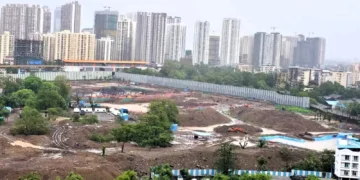










A Bengaluru rental listing reportedly demanding around ₹1.1 lakh per month has reignited debates around India’s rising urban housing costs. The discussion quickly spread across social media, where users questioned affordability, work culture, migration pressure, and the growing gap between salaries and living expenses.
Bengaluru Rent Debate Goes Viral Across Social Media
The Bengaluru rent debate gained momentum after screenshots of a high-priced apartment listing began circulating online. Social media users were shocked to see monthly rent figures touching nearly ₹1.1 lakh for residential properties in popular technology corridors of the city.
The viral posts triggered thousands of reactions on X, Instagram, Reddit, and LinkedIn. While some users argued that premium gated communities and luxury apartments naturally command higher rents, others pointed out that even standard housing in Bengaluru has become increasingly unaffordable for middle-class professionals.
The issue quickly evolved beyond one apartment listing. It became part of a larger conversation around India’s urban housing crisis, especially in cities driven by technology jobs and startup growth.
Many professionals working in Bengaluru’s IT sector shared personal stories about steep security deposits, yearly rent hikes, brokerage charges, and rising maintenance costs. Several users compared Bengaluru’s rental market to global metro cities despite differences in infrastructure and public transport quality.
Why Bengaluru Property Prices Continue Rising
The Bengaluru housing market has witnessed significant pressure over the past few years due to strong migration into the city. As India’s startup and technology capital, Bengaluru attracts professionals from nearly every state.
Areas near Whitefield, Sarjapur Road, Electronic City, Koramangala, HSR Layout, and Outer Ring Road have seen sharp increases in demand because they are close to major IT parks and multinational offices.
Property experts say rental prices often rise when supply struggles to match incoming demand. Hybrid work policies also contributed to renewed demand after many employees returned to offices during the last two years.
Another major factor is infrastructure expansion. Metro connectivity projects, commercial developments, and new tech campuses have increased property valuations in multiple Bengaluru neighborhoods.
However, critics argue that salary growth for many employees has not kept pace with housing inflation. Young professionals, especially freshers and early-stage startup employees, increasingly struggle to balance rent with transportation, food, and lifestyle expenses.
The viral ₹1.1 lakh rent discussion reflected these growing frustrations.
Social Media Users Question Urban Work-Life Economics
One reason the Bengaluru viral rent topic resonated strongly online is because it touched a broader concern affecting urban India: whether metro city life is becoming financially unsustainable for ordinary workers.
Many users questioned whether paying extremely high rent makes sense even for well-paid professionals. Others pointed out that people are spending a large portion of their salaries simply to stay close to workplaces due to Bengaluru’s traffic congestion.
The debate also highlighted changing attitudes among younger workers. Some users suggested remote work and smaller cities may offer better financial stability compared to living in expensive metropolitan areas.
Tier-2 cities such as Pune, Indore, Ahmedabad, Coimbatore, and Jaipur were repeatedly mentioned during online discussions as alternatives offering lower housing costs and improving job opportunities.
At the same time, real estate supporters argued that Bengaluru remains one of India’s strongest employment hubs with high demand for quality housing. They believe premium rents are mainly concentrated in luxury segments rather than across the entire market.
The conversation revealed how urban housing has become emotionally and economically sensitive for India’s working population.
Bengaluru Housing Costs Reflect Larger Indian Urban Challenges
The Bengaluru rent controversy is not an isolated case. Similar discussions have emerged in Mumbai, Gurugram, Hyderabad, Pune, and Delhi-NCR over the past year.
Across Indian metro cities, rapid migration, infrastructure pressure, and commercial development are changing residential markets quickly. The gap between affordable housing availability and actual demand remains a major challenge.
Housing analysts often note that India’s urban population is expected to continue growing significantly over the next decade. This could further increase pressure on rental markets unless large-scale affordable housing development improves.
The social media response also exposed a growing disconnect between aspirational city lifestyles and financial realities. Many middle-class workers today prioritize location convenience because long commutes affect both productivity and personal life.
For Bengaluru specifically, traffic congestion continues to influence rental decisions heavily. People often choose expensive homes closer to offices simply to avoid spending several hours daily on roads.
This practical reality partly explains why some properties near technology hubs attract unusually high rents.
The Viral Debate Shows How Housing Has Become A National Issue
The ₹1.1 lakh Bengaluru rent discussion ultimately became larger than one property listing. It reflected anxieties around affordability, career growth, migration, and quality of life in modern urban India.
Social media amplified the issue because many Indians now directly relate housing expenses to mental stress, savings pressure, and long-term financial planning.
The conversation also demonstrated how digital platforms are increasingly shaping public debates around economic realities. Viral housing stories now regularly influence discussions about salaries, urban planning, remote work, and even government infrastructure policies.
While Bengaluru continues to remain one of India’s most attractive employment destinations, the housing debate suggests many residents are reassessing what sustainable city living actually means in 2026.
Key Takeaways
- A viral Bengaluru rental listing reportedly priced around ₹1.1 lakh sparked nationwide online discussion.
- Rising housing costs in Bengaluru are linked to tech migration, office demand, and infrastructure expansion.
- Social media users debated whether metro city living is becoming financially unsustainable.
- The issue reflects broader urban housing affordability concerns across India.
FAQ
Why did the Bengaluru rent debate go viral?
The topic gained traction after social media users shared screenshots of expensive apartment rentals, leading to discussions about affordability and urban living costs.
Which Bengaluru areas have seen major rent increases?
Locations near IT hubs such as Whitefield, HSR Layout, Koramangala, Sarjapur Road, and Electronic City have experienced strong rental demand.
Are rising rents only affecting Bengaluru?
No. Similar housing affordability concerns are being discussed in Mumbai, Delhi-NCR, Hyderabad, Pune, and Gurugram.
Why are people considering Tier-2 cities instead?
Many professionals believe Tier-2 cities offer lower living costs, shorter commutes, and improving job opportunities compared to expensive metro cities.