






























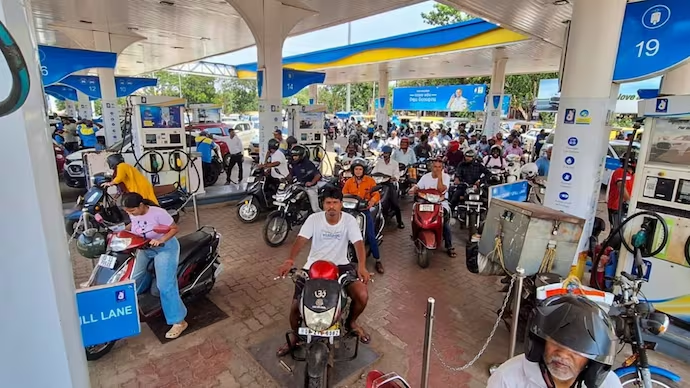
A fresh increase in petrol and diesel prices across India is putting added pressure on household budgets. From daily commuting costs to higher prices for groceries and essentials, the latest fuel hike is expected to affect families in both metro cities and smaller towns.
Fuel Prices Increase Again Across Major Indian Cities
Petrol and diesel prices are among the most closely watched indicators for Indian consumers because they influence transportation and the cost of nearly every essential item. The latest fuel hike has pushed rates upward in cities such as Delhi, Mumbai, Kolkata, Chennai, and Nagpur.
Fuel prices in India are revised based on international crude oil prices, the rupee-dollar exchange rate, refining costs, freight charges, and central and state taxes. Even a small increase of ₹1 to ₹3 per litre can significantly affect monthly expenses for households that rely on two-wheelers and cars for daily travel.
The impact is especially noticeable for middle-class families, delivery workers, small business owners, and farmers, all of whom depend heavily on fuel.
Why Petrol and Diesel Prices Are Rising
The recent rise in petrol and diesel prices is linked to a combination of global and domestic factors.
International crude oil prices have remained firm due to geopolitical tensions and production decisions by major oil-producing countries. At the same time, a weaker rupee makes imported crude more expensive for India, which imports the majority of its oil requirements.
Taxes also play a major role. State-level value-added tax differs across India, which is why fuel prices vary from one city to another.
Oil marketing companies such as Indian Oil Corporation, Bharat Petroleum, and Hindustan Petroleum adjust retail prices according to these cost components.
How the Fuel Hike Affects Household Budgets
The immediate effect of higher petrol and diesel prices is an increase in transportation costs.
A commuter who uses 40 litres of petrol each month will spend ₹80 more if fuel rises by ₹2 per litre. While this may appear manageable in isolation, it adds to existing pressure from higher food, electricity, school, and medical expenses.
Diesel price hikes have a broader effect because diesel powers trucks, buses, and agricultural equipment. When transport costs rise, businesses often pass the additional expense to consumers through higher prices for vegetables, milk, packaged foods, and household goods.
Families in Tier-2 and Tier-3 cities can feel this impact more sharply because personal vehicles are often essential and public transport options may be limited.
Grocery and Delivery Costs May Also Rise
Fuel prices affect much more than what drivers pay at the pump.
Higher diesel costs can increase the expense of moving goods across the country. This can lead to gradual price increases for fruits, vegetables, dairy products, and consumer goods.
App-based cab fares and food delivery charges may also edge higher. Companies such as Uber, Ola, Swiggy, and Zomato may adjust charges when fuel costs remain elevated for extended periods.
For households trying to manage monthly expenses, these small increases can accumulate quickly.
What Consumers Can Do to Reduce Fuel Expenses
While consumers cannot control fuel prices, they can take practical steps to reduce the impact.
Maintaining proper tyre pressure, avoiding sudden acceleration, and servicing vehicles regularly can improve mileage. Combining errands into a single trip and carpooling can also lower monthly fuel use.
Many urban commuters are exploring public transport or switching to electric scooters for short-distance travel.
Tracking daily prices through official oil company websites can help consumers plan refueling when rates are relatively lower in nearby locations.
Could Fuel Prices Change Again Soon?
Fuel prices are influenced by international crude trends, currency movements, and tax decisions, which means they can move in either direction.
If global oil prices soften or governments reduce taxes, retail prices may stabilize or decline. However, if crude prices remain elevated, consumers could face continued pressure in the coming weeks.
For now, households should prepare for modest but noticeable increases in transportation and living costs.
Key Takeaways
- Petrol and diesel prices have increased in several Indian cities.
- Higher fuel costs raise commuting, delivery, and logistics expenses.
- Diesel hikes can push up prices of groceries and daily essentials.
- Households can reduce the impact by improving mileage and cutting unnecessary travel.
Frequently Asked Questions
Why do petrol and diesel prices differ across cities?
State taxes and local levies vary, causing price differences between cities.
How does diesel affect grocery prices?
Diesel powers trucks and farm equipment, so higher diesel costs increase transportation and production expenses.
Will cab and food delivery services become more expensive?
They may revise charges if fuel prices stay elevated for a sustained period.
Can fuel prices fall again?
Yes. Prices may decrease if global crude oil prices decline or if taxes are reduced.