



























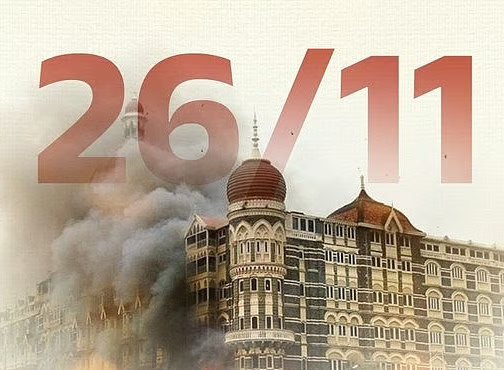
As India marks 18 years since the 26/11 Mumbai terror attacks, Maharashtra has reorganised its elite Force One commando unit under ATS control. New training programmes, mock drills and improved coordination are part of wider efforts to strengthen India’s counter-terrorism preparedness.
18 Years After 26/11, India Reviews Its Counter-Terrorism Preparedness
India marks the 18th anniversary of the 26/11 Mumbai terror attacks on November 26, 2026. The attacks exposed serious gaps in India’s security infrastructure, particularly in rapid response, intelligence coordination and specialised counter-terrorism capabilities.
The events of November 26, 2008, changed the country’s approach towards internal security. Ten terrorists entered Mumbai by sea and attacked several locations, including Chhatrapati Shivaji Maharaj Terminus, the Taj Mahal Palace Hotel, the Oberoi Trident and Nariman House.
The four-day assault killed 166 people, including security personnel, and injured hundreds of others.
One of the major challenges during the operation was the time required to bring specialised commandos to Mumbai. The National Security Guard (NSG), headquartered in Manesar, Haryana, had to be mobilised and transported to the city.
The experience highlighted the need for states to develop their own specialised forces capable of responding quickly to major security emergencies.
Eighteen years later, Maharashtra’s Force One, along with national-level training programmes and multi-agency security exercises, represents part of the effort to address those vulnerabilities. Press Information Bureau+2
What Is Maharashtra’s Force One and Why Was It Created?
Force One is Maharashtra’s specialised commando unit established following the 2008 Mumbai terror attacks.
The Maharashtra Home Department issued the Government Resolution establishing the unit on April 2, 2009. Force One became operational in November 2009, beginning with an initial batch of 216 commandos.
The unit was created along the lines of the NSG to provide Maharashtra with a dedicated force capable of responding to major terrorist incidents and other high-risk security situations.
Its responsibilities include counter-terrorism operations, hostage rescue and specialised interventions during emergencies.
Force One is headquartered at a 96-acre campus in Aarey Milk Colony, Goregaon East, Mumbai.
The unit was particularly important because the 26/11 experience showed that depending entirely on a centrally located national commando force could create delays during an emergency.
A state-level specialist unit gives Maharashtra an additional response capability, allowing trained personnel to be mobilised without waiting for reinforcements from another state.
Force One has remained on standby for major terror emergencies since its formation. According to The Indian Express, it has also assisted the Anti-Terrorism Squad in two to three operations involving the apprehension of suspected anti-national elements. Mumbai News – The Indian Express+2
Force One Comes Under Maharashtra ATS Control in November 2026
One of the most significant recent developments in Maharashtra’s counter-terrorism structure is the decision to place Force One under the administrative and operational control of the Anti-Terrorism Squad.
The Maharashtra Home Department issued a Government Resolution on November 16, 2026, bringing the two specialised units under a unified command structure.
Previously, Force One operated under the Additional Director General of Police (Law and Order), while the ATS had a separate administrative leadership.
The arrangement had been in place since 2013, when the two units were separated under different senior officers.
The new structure is intended to improve coordination between intelligence gathering and operational deployment.
The ATS is responsible for monitoring terrorist networks, investigating terror-related activities and collecting intelligence about potential threats. Force One provides specialised commando capabilities for high-risk operations.
Bringing the two units under the same leadership is expected to reduce administrative delays and make it easier to deploy trained commandos when intelligence inputs indicate a potential security threat.
The government has clarified that the restructuring will not change Force One’s sanctioned posts, manpower strength, financial provisions or service conditions. Mumbai News – The Indian Express+2
How ATS and Force One Can Work Together During Terror Emergencies
The integration of Force One and ATS is intended to address an important requirement in counter-terrorism operations: coordination between intelligence and immediate action.
The ATS monitors suspicious activities, investigates terrorist networks and gathers information that may indicate potential security threats. However, identifying a threat is only one part of preventing an attack. Authorities also need trained personnel who can respond when an emergency occurs.
Force One provides this specialised operational capability.
Under the new arrangement, both units will function under unified administrative and operational leadership. This is expected to make it easier to coordinate intelligence inputs, prepare deployment plans and mobilise commandos when required.
For example, if intelligence agencies identify a potential threat involving a sensitive installation, the ATS can coordinate the relevant information while Force One provides specialised intervention capabilities if an operation becomes necessary.
The arrangement is also expected to improve training coordination, equipment planning and capacity building.
Retired IPS officer Sanjay Saxena, who previously headed Force One, told The Indian Express that closer coordination between the two units could help them use intelligence inputs more effectively.
However, the administrative restructuring alone cannot guarantee better security. Its effectiveness will depend on training, communication, operational readiness and coordination with other security agencies. Mumbai News – The Indian Express+2
NSG Trains State Anti-Terror Units to Handle 26/11-Type Attacks
Another important development in India’s counter-terrorism preparedness is the National Security Guard’s specialised training programme for state police anti-terror units.
According to Hindustan Times reporting on November 26, 2026, the NSG has completed six-week police commando conversion courses for personnel from Maharashtra, Telangana, West Bengal, Gujarat and Uttar Pradesh.
The programme is designed to help state-level anti-terror units develop specialised capabilities for responding to major terrorist incidents.
Training includes hostage rescue, counter-terrorism operations and handling situations involving attackers inside buildings.
One of the important lessons from the 26/11 attacks was the difficulty of conducting rescue operations inside large buildings.
During the Mumbai attacks, security personnel had to search multiple floors and hundreds of rooms at locations such as the Taj Mahal Palace Hotel while dealing with armed attackers and hostage situations.
The NSG’s training programme aims to share specialised operational experience with state police personnel so they can respond more effectively before central reinforcements arrive.
The Union Home Ministry is monitoring these training programmes, with plans to extend similar training to other state anti-terror units.
Refresher courses are also expected to help maintain the skills developed during the initial training. India News
Mumbai Police Conducts Counter-Terror Mock Drills Ahead of 26/11
Training is not limited to specialised commando units. Mumbai Police and other security agencies have also conducted joint exercises to test their emergency response capabilities.
On November 5, 2026, the NSG, Indian Air Force and Mumbai Police conducted a major counter-terrorism mock exercise across Mumbai ahead of the 26/11 anniversary.
The exercises covered sensitive locations and critical infrastructure, including the Mumbai Diamond Bourse in Bandra-Kurla Complex and the ONGC building.
According to reports, NSG commandos participated in helicopter-based deployment exercises, including rappelling onto high-rise buildings.
The drills were designed to test rapid deployment, hostage rescue, emergency response and coordination between different security agencies.
Mumbai Police Quick Response Teams also participated in the exercises.
Such drills are important because counter-terrorism operations often require several agencies to work together under difficult circumstances. Police personnel, specialised commandos, emergency services and other authorities must be able to coordinate their responsibilities.
Mock exercises help identify communication gaps, test emergency procedures and evaluate whether security teams can respond effectively to different scenarios.
These exercises also help agencies review their preparedness without waiting for an actual emergency. ET Now+2
How India’s Coastal Security Changed After the 26/11 Attacks
The 2008 Mumbai attacks exposed serious weaknesses in India’s maritime security arrangements.
The terrorists entered Mumbai by sea after travelling from Pakistan. Their arrival demonstrated the importance of monitoring coastal areas, fishing vessels and maritime movements.
Following the attacks, the government reviewed coastal security and introduced several measures involving the Indian Navy, Indian Coast Guard, state marine police and other agencies.
According to the Press Information Bureau, these measures included establishing additional coastal police stations, supplying interceptor boats, strengthening maritime surveillance and improving coordination between security agencies.
Joint Operations Centres were also established at Mumbai, Visakhapatnam, Kochi and Port Blair.
These centres serve as coordination hubs involving the Navy, Coast Guard and Marine Police.
The government also introduced measures involving vessel tracking, fishermen’s identity cards and intensified coastal patrolling.
The objective was to strengthen the monitoring of India’s coastline and improve the ability of different agencies to identify suspicious maritime activity.
For Maharashtra, which has an extensive coastline and an important commercial port in Mumbai, coastal security remains a significant part of the state’s wider counter-terrorism preparedness. Press Information Bureau+2
What Has Changed in India’s Security System Since 2008?
The 26/11 attacks triggered several changes in India’s internal security arrangements.
One important development was the strengthening of specialised investigation agencies and coordination mechanisms.
The National Investigation Agency (NIA) was established in 2008 to investigate offences related to terrorism and other national security threats.
The government also strengthened coastal security, expanded specialised police response capabilities and introduced improvements in intelligence sharing.
The Ministry of Home Affairs’ National Counterterrorism Policy and Strategy, PRAHAAR, also emphasises modernisation, specialised training, improved investigative capabilities and coordination between central and state agencies.
Another important area is the development of state-level counter-terrorism capabilities. Instead of depending entirely on central forces, states are encouraged to develop trained personnel who can act as first responders during emergencies.
These measures reflect a broader shift towards a multi-agency security system.
However, security preparedness is an ongoing process. New technologies, changing methods of terrorist activity, cyber threats and emerging security challenges require agencies to regularly update their training and operational capabilities. Ministry of Home Affairs+2
Why Force One Matters for Maharashtra’s Future Security
For Maharashtra, Force One represents an important layer of specialised emergency response.
Mumbai is a major financial centre with important commercial establishments, transport infrastructure, public spaces and international connections. Security preparedness therefore requires coordination across several agencies.
Force One provides the state with a dedicated commando capability, while ATS focuses on intelligence gathering and investigations into terror-related activities.
The November 2026 administrative restructuring aims to bring these responsibilities closer under a common leadership structure.
The NSG’s training programmes and recent joint mock drills also demonstrate the importance of preparing state-level personnel to respond before national-level reinforcements become necessary.
The 26/11 anniversary is therefore not only a reminder of the lives lost in 2008. It is also an opportunity to examine how India’s security institutions have changed and where further improvements are needed.
Force One’s return under ATS control is one such organisational development. Its long-term effectiveness will depend on how successfully the state translates administrative coordination into operational readiness.
Key Takeaways
- The 26/11 Mumbai terror attacks killed 166 people and exposed major gaps in India’s counter-terrorism preparedness.
- Maharashtra established Force One in 2009 to provide the state with a specialised commando response capability.
- A November 16, 2026, government resolution brought Force One under the administrative and operational control of ATS.
- The NSG has completed six-week specialised training programmes for anti-terror personnel from five states, including Maharashtra.
Frequently Asked Questions (FAQs)
1. What is Force One in Maharashtra?
Force One is Maharashtra’s specialised commando unit established after the 26/11 Mumbai terror attacks. It became operational in November 2009 and is trained to handle high-risk counter-terrorism operations and hostage rescue situations.
2. Why has Force One been brought under ATS control in 2026?
The Maharashtra government brought Force One under ATS control to improve coordination, reduce administrative delays and establish unified leadership during counter-terrorism operations.
3. What training is the NSG providing to state police forces?
The NSG has completed six-week commando conversion courses for anti-terror personnel from Maharashtra, Telangana, West Bengal, Gujarat and Uttar Pradesh. The training includes hostage rescue and counter-terrorism operations.
4. What security changes were introduced in India after the 26/11 attacks?
Major changes included the establishment of the NIA, strengthening of coastal security, development of specialised state police units, improved intelligence coordination and expansion of counter-terrorism training.