



























From a youth demanding pumpkin cooked with poppy seeds while sitting atop a 270-foot tower to creators filming risky stunts inside Delhi Metro, several unusual incidents have recently captured attention across India. Here is what happened, and why these moments went viral.
Siliguri tower rescue began with an unusual food demand
The most unusual recent incident came from Siliguri, West Bengal, where an eight-hour rescue operation followed a youth climbing to the top of a roughly 270-foot BSNL telecommunications tower at Kanchanjunga Stadium.
The youth was first spotted around 4 pm. Police, fire services, Civil Defence personnel and disaster-management teams reached the location as crowds gathered below.
The height of the tower created an immediate communication problem. Instead of attempting a risky direct intervention, the Siliguri Police Commissionerate used a drone to communicate with him.
That conversation produced one of the strangest details of the incident. According to reports, the youth asked for posto diye kumro bhaja, a Bengali preparation of pumpkin cooked with poppy seeds. He reportedly also demanded a helicopter ride at one point.
With attempts to persuade him from the ground proving unsuccessful, authorities brought in experienced mountaineers. The team eventually reached him, secured him in a stretcher-like arrangement and carefully lowered him.
He was brought safely to the ground at around 11:30 pm and was subsequently taken to North Bengal Medical College and Hospital for medical attention and observation. Police were also investigating how he entered the stadium premises and gained access to the ageing tower.
Delhi Metro turns viral content into a safety debate
Another unusual trend currently drawing attention is not about one isolated incident but a growing form of social-media content.
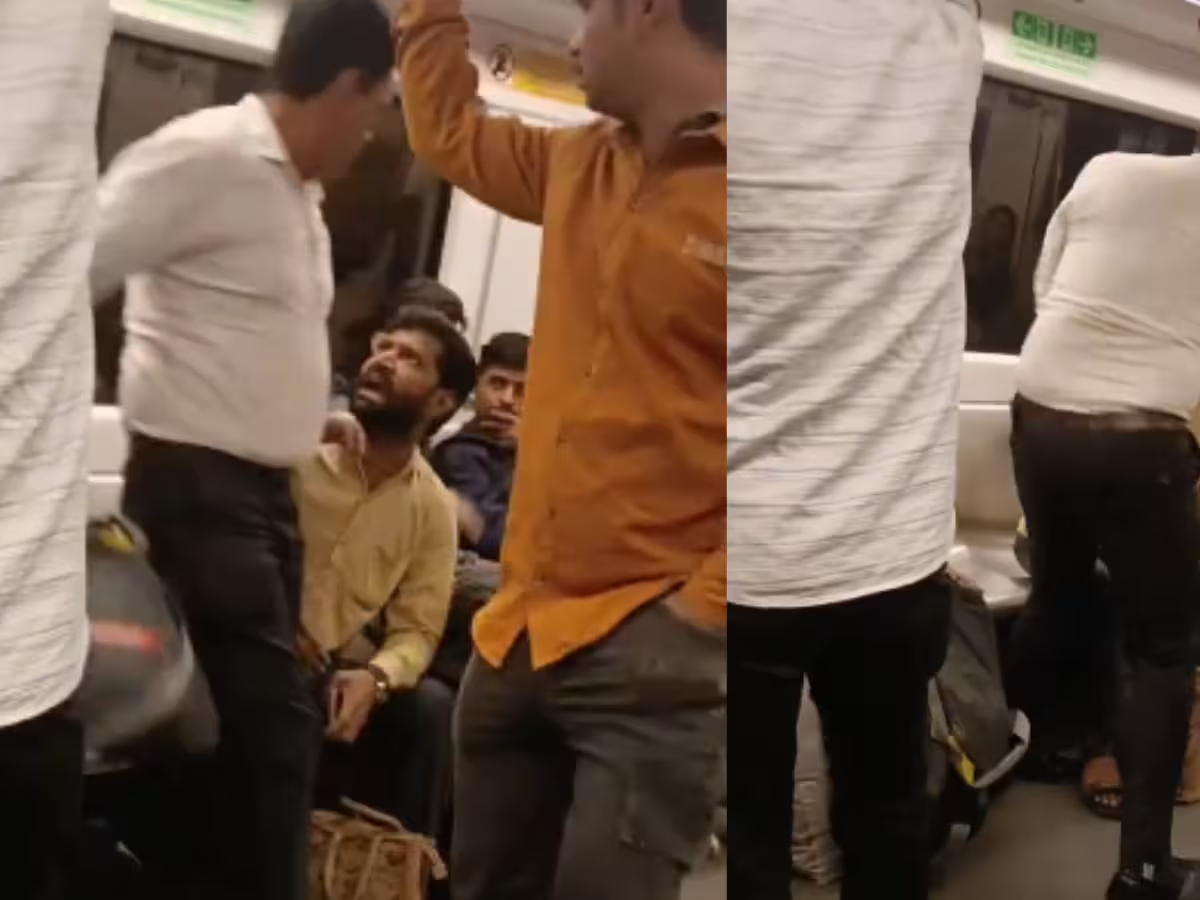
The Delhi Metro has recently become the setting for creators attempting dramatic videos involving moving trains. One trend involves attaching smartphones to Metro train windows and then filming as the train begins moving. Some clips show creators running after the train or staging a moment in which a phone appears to be left behind.
The videos may look entertaining online, but the Delhi Metro Rail Corporation has warned against such activities.
According to reports, DMRC has highlighted risks to passengers, potential damage to equipment and the possibility of legal action. One video associated with the trend reportedly crossed 135 million views, showing just how quickly unusual public stunts can spread online.
The larger issue is the changing relationship between viral content and public safety. A stunt that takes only a few seconds to record can create risks for commuters who have nothing to do with the video.
For viewers, the important distinction is between an unusual moment that happens naturally and a dangerous act deliberately performed for views.
A hawk on a Mumbai local train became an internet sensation
Mumbai’s local trains have long been associated with unexpected encounters, but one viral video took that reputation to another level.
A video reportedly recorded on a Mumbai local train showed a hawk sitting calmly on the turban of a female Nihang Sikh passenger. The incident was said to have taken place on a train operating between Chhatrapati Shivaji Maharaj Terminus and Kalyan.
Passengers filmed the unusual sight as the bird remained perched on the passenger’s turban inside the crowded compartment. The video subsequently circulated widely on social media.
Unlike the Siliguri tower incident or the Metro stunt trend, this was not reported as a deliberate attempt to create viral content. That difference is important. Social media often turns ordinary public moments into unexpected internet stories simply because cameras happen to be present.
Jaipur kulfi seller makes a treat specifically for dogs
Not every bizarre viral story involves danger or controversy.
A Jaipur kulfi seller recently attracted attention after a video showed him offering sugar-free kulfi specially prepared for dogs. The unusual idea was highlighted online after a visitor noticed the pet-friendly offering.
The vendor was affectionately referred to as Cutie Uncle by some viewers, while a dog named Tara was shown enjoying the specially prepared kulfi. The story gained traction because of its unusual combination of street food, small-business creativity and animal-friendly thinking.
The episode also shows why simple local stories can perform strongly on social media. A small business serving a niche need can become a national talking point when the moment is visually interesting and easy to understand.
Why unusual Indian incidents spread so quickly online
The common thread between these stories is not necessarily comedy. It is surprise.
A man sitting hundreds of feet above the ground and asking for a specific Bengali dish is unexpected. A hawk calmly travelling inside a Mumbai local train is unexpected. A seller making special kulfi for dogs is unusual. And creators placing phones on moving Metro trains turns an ordinary commute into staged social-media content.
Visual storytelling plays a major role. Videos and photographs can communicate the unusual nature of an incident within seconds, allowing users to understand the story before reading a full article.
There is also a strong regional element. Stories from Siliguri, Jaipur and Mumbai can travel far beyond their original audiences when they contain a memorable detail.
For news publishers, however, virality should not replace verification. A video can be real while its accompanying claim is false, exaggerated or incomplete. The date, location, identity of people involved and official response should therefore be checked before publication.
Viral does not always mean funny
It is also important to separate bizarre viral incidents from stories involving serious harm.
Recent viral reports have included a police officer being arrested after a video allegedly showed him purchasing drugs, as well as six Uttar Pradesh police personnel being suspended after a video showed an unauthorised person cutting a birthday cake inside police premises. These incidents attracted attention because of the videos, but they should be treated as accountability and public-interest stories rather than comedy content.
That distinction matters for responsible digital journalism. A strange incident can be presented with an engaging headline without trivialising potential mental-health, safety, criminal or public-order concerns.
What these viral stories reveal about India’s internet culture
India’s viral ecosystem increasingly mixes local incidents, public behaviour, food culture, unexpected animal encounters and creator-driven stunts.
Tier-2 and Tier-3 cities are especially important in this cycle because smartphones and social platforms allow incidents from smaller cities to reach national audiences almost instantly.
The Siliguri tower rescue is a good example. What began as a local emergency became widely discussed because of one highly unusual detail: the reported request for posto diye kumro bhaja from the top of a 270-foot tower.
The lesson for readers and publishers is straightforward. Viral content can be entertaining, but context still matters. Before sharing or reporting an unusual video, users should ask where it happened, when it happened, whether the footage is authentic and what authorities or reliable news organisations have confirmed.
Key Takeaways
- A Siliguri youth was safely rescued after spending nearly eight hours atop a 270-foot BSNL tower and reportedly asking for pumpkin cooked with poppy seeds.
- Delhi Metro has warned against dangerous viral filming trends involving phones attached to moving trains.
- A hawk travelling on a passenger’s turban inside a Mumbai local became an unusual viral social-media moment.
- A Jaipur kulfi seller gained attention for preparing sugar-free kulfi specifically for dogs.
FAQ
What happened in the Siliguri tower rescue?
A youth climbed to the top of a roughly 270-foot BSNL tower at Kanchanjunga Stadium in Siliguri. Police used a drone to communicate with him before trained mountaineers eventually brought him safely down after an operation lasting nearly eight hours.
What food did the Siliguri youth reportedly demand?
Reports said he asked for posto diye kumro bhaja, a Bengali preparation involving pumpkin and poppy seeds. He also reportedly demanded a helicopter ride during the rescue operation.
Why did the Delhi Metro issue a warning about viral videos?
DMRC warned against social-media stunts involving phones attached to moving Metro trains because they can create safety risks, inconvenience passengers and potentially damage equipment.
Why do unusual local incidents become national viral stories?
Short videos and photographs can make unusual incidents instantly understandable. When a story contains a memorable visual or unexpected detail, social platforms can quickly push it beyond its original city or state.