
























India’s civic problems are increasingly becoming social-media content, from pothole protests and flooded roads to littering and unsafe public behaviour. Viral videos can expose local failures within hours, but they also raise questions about accountability, context and whether online outrage leads to lasting change.
Pothole Protest in Hyderabad Draws Fresh Attention
The latest example comes from Hyderabad, where a local resident reportedly sat inside a large pothole on a busy Old City road to protest deteriorating road conditions. The unusual demonstration took place on Imlibun-Putlibowli Road near Gowliguda bus stand and reportedly affected traffic. A video of the protest was widely shared on social media, bringing renewed attention to complaints about damaged roads and delayed repairs.
The protest is striking because it turns an everyday infrastructure problem into a visual statement that is difficult to ignore. Instead of holding a conventional demonstration, the resident physically placed himself inside the pothole that he wanted authorities to notice.
This is precisely the kind of incident that performs well on social platforms. A large road crater is immediately understandable, while a person sitting inside it creates a memorable image that can be photographed, recorded and shared within seconds.
From Hyderabad to Jaipur, Potholes Become Protest Props
Hyderabad is not an isolated example. In Jaipur, more than 100 residents recently staged a distinctive protest against waterlogging and potholes by dressing two protesters as astronauts and placing them inside large, water-filled road craters.
The protesters described the pothole-riddled roads as resembling the surface of the Moon or Mars. The demonstration took place in the Gokulpura area of Jhotwara and was aimed at highlighting deteriorating roads and drainage after recent rains.
The approach may look humorous, but the underlying complaint is serious. Potholes can affect two-wheelers, cars, pedestrians and public transport, particularly during the monsoon when water can hide the depth of damaged sections.
Using humour gives such protests an additional advantage. A conventional road complaint may receive limited attention, while an astronaut standing inside a flooded pothole is much more likely to become a photograph, headline and social-media post.
Why Civic Complaints Are Becoming Visual Stories
Social media has changed the way residents report civic problems.
Earlier, a complaint about a broken road, overflowing drain or uncollected garbage might have involved contacting a municipal helpline, filing a written complaint or approaching a local representative. Those channels still exist, but citizens now have another option: document the problem publicly.
A smartphone allows a resident to record the exact location, show the condition of the infrastructure and publish the evidence immediately.
That changes the dynamics of a civic complaint. Instead of remaining a private exchange between a resident and a government department, the issue can become visible to thousands or even millions of people.
A viral post can also attract journalists, local politicians and civic officials. In some cases, that public attention can accelerate a response.
But virality itself should not be confused with resolution. A video getting millions of views does not necessarily mean the pothole has been repaired or the drainage problem has been fixed.
Waterlogging and Flooded Roads Find a Ready Audience
Waterlogging is another civic problem that frequently becomes social-media content, particularly during the monsoon.
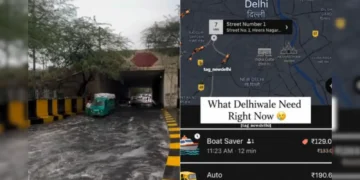
In Gurugram, a founder recently shared a video showing waterlogging outside his home after about an hour of rain and questioned the quality of civic infrastructure despite residents and businesses paying taxes. The post triggered an online discussion about urban drainage and the quality of public services.
Such videos resonate because waterlogging is an experience shared by residents of many Indian cities. It can disrupt office commutes, school routes, deliveries and emergency travel.
The visual nature of the problem makes it especially suited to short-form platforms. A flooded road immediately communicates the scale of the issue without requiring a lengthy explanation.
At the same time, one video cannot establish the complete cause of flooding. Drainage capacity, rainfall intensity, encroachments, road construction, garbage accumulation and maintenance can all contribute to local waterlogging. Responsible reporting therefore requires more than simply reposting a viral clip.
Bhopal Residents Burn Effigy Over Civic Problems
In Bhopal, residents of Katara Hills recently staged a protest over persistent waterlogging, potholes, poor sanitation and non-functional street lights. Demonstrators burned an effigy of the Bhopal Municipal Corporation to express frustration over civic conditions.
This example shows another stage in the relationship between civic complaints and public attention. A local problem can begin as neighbourhood frustration, become a physical protest and then gain wider visibility through photographs and videos online.
The pattern is increasingly common across Indian cities. Residents are not only complaining about individual potholes. They are using visible forms of protest to communicate frustration with what they perceive as repeated failures in basic services.
The social-media layer then gives the protest a second audience beyond those physically present at the location.
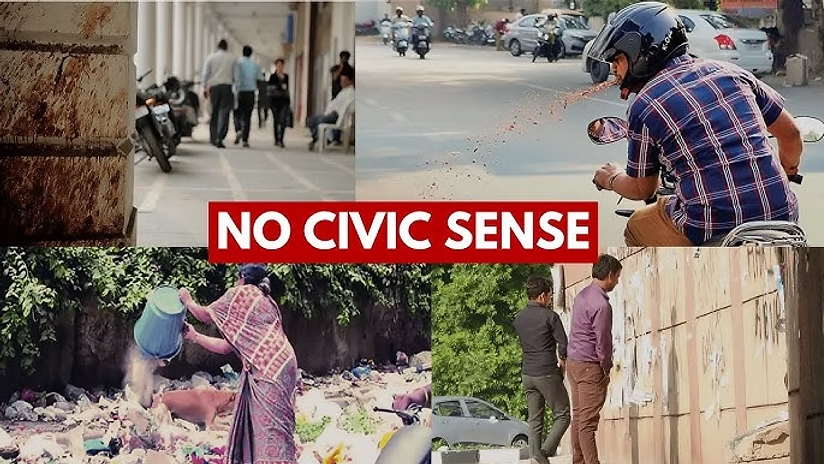
Viral Videos Can Also Expose Poor Civic Behaviour
The trend works in both directions.
Social media is used not only to expose government failures but also to document citizens behaving irresponsibly in public spaces.
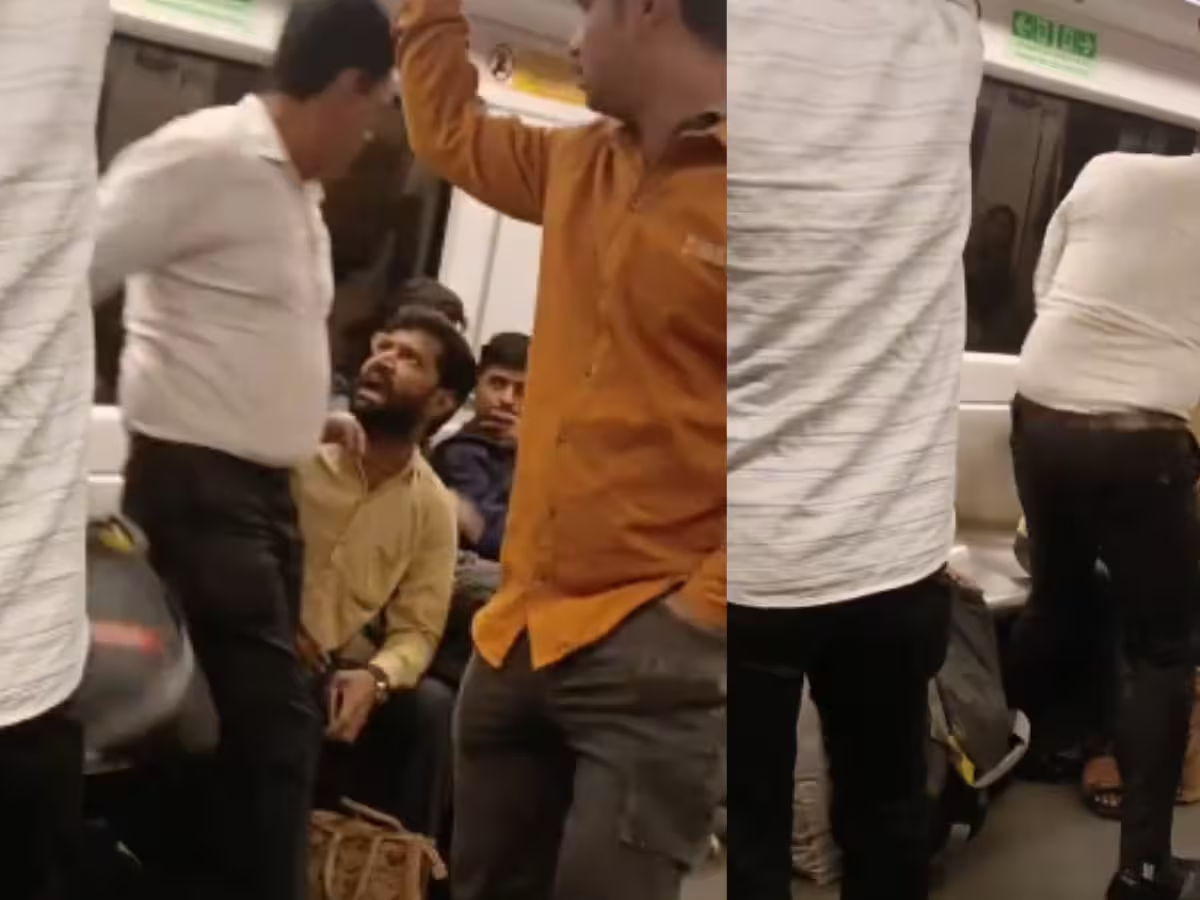
A recent video from Dehradun showed a group of tourists dancing inside Robber’s Cave while using a large speaker. The footage prompted criticism from social-media users who questioned whether such loud behaviour was appropriate at a natural tourist attraction.
Similarly, a video showing men apparently wearing Indian Railways bedsheets as shawls in a market triggered a debate about railway property and civic sense. The report noted that the claim that the bedsheets were stolen was attributed to the account sharing the video, rather than independently established by the report.
These examples highlight an important distinction. Civic sense is not only about what governments provide. It also involves how citizens use public infrastructure and shared spaces.
When Viral Content Becomes a Form of Accountability
One of the strongest arguments in favour of social-media civic reporting is that it can make local problems visible to people who might otherwise never hear about them.
A pothole on a residential road in Hyderabad may matter enormously to the people who use that road but receive little attention outside the neighbourhood. A viral video can change that.
The same applies to garbage near a major landmark. A recent video highlighting litter around India Gate in Delhi prompted online concern about cleanliness and the upkeep of a highly recognisable public space.
This can create pressure for authorities to respond. It can also help journalists identify stories that deserve further investigation.
However, the effectiveness of viral accountability depends on what happens after the post gains attention. If officials repair the road, clean the area or address the underlying problem, social media has served as an effective reporting mechanism.
If the conversation disappears after a few days, the impact may be largely symbolic.
The Risk of Outrage Without Context
There is another side to the rise of viral civic content.
Short videos are powerful because they simplify complex situations. That can also make them misleading.
A 20-second clip can show a pothole but not explain when it developed, who is responsible for repairing it or whether a repair order already exists. A video of a crowded road can show dangerous behaviour without establishing what happened before or after the recording.
The same problem applies to allegations against individuals or institutions. Viral posts often contain captions that present interpretations as facts.
This is why news organisations and social-media users need to distinguish between what a video clearly shows and what someone claims it proves.
A responsible report should identify the location, date and source of the footage where possible, seek official responses and avoid presenting unverified allegations as established facts.
Why Humour Makes Civic Protests More Shareable
The growing use of humour in civic protests is not accidental.
Traditional complaints can struggle to break through the enormous volume of content competing for attention online. Humour, visual symbolism and unusual demonstrations give a protest a recognisable identity.
The Jaipur astronaut protest is a good example. The message about potholes could have been communicated through banners and slogans, but dressing people as astronauts transformed the demonstration into an image that could easily circulate online.
The Hyderabad pothole protest uses a similar principle. A person physically sitting inside a road crater is unusual enough to make people stop scrolling and ask what happened.
In the attention economy of social media, that matters.
The challenge is ensuring that the entertaining presentation does not overshadow the actual civic issue.
What Viral Civic Content Means for Indian Cities
The growing number of civic videos suggests that residents increasingly see social media as another public forum for raising complaints.
For Tier-2 and Tier-3 cities, this can be particularly significant. Local infrastructure problems may receive less national media attention than issues in Delhi, Mumbai, Bengaluru or other major metropolitan areas. A viral post can potentially bridge that gap.
But online visibility should complement formal civic systems, not replace them.
Municipal bodies still need functioning complaint mechanisms, transparent maintenance schedules, accountable contractors and timely repairs. Citizens, meanwhile, need to use public spaces responsibly and report problems without exaggeration or misinformation.
The larger trend is clear. India’s civic problems are no longer confined to municipal offices and neighbourhood meetings. They are increasingly becoming videos, reels, memes, protest photographs and online debates.
That visibility can be useful. But the real measure of success is not how many people watch a civic-problem video. It is whether the problem eventually gets fixed.
Key Takeaways
- Civic problems such as potholes, waterlogging, poor sanitation and damaged roads are increasingly being documented through viral videos and unusual public protests.
- Recent examples include a Hyderabad resident sitting inside a pothole and Jaipur residents using an astronaut-themed protest to highlight damaged, waterlogged roads.
- Social media can increase pressure on authorities, but viral attention does not automatically mean that a civic issue has been resolved.
- Viral videos need context and verification because footage may show only part of an incident and social-media captions can contain unverified claims.
Frequently Asked Questions
Why are civic problems becoming viral on social media?
Civic problems are highly visual. Potholes, flooded roads, garbage and damaged infrastructure can be shown immediately through photographs and short videos. Unusual protests also make such content more likely to be shared.
Can viral videos force authorities to act?
They can create public pressure and attract the attention of officials, journalists and local representatives. However, a viral video does not guarantee action. The actual impact depends on whether authorities investigate the complaint and address the underlying problem.
Why do people use humour during civic protests?
Humour and unusual visual demonstrations can make a protest easier to notice and share. The Jaipur astronaut protest, for example, used a visual comparison between potholes and lunar craters to draw attention to road conditions.
Should every viral civic video be treated as evidence?
No. A video can provide useful evidence of what was captured at a particular time and place, but captions and claims attached to it may not be independently verified. News reports should establish the location, date and circumstances and seek responses from relevant authorities where necessary.