





























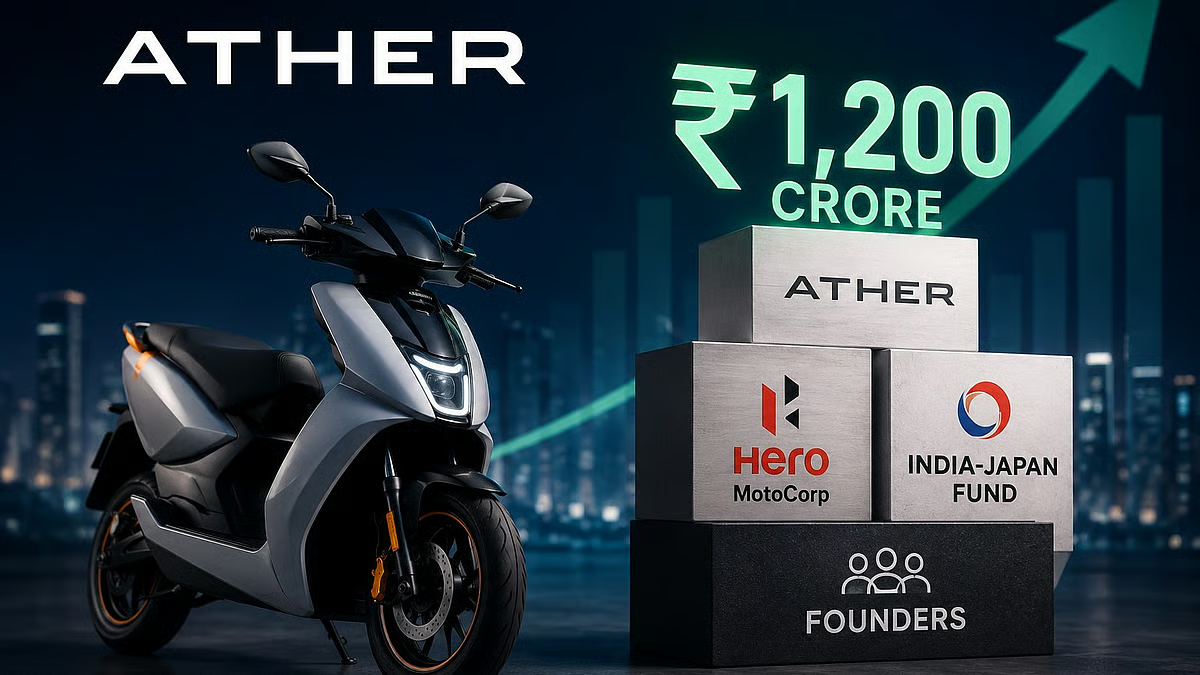
Ather Energy’s latest investment plans highlight the company’s focus on expanding manufacturing capacity, strengthening research and development, and accelerating electric vehicle adoption. The move reflects broader confidence in India’s growing EV market and could influence competition, supply chains and charging infrastructure in the coming years.
Time-sensitive or evergreen?
This is a time-sensitive business news topic. The article is written in a news reporting style because it is based on Ather Energy’s latest investment announcements and ongoing developments in India’s electric vehicle industry.
Ather Energy’s latest investment plans have drawn attention across India’s automotive and startup ecosystem as the electric two-wheeler manufacturer prepares for its next phase of growth. The Bengaluru-based company has announced plans to strengthen its manufacturing capabilities and expand its operations through fresh investments, reflecting increasing confidence in India’s rapidly evolving electric vehicle market.
The development comes at a time when India’s EV sector is witnessing rising consumer demand, greater government support and increasing competition among manufacturers. For investors, suppliers and consumers alike, Ather’s expansion strategy offers insights into where the country’s electric mobility industry is headed.
Ather Energy Focuses on Manufacturing Expansion
A key element of Ather Energy’s investment strategy is increasing production capacity to meet future demand. The company has already expanded its manufacturing footprint over the past few years, and its latest investment plans continue that trajectory.
Ather aims to scale production while improving operational efficiency and maintaining product quality. Increased manufacturing capacity is expected to help the company reduce delivery timelines, support new product launches and strengthen its presence across India.
Alongside factory expansion, Ather continues to invest in automation and advanced manufacturing processes. These improvements are designed to support long-term growth while maintaining consistency in production.
For India’s EV industry, such investments indicate that manufacturers are preparing for a larger customer base rather than focusing only on current demand.
Investment in Research and Product Development
Research and development remain central to Ather Energy’s growth strategy. The company has consistently invested in battery technology, software integration and connected vehicle features that distinguish its electric scooters from conventional alternatives.
Future investments are expected to support improvements in battery performance, charging efficiency, vehicle software and rider experience. Connected technologies, over-the-air software updates and smart dashboard features have become important differentiators in India’s premium electric scooter segment.
Continued investment in innovation also reflects the changing expectations of Indian consumers, who increasingly value technology alongside performance and reliability.
As competition intensifies, companies that invest in research are likely to gain an advantage through faster product development and feature upgrades.
Charging Infrastructure Continues to Grow
Beyond manufacturing and product development, Ather Energy has also invested significantly in charging infrastructure through its Ather Grid network.
Expanding charging facilities remains important for increasing consumer confidence in electric vehicles. While home charging satisfies most daily requirements, public charging stations provide reassurance for longer urban journeys and intercity travel.
The company has steadily expanded its charging network across multiple cities, often collaborating with commercial establishments and public locations. Improved charging accessibility benefits not only Ather customers but also contributes to the broader EV ecosystem by encouraging greater adoption of electric mobility.
As more charging stations become available, concerns regarding range anxiety are expected to decline further.
Increased Competition Benefits Consumers
India’s electric two-wheeler market has become increasingly competitive, with established manufacturers and emerging startups introducing new models across different price segments.
Ather competes with companies such as Ola Electric, TVS Motor, Bajaj Auto and other EV manufacturers. Continued investment by major players encourages faster innovation, competitive pricing and improved customer service.
Consumers are likely to benefit through:
- Better battery technology
- Improved vehicle range
- More charging options
- Enhanced software features
- Wider dealership networks
- Increased after-sales support
Competition also motivates manufacturers to improve quality standards while introducing new products that address diverse customer needs.
Government Policies Continue to Support EV Growth
India’s transition towards electric mobility continues to receive policy support from both the central and state governments.
Initiatives promoting domestic manufacturing, battery production and charging infrastructure have encouraged companies to invest in the sector. Although subsidy structures continue to evolve, policy efforts increasingly focus on building a sustainable EV ecosystem through local manufacturing and technological innovation.
State governments have also introduced EV policies offering incentives for manufacturing facilities, investment and infrastructure development.
These measures create a more favourable environment for companies planning long-term expansion while supporting employment and industrial growth.
What Ather’s Investment Means for India’s EV Industry
Ather Energy’s latest investment plans extend beyond the company’s own business objectives. They signal growing confidence in India’s electric mobility sector at a time when consumer awareness and EV adoption continue to rise.
Increased investments can strengthen domestic supply chains, generate employment opportunities and encourage component manufacturers to expand alongside vehicle producers. They also reinforce India’s ambition to become a major global hub for electric vehicle manufacturing.
For consumers, continued investment means access to better products, improved charging infrastructure and greater technological innovation. For the broader industry, it reflects a transition from an emerging market to one entering a more mature phase of growth.
While challenges such as battery sourcing, charging expansion and affordability remain, the overall direction of India’s EV industry continues to be positive. Ather Energy’s expansion plans underline the confidence that leading manufacturers have in the country’s long-term electric mobility journey.
Takeaways
- Ather Energy plans to expand manufacturing capacity to meet rising demand for electric scooters.
- Continued investment in research and development is expected to improve battery technology and connected vehicle features.
- Expansion of charging infrastructure supports wider EV adoption across India.
- Ather’s growth strategy reflects increasing confidence in India’s long-term electric vehicle market.
FAQ
Q1. Why is Ather Energy increasing its investments?
The company aims to expand manufacturing, strengthen research and development, improve charging infrastructure and prepare for growing demand in India’s EV market.
Q2. How will these investments benefit consumers?
Consumers can expect improved product availability, better technology, expanded charging networks and continued innovation in electric scooters.
Q3. Does Ather’s expansion indicate growth in India’s EV sector?
Yes. Continued investments by major manufacturers indicate confidence in the long-term growth potential of India’s electric vehicle industry.
Q4. What challenges still exist for India’s EV industry?
Key challenges include expanding charging infrastructure, ensuring battery supply, reducing ownership costs and increasing EV adoption in smaller cities and rural areas.