

















The Cockroach Janta Party began as an internet joke in May 2026 but soon became a wider example of how memes can carry satire, frustration and political commentary. Months later, the trend continues to generate discussion, showing how Indian internet humour can move beyond entertainment.
How the Cockroach Meme Trend Started in India
The Cockroach meme trend in India emerged in May after remarks made by Chief Justice of India Surya Kant during a Supreme Court hearing became the subject of widespread online discussion.
Reports initially presented the remarks as referring to unemployed youth as “cockroaches” and “parasites”. The CJI later clarified that his comments were directed at people who had entered professions using fake or bogus degrees and said they were not aimed at India’s youth generally.
The clarification did not stop the phrase from spreading online. Instead, social media users began turning the cockroach reference into memes, jokes, graphics and satirical posts.
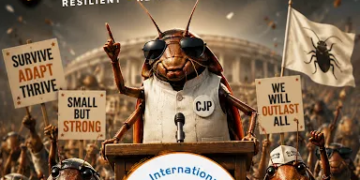
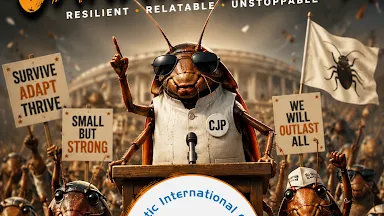
That eventually contributed to the emergence of the Cockroach Janta Party (CJP), a satirical digital collective associated with Abhijeet Dipke. India Today reported that the phenomenon rapidly gained attention among young social media users.
From One Viral Remark to a Meme Culture
What made the trend different from an ordinary viral joke was its ability to combine humour with subjects that already dominate conversations among young Indians.
Unemployment, competitive examinations, career pressure, social-media arguments and frustration with institutions became recurring themes in the memes surrounding CJP.
The format was simple. The cockroach became a symbolic character that could be placed into almost any situation. A person struggling to find a job could become a “cockroach”. Someone surviving exam preparation could become a “cockroach”. A social-media user complaining about everyday problems could also join the joke.
This adaptability is an important reason why meme formats spread quickly. They do not require a long explanation. Users can understand the basic joke and then modify it according to their own experiences.
India Today described the phenomenon as a parody movement rather than a conventional political party.
Why Gen Z Connected With the Cockroach Meme
The popularity of the trend also reflects the changing language of online conversations.
Younger internet users increasingly communicate through short videos, reaction images, memes, emojis and deliberately exaggerated humour. Instead of writing a long political or social commentary, a user can communicate an idea through one image and a few words.
The Cockroach Janta Party fitted naturally into that environment.
Reuters reported in May that the movement had attracted a very large Instagram following and that its supporters were using the campaign to express concerns around unemployment, examination paper leaks and dissatisfaction with established political structures.
That does not mean every person sharing a CJP meme necessarily supported the same political position. Meme participation can range from genuine activism to simple entertainment.
This distinction matters because viral numbers alone cannot establish what every follower or viewer believes.
Indian Memes Are Becoming More Contextual
Indian internet humour has changed significantly over the past decade.
Earlier meme culture often revolved around Bollywood dialogues, television scenes, cricket moments and reaction images. Those references remain popular, but newer meme formats increasingly respond to events within hours.
A news event can become a template. The template is then edited, remixed and reposted across Instagram, X, WhatsApp and other platforms.
The Cockroach Janta Party demonstrated this process particularly clearly. A courtroom controversy became a social-media phrase, the phrase became a meme, and the meme developed into a larger satirical identity.
India Today reported that fake accounts and clone websites also appeared as the CJP became popular, illustrating another side of viral internet culture.
For ordinary users, this is an important reminder that a viral account or logo should not automatically be treated as authentic.
The Trend Also Shows the Risks of Viral Context
The original controversy highlights another important feature of modern meme culture: context can disappear extremely quickly.
A spoken remark made during a court hearing can be clipped, paraphrased or turned into a headline before the complete explanation reaches social media users.
In this case, the CJI subsequently clarified that his remarks were about people entering professions through fake degrees, not about Indian youth as a whole. He also reiterated his respect for young people.
The episode therefore offers a useful lesson for social-media audiences. A meme may be funny, but the event behind the meme can be more complicated.
This becomes especially important when humour involves courts, politicians, government institutions or other public figures.
Cockroach Janta Party Moves Beyond Meme Posts
The CJP phenomenon has also continued to appear in Indian public affairs months after its initial viral phase.
Recent reports show representatives associated with the group commenting on student politics, government recruitment issues and education-related campaigns. The Times of India reported this week on statements by CJP founder Abhijeet Dipke concerning the Delhi University Students’ Union elections and the influence of money in student politics.
The group has also been involved in campaigns focused on school conditions and recruitment-related issues. A recent report from Nagpur edition of The Times of India covered the CJP’s “Adivasi School Thik Karo” campaign concerning tribal schools.
These developments show that the phenomenon is no longer limited to meme pages. At the same time, its political significance should not be assumed simply because it has a social-media presence.
Why Meme Culture Matters Beyond Entertainment
Memes are often dismissed as simple internet jokes, but they can reveal what topics are attracting public attention.
They provide an informal language for discussing difficult subjects. A meme about unemployment may contain humour, but it can also reflect a user’s personal experience with job searches. A joke about examinations can similarly reflect pressure faced by students.
For Tier-2 and Tier-3 audiences, this is particularly relevant because social media has become a major channel through which national conversations reach smaller cities and towns.
At the same time, memes can oversimplify complicated subjects. Satire can remove important context, while repeated sharing can make an unverified claim appear true.
The Cockroach trend therefore represents both sides of modern digital culture: humour can make serious subjects easier to discuss, but viral content still needs to be separated from verified information.
What the Cockroach Trend Says About Indian Internet Humour
The most notable part of the trend is not simply the use of a cockroach as a meme character. It is the speed with which Indian internet culture can transform a serious public incident into a shared cultural reference.
The trend also demonstrates how today’s meme culture is participatory. Users do not merely consume jokes. They modify them, create new versions and apply them to their own experiences.
That makes viral humour difficult to predict. A phrase can disappear within days, remain as an internet reference for months, or develop into a broader social-media campaign.
The Cockroach Janta Party’s continued presence in news reports in September 2026 shows that this particular meme phenomenon has moved through several stages, from controversy to satire and then into organised public commentary.
Key Takeaways
- The Cockroach meme trend began after controversy surrounding remarks made by CJI Surya Kant in May 2026.
- The CJI later clarified that his remarks were directed at people using fake or bogus degrees, not Indian youth generally.
- The Cockroach Janta Party emerged as a satirical digital collective and attracted substantial social-media attention.
- The trend demonstrates how memes can connect humour with wider conversations about employment, education and public affairs.
FAQ
What is the Cockroach Janta Party?
The Cockroach Janta Party is a satirical digital collective that emerged in May 2026 following the controversy surrounding the “cockroach” remarks attributed to CJI Surya Kant. It uses memes, satire and social-media campaigns to discuss public issues.
Why did the cockroach meme become popular in India?
The meme provided a simple and adaptable format for discussing subjects including unemployment, examinations, social pressure and dissatisfaction with institutions. Its humorous format also made it easy for users to remix and share.
Did the CJI call all unemployed Indian youth cockroaches?
The CJI later clarified that his remarks were not directed at Indian youth generally. He said he was referring to individuals who had entered professions using fake or bogus degrees.
Is the Cockroach Janta Party a registered political party?
The term has primarily been associated with a satirical digital movement. Readers should distinguish the online collective and its campaigns from a formally recognised political party and verify any claims about its legal or electoral status before publication.